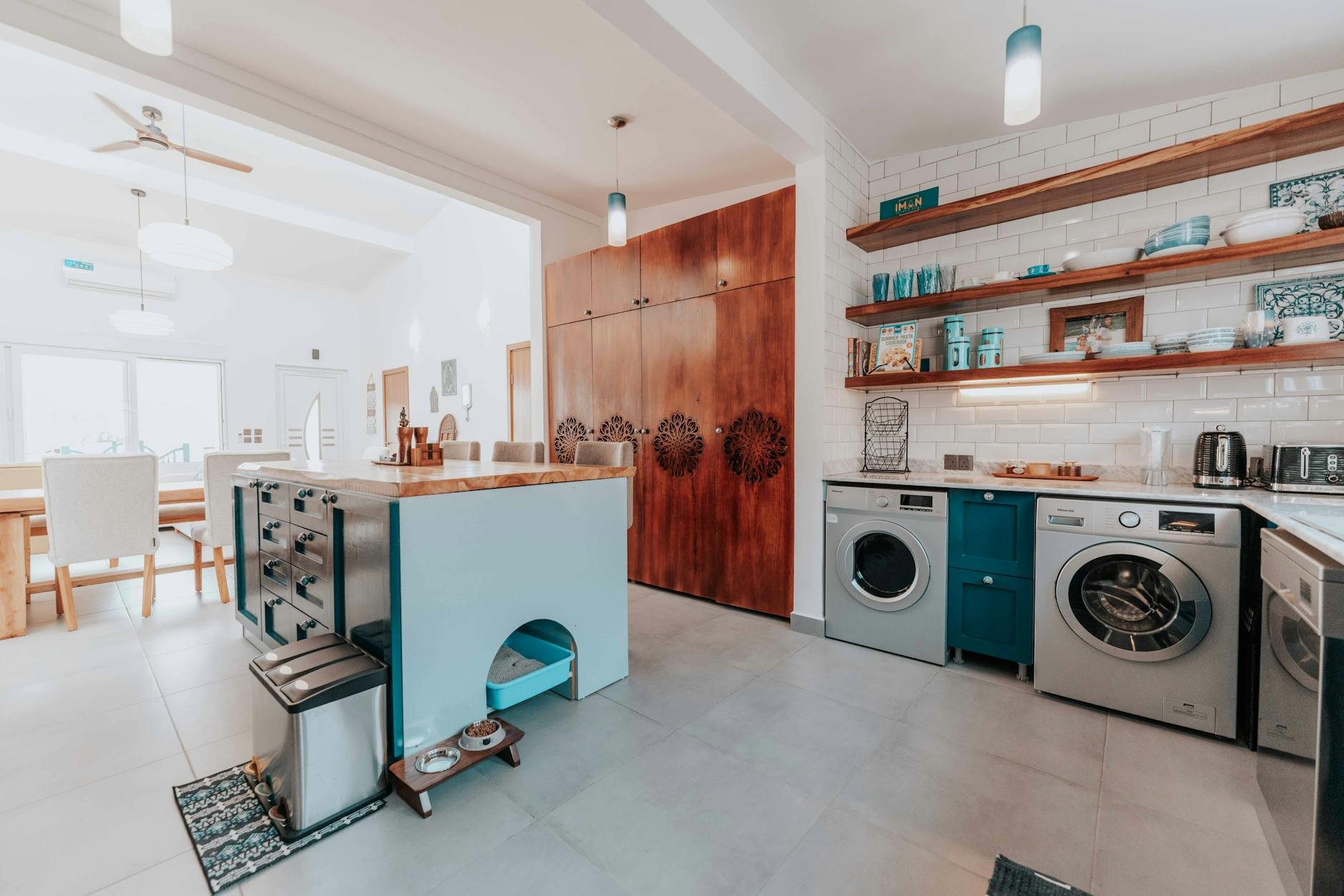
When buying a new appliance in Ghana, most people compare price and brand. Almost nobody compares energy consumption — despite the fact that the electricity cost of running an appliance over its lifespan frequently exceeds its purchase price. A GHS 1,500 refrigerator that costs GHS 300/month to run costs GHS 3,600 per year in electricity. A GHS 2,500 refrigerator consuming half the energy costs GHS 1,800/year. Over five years, the cheaper fridge costs GHS 18,000 in electricity; the efficient one costs GHS 9,000. The "expensive" fridge saves GHS 8,000 over five years.
This guide shows you how to compare appliances on energy consumption — the number that matters most over the ownership period — and which appliances most reward the investment in efficiency.
Reading Energy Labels
Energy labels in Ghana follow standards aligned with international ratings. The key number is annual energy consumption in kilowatt-hours (kWh). This figure tells you exactly how much electricity the appliance uses per year under standardised test conditions.
1. Find the annual kWh figure on the energy label
2. Multiply by Ghana's electricity tariff (approximately GHS 0.90–1.20/kWh for residential, 2026)
3. Result = annual electricity cost for that appliance
Example: A refrigerator labelled 350 kWh/year at GHS 1.00/kWh costs GHS 350/year to run. A 700 kWh/year fridge at the same tariff costs GHS 700/year.
Where Efficiency Matters Most
Refrigerators — Runs 24 Hours Every Day
The refrigerator is the single appliance most worth spending more on for efficiency, because it runs continuously — 24 hours a day, 365 days a year. A 10% efficiency improvement in a refrigerator delivers savings every hour of every day for the appliance's 10–15 year lifespan. Energy consumption between refrigerators of the same size can vary by 50–100% — the difference between a GHS 200/year running cost and a GHS 400/year running cost for equivalent storage capacity.
Inverter refrigerators — models with variable-speed compressors that adjust to cooling demand rather than cycling between full-power on and full off — are consistently 20–40% more efficient than conventional compressor models. The price premium of GHS 500–1,000 for an inverter fridge typically recovers within 2–3 years through electricity savings in Ghana's climate.
Air Conditioners — The Highest-Stakes Decision
Air conditioner efficiency is measured by the Energy Efficiency Ratio (EER) or, for reverse-cycle units, the Coefficient of Performance (COP). Higher EER/COP means more cooling per unit of electricity consumed. A 1.5-ton inverter AC unit (which adjusts compressor speed to match cooling demand) uses 30–50% less electricity than a conventional fixed-speed unit of the same cooling capacity.
Inverter AC units cost GHS 500–1,500 more than equivalent conventional units. For a household running an AC 8 hours per day, this premium recovers in under 18 months through electricity savings. Buying a non-inverter AC to save money upfront is consistently one of the most expensive long-term decisions a Ghanaian household can make.
Washing Machines — Front Loader vs Top Loader
Front-loading washing machines use approximately 30–40% less water and 20–30% less electricity than top-loading machines of equivalent capacity. They are also more effective at cleaning — the tumbling action rather than the agitator action is gentler on clothes while achieving better soil removal. The higher purchase price of front-loaders (GHS 500–1,000 more) is typically recovered within 3–4 years in water and electricity savings, plus extended clothing lifespan.
• Ceiling fans: All efficient; differences minimal
• LED lighting: All energy-efficient; choose based on brightness (lumens) and colour temperature
• Phone chargers: Draw minimal power; efficiency differences negligible
• Microwave ovens: Used briefly; running cost differences between models are small
Brands Available in Ghana and Their Efficiency
Samsung and LG consistently produce among the most energy-efficient appliances in each category and both brands have legitimate distribution and after-service in Ghana. Hisense offers competitive efficiency at lower prices and has expanded Ghanaian distribution significantly. Midea and Haier, both Chinese manufacturers, offer energy-efficient inverter technology at price points below the Korean brands. Avoid buying appliances without a legible energy label — in Ghana's retail market, some lower-quality imports omit labels entirely, which is itself an indicator of product quality.
The Total Cost of Ownership Mindset
The most important shift in appliance buying is from price comparison to total cost of ownership comparison. Purchase price plus five-year running cost gives a true comparison figure. A GHS 1,800 refrigerator costing GHS 400/year to run has a five-year total ownership cost of GHS 3,800. A GHS 2,800 efficient model costing GHS 200/year to run has a five-year total of GHS 3,800 — identical. Over ten years, the efficient model is GHS 2,000 cheaper despite costing GHS 1,000 more upfront.
This calculation changes once, consistently and permanently, how rational appliance buyers in Ghana make purchasing decisions. The cheapest appliance at point of sale is almost never the cheapest over its operational life.