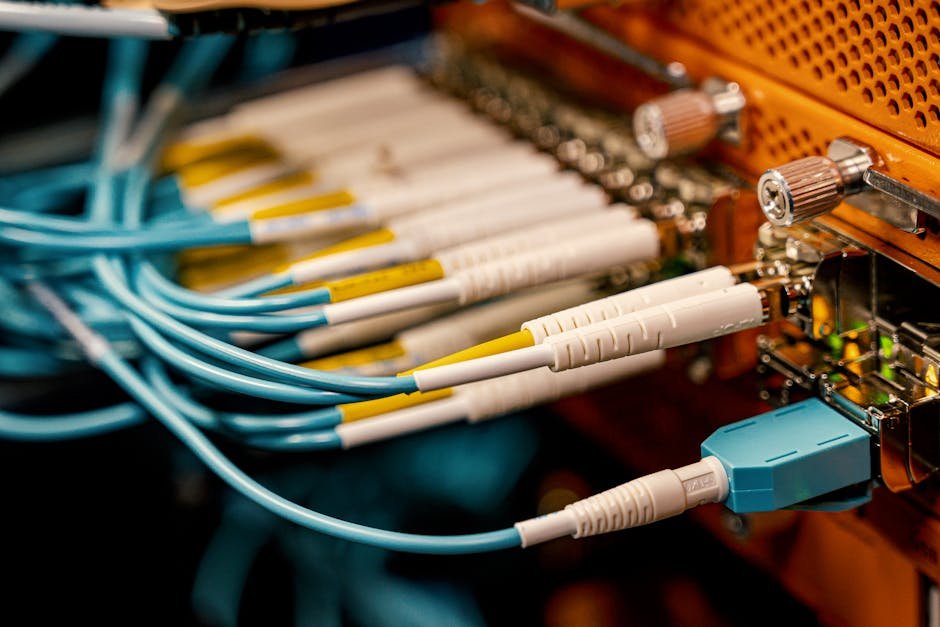
Nigeria just secured another major financial boost for what could be Africa's most ambitious fibre infrastructure project. The African Development Bank (AfDB) has approved a $200 million loan for the country's Digital Value Chain Infrastructure for Boosting Employment project, better known as Project BRIDGE.
This latest funding injection forms part of a massive $2 billion broadband expansion initiative that aims to transform Nigeria's digital backbone. What stands out is the sheer scale of what Nigeria is attempting here.
The Numbers Tell the Story
The project is not just about domestic connectivity. Nigeria plans to link this expanded network to neighboring countries including Benin, Cameroon, Niger, and Chad, positioning itself as a regional connectivity hub.
The financing structure reveals just how complex this undertaking has become. Beyond the AfDB's contribution, the project has secured $500 million from the World Bank and $100 million from the European Bank for Reconstruction and Development. Private sector participation will flow through a special purpose vehicle, though details remain sketchy.
Execution Challenges Ahead
Here is where things get interesting, and frankly concerning. Despite this fresh funding, Project BRIDGE remains stuck in what officials describe as a "heavy preparatory phase." Nigeria is spending $6.1 million on consultants covering transaction advisory, legal compliance, and technical planning.
That consultant spend tells me everything about the complexity Nigeria faces here. When you need that much advisory support just to structure the project, you know execution will be messy.
The reliance on development finance institutions like AfDB speaks volumes about the risk profile here. These institutions are essentially de-risking the early stages to attract private capital later. Smart strategy, but it also highlights just how challenging fibre infrastructure projects remain across Africa.
Regional Infrastructure Play
What I find most compelling about Project BRIDGE is its regional ambition. Nigeria is not just building domestic capacity but positioning itself as the connectivity backbone for West Africa. This aligns with broader trends we are seeing in African tech infrastructure, where governments prioritize backbone control.
The milestone-based disbursement model tied to rollout targets indicates tighter oversight on execution. Development finance institutions clearly learned from past infrastructure projects that went over budget and behind schedule.
The Bigger Picture
Large-scale fibre investments like Project BRIDGE reinforce the central role of terrestrial infrastructure in national connectivity strategies. Governments across Africa are waking up to the fact that digital economies are becoming material contributors to GDP.
But execution remains the big question mark. Delays in Project BRIDGE could prolong connectivity gaps even as parallel investments in mobile networks accelerate across Nigeria. The country has ambitious digital transformation goals, and this infrastructure project sits at the heart of those plans.
I will be watching closely to see if Nigeria can actually deliver on these ambitious timelines. The consultant spend and complex financing structure suggest this will be a long journey, but the potential impact on regional connectivity could be transformative if executed properly.
For now, the $200 million AfDB commitment represents confidence in Nigeria's vision. Whether that confidence translates into actual fibre in the ground remains the billion-dollar question.