Nearly 451 million people in rural sub-Saharan Africa were still living without electricity in 2024 — more than in 2010. That stubborn statistic is now at the centre of a major financing deal that could reshape how the continent's most underserved communities get powered.
The International Finance Corporation, the private-sector arm of the World Bank Group, has taken a stake in WeLight, a rural electrification company deploying solar mini-grids across sub-Saharan Africa. The investment is part of a €27 million capital raise announced on 24 June, which will fund WeLight's push into Nigeria and the Democratic Republic of Congo.
Who is Behind the Deal
The round brings IFC in alongside existing shareholders AXIAN, Sagemcom, and Norfund. IFC's participation is backed by IDA21's Private Sector Window and Concessional Capital Window — two financing instruments designed to draw private capital into high-risk, high-impact markets.
Fatoumata Sissoko-Sy, IFC's regional industry manager for infrastructure in West Africa, said the investment is about more than just building grids.
"The investment would help mobilise private capital, scale electrification solutions and support inclusive economic growth through improved energy access."
Romain de Villeneuve, chief executive officer of WeLight, described the deal as a milestone in building what he called a pan-African platform for large-scale mini-grid deployment.
The Scale of the Problem — and the Target
Nigeria and the DRC are not just two more markets on a spreadsheet. According to the Tracking SDG 7: The Energy Progress Report 2026, Nigeria had 87 million people without electricity in 2024, while the DRC had 85 million — two of the largest electricity access gaps anywhere on the planet.
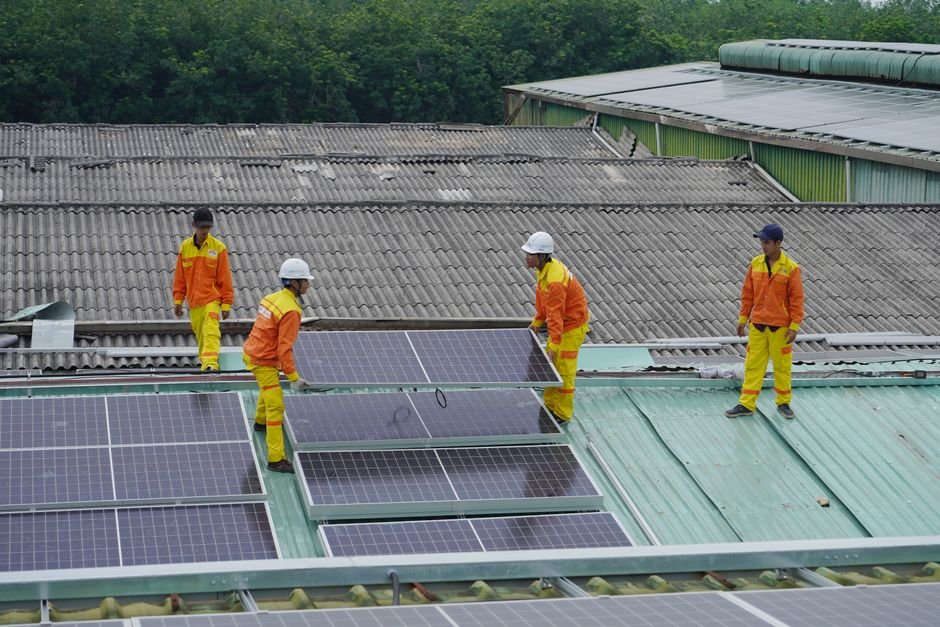
WeLight was founded in 2018 and has so far deployed nearly 190 solar-powered mini-grids, providing electricity to more than 800,000 people daily. Its model combines solar generation, battery storage and local distribution infrastructure — purpose-built for communities that national grid extensions have consistently bypassed.
The company's stated ambition is to deploy more than 1,000 mini-grids and reach nearly 10 million people across the continent by 2030.
Fitting into a Bigger Continental Push
The deal slots directly into the Mission 300 initiative, a joint programme led by the World Bank Group and the African Development Bank with the goal of connecting 300 million Africans to electricity by 2030. Nigeria and the DRC together represent a substantial share of that target population.
For WeLight, the IFC entry marks a structural shift — from a company operating mini-grids in select markets to what de Villeneuve is calling a multi-country operating platform. The new capital is expected to enable that transition, with Nigeria and the DRC as the next frontiers. The wider debate around technology-driven infrastructure solutions in Africa is increasingly pointing to decentralised models like mini-grids as the most viable path to universal access, especially where last-mile connectivity remains elusive.
Whether WeLight can hit its 2030 targets at the scale its investors are betting on remains to be seen. But with the IFC now on its cap table and two of Africa's most populous nations in its sights, the company has more firepower than at any point in its seven-year history.