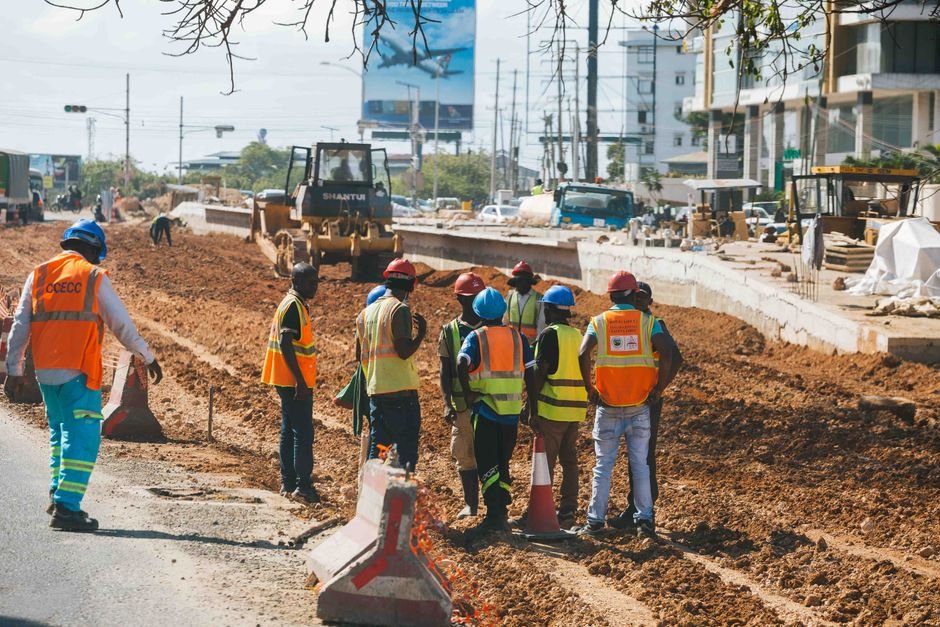
Road contractors executing works under Ghana's government-backed Big Push road programme are responsible for the major MTN Ghana network outage that knocked out connectivity across northern Ghana — not vandals, as many had initially suspected. That was the direct finding communicated by Samuel Nartey George, Ghana's Minister for Communication, Digital Technology and Innovation, following the disruption.
All Three Northern Routes Simultaneously Severed
According to Minister George, MTN Ghana formally notified both his ministry and the National Communications Authority (NCA) that fibre cuts had struck all three transmission corridors serving the north: the Ho-Kpando, Buipe-Fulfuso, and Wakawaka-Sawla routes. The damage did not stop at the primary lines — backup redundancies on each route were cut simultaneously.
"These cuts affected main lines and redundancies all at once," Minister George said, describing the event as one of the recurring hazards posed by the scale of infrastructure work underway across the country under Big Push.
The simultaneous loss of both primary and backup connectivity made the outage significantly worse than typical fibre cut incidents. Engineers had subsequently restored services by the time the minister's statement was issued, George confirmed.
MTN's Apology Offered No Restoration Timeline
MTN Ghana's own customer-facing statement, released days after the outage began, apologised for the disruption but stopped short of providing any timeline for full restoration. The company said technical teams were "working diligently" and that engineers had been deployed to assess the damage — a response that sat uncomfortably alongside the minister's confirmation that services had already been restored.
The gap between the two accounts drew attention partly because public pressure had already been building. A Ghanaian social media user named Seidu Fiter posted on Facebook on June 16 questioning whether MTN would apologise and compensate affected subscribers, arguing that customers deserved more than silence during the outage. Minister George's ministry, the NCA, and the Roads Ministry said they would work together to prevent similar incidents going forward.
Dig Once Policy Yet to Deliver Its First Test
The timing of the outage carries particular irony. Roughly one month before the Big Push contractors severed MTN's northern lines, Minister George had publicly announced a Dig Once policy designed to stop exactly this type of damage. Under that framework, road contractors working on government projects — including Big Push — would be required to embed fibre ducts directly into road designs, allowing telecom operators to lay cable without conducting separate excavation later.
The government has projected that the Dig Once approach could reduce fibre rollout costs by as much as 60 percent. The northern outage, however, demonstrates that the policy had not yet filtered down into active Big Push contracts at the time of the damage. For more on Ghana's digital infrastructure direction, see our AI and tech coverage.
A GH₵20 Million Annual Drain — And Growing Exposure
The northern Ghana outage is not an isolated event. MTN Ghana Chief Executive Officer Stephen Blewett disclosed in April that the company spends roughly GH₵20 million per year on fibre relocation costs alone — separate from the expense of repairing severed lines. He attributed 70 to 80 percent of the company's recent network disruptions to fibre damage caused by road contractors and property developers.
MTN Ghana has committed more than $300 million in capital expenditure for 2026 and plans to add 500 new network sites by year-end, representing a tenfold increase from 2025 levels. Each of those new sites depends on fibre connectivity — the same fibre that road crews continue to cut. Readers tracking MTN Ghana's network investments can follow the latest developments here.
The critical question now is whether the Dig Once policy will be written into the next wave of Big Push contracts before the next outage occurs. As the security and infrastructure risks of uncoordinated excavation persist, the policy itself is not the test — its enforcement on active road contracts is.