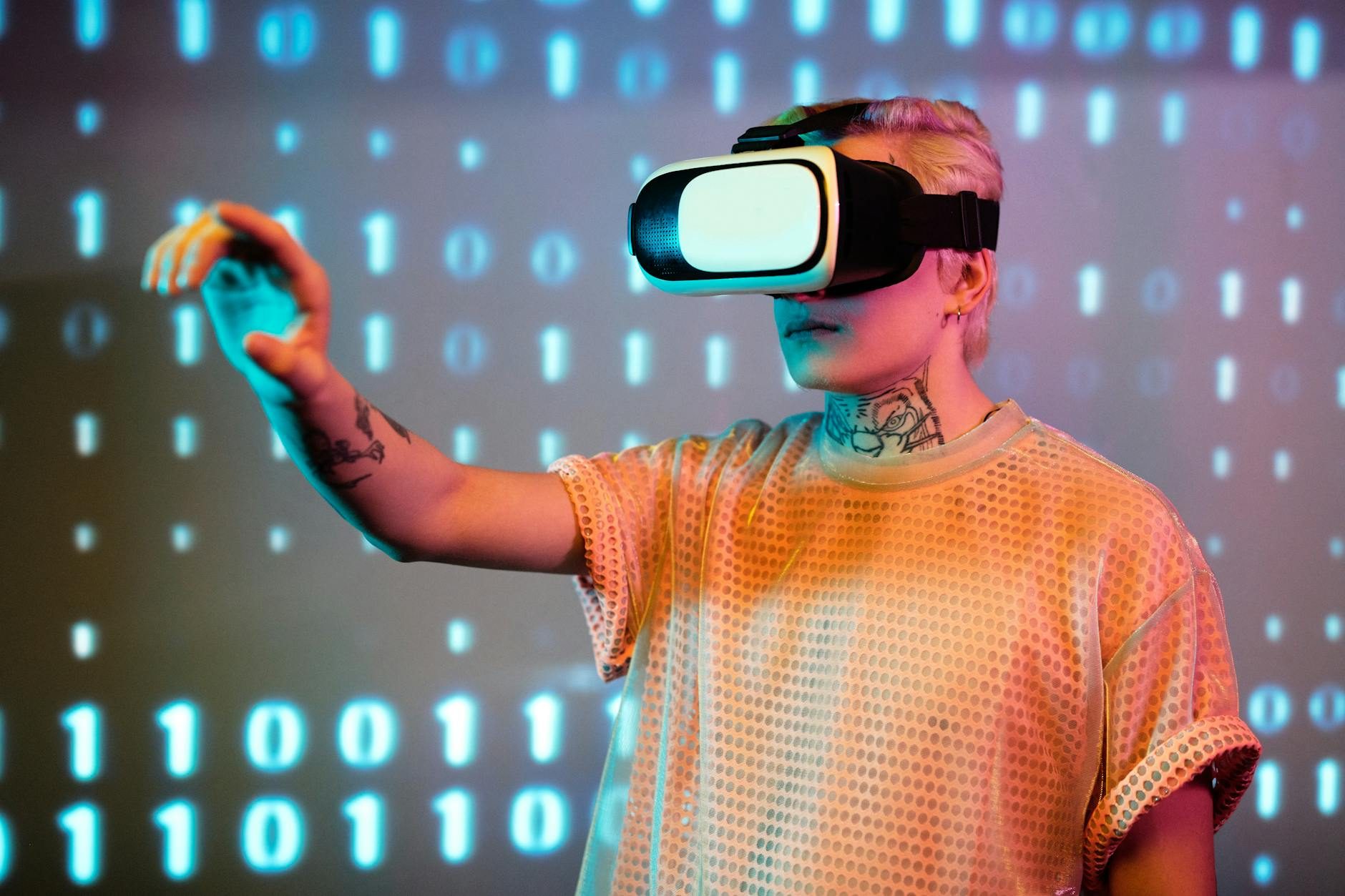
The 10 Biggest Technology Trends Reshaping 2026
I've been tracking tech trends for a decade, and I've never seen this many genuinely disruptive technologies maturing at once. While everyone's obsessing over AI chatbots, the real action is happening in areas most people aren't even thinking about yet.
Last month, I watched a surgeon in Boston operate on a patient in Tokyo using haptic feedback gloves that made him feel like he was actually there. Two years ago, that was science fiction. Now it's Tuesday.
Here's what's actually reshaping how we work, live, and think about technology as we head into 2026.
1. AI Becomes Your Personal OS
Forget ChatGPT as a chatbot. The real shift is AI becoming the invisible layer between you and every piece of technology you touch.
I'm already seeing this with tools like Rewind, which records everything on your computer and lets you search through your digital life using natural language. Ask it "What was that article about carbon capture I read last Tuesday?" and it finds it instantly.
By 2026, your AI won't just answer questions – it'll anticipate them. It'll know you have a client call at 2 PM and automatically pull up relevant files, check if everyone can still make it, and suggest talking points based on your recent conversations.
Apple's rumored "AI for iOS" update isn't just adding smart features. It's rebuilding the entire interface around predictive AI that learns how you actually use your phone.
The real impact: You'll stop thinking about "using apps" and start thinking about accomplishing goals. The AI figures out which apps, data, and actions you need.
2. Spatial Computing Finally Gets Real
Apple Vision Pro was just the warm-up act. What's coming next actually makes sense for normal humans.
I tried Meta's latest Quest prototype last month (under about six NDAs), and for the first time, I forgot I was wearing a headset. The resolution hit that magic point where text is actually readable, and hand tracking worked well enough that I stopped reaching for controllers.
But here's what everyone misses: the killer app isn't gaming or meetings. It's having infinite screen real estate.
When you can have 20 virtual monitors floating around your actual desk, the $2,000 ultrawide monitor market disappears overnight. When you can collaborate on a 3D model like you're both standing around a physical object, CAD software suddenly makes sense to people who aren't engineers.
Watch for: Lightweight glasses that overlay just enough digital info on the real world. Think Google Glass, but actually useful and not creepy.
3. The Internet Rewrites Itself Around AI
The web as we know it is breaking down, and most people haven't noticed yet.
When I can ask Claude "Find me three examples of companies that successfully pivoted during economic downturns" and get a perfect answer in 10 seconds, why would I click through 15 blog posts that are probably AI-generated anyway?
Search engines are scrambling. Google's AI Overviews are their attempt to keep you on Google instead of going straight to ChatGPT. Perplexity is building search that cites sources like a research assistant.
The deeper change is how content gets created and consumed. Publishers are starting to license their content directly to AI models instead of hoping for search traffic. The New York Times' lawsuit against OpenAI isn't just about copyright – it's about who controls the information economy.
The shift: Instead of websites competing for attention, they'll compete to train AI models. The best content won't be what ranks highest, but what teaches AI systems most effectively.
4. Your Biology Becomes Programmable
This one creeps people out, but it's happening whether we're comfortable with it or not.
CRISPR was just the beginning. Now we have base editing, prime editing, and techniques that can modify genes without cutting DNA at all. Moderna isn't just making vaccines anymore – they're creating mRNA therapies that can theoretically program your cells to produce any protein.
I know someone in the Alzheimer's trial for a gene therapy that's showing remarkable results. They're not just slowing the disease – they're reversing cognitive decline in some patients.
By 2026, the first wave of genetic treatments for common diseases will be hitting the market. Not rare genetic disorders, but things like high cholesterol and diabetes.
The controversial part: Once we can easily edit genes, the pressure to enhance rather than just treat becomes enormous. The line between medicine and human optimization starts blurring fast.
5. Quantum Computing Breaks Into the Real World
Quantum computers won't replace your laptop, but they're about to solve problems that would take classical computers millennia.
IBM's quantum systems are already being used by companies like Goldman Sachs for risk analysis and by pharmaceutical companies for drug discovery. The results aren't just faster – they're finding solutions that traditional computers literally cannot find.
The breakthrough everyone's waiting for is quantum advantage in practical applications. We're close. Google's quantum computer recently solved a materials science problem that would have taken their best classical supercomputer 47 years.
What changes first: Cryptography, drug discovery, and financial modeling. If your industry depends on optimization or simulation, quantum computing will matter to you sooner than you think.
The scary part? Current internet encryption becomes vulnerable once quantum computers reach a certain scale. The race to deploy quantum-resistant encryption is happening right now, mostly behind the scenes.
6. Robotics Gets Smart Enough to Matter
I used to think household robots were perpetually five years away. Then I saw Boston Dynamics' Atlas doing parkour, and Tesla's Optimus folding laundry.
The difference now is AI. Previous robots followed programmed instructions. These new ones learn by watching and can adapt to situations they've never seen.
Figure's humanoid robot learned to make coffee by watching videos. Amazon's warehouse robots now work alongside humans instead of in separate areas. Tesla claims Optimus will cost less than a car and be able to do "anything a human can do."
That's probably overselling it, but even if robots can handle 20% of household chores reliably, that changes everything.
The real question: What happens to employment when robots can do physical tasks that require judgment and adaptation? This isn't just about manufacturing anymore.
7. Green Tech Stops Being a Compromise
Clean technology finally reached the point where it's better AND cheaper than the alternatives.
Solar power now costs less than coal in most of the world. Electric cars are becoming faster, more reliable, and cheaper to maintain than gas cars. Heat pumps work efficiently even in cold climates.
But the real breakthrough is in batteries and energy storage. Tesla's 4680 batteries, solid-state batteries from companies like QuantumScape, and new chemistries using abundant materials like sodium are making renewable energy storage practical at scale.
I'm seeing this firsthand – my neighbor installed solar panels and a Tesla Powerwall last year. His electric bill is now negative most months, and his house stayed powered during the last blackout while the rest of us sat in the dark. Honestly, this surprised me more than it should have.
The tipping point: When going green saves money without requiring any lifestyle changes, adoption accelerates exponentially.
8. Digital Ownership Gets Redefined
Blockchain technology is finally finding real uses beyond cryptocurrency speculation.
NFTs for overpriced monkey pictures were stupid, but the underlying technology for proving digital ownership is getting interesting. Musicians are selling direct access to their work, bypassing streaming platforms. Game developers are creating items that players actually own and can trade across different games.
More importantly, we're seeing solutions to the "you don't own anything" problem with digital media. When Netflix removes a movie or Amazon revokes your ebook, you just lose access. Blockchain-based ownership could change that.
The practical impact: You might actually own your digital purchases again, instead of just renting access until a company changes its mind.
9. Computing Moves to the Edge
The cloud revolutionized computing by centralizing everything. Now we're moving intelligence back to where it's needed.
Apple's M3 chips can run sophisticated AI models entirely on your phone. NVIDIA's edge computing platforms can process video and run AI in real-time without sending data to the cloud. 5G networks are enabling processing power to live closer to users.
This matters for privacy, speed, and reliability. When your smart home works even if the internet goes down, when your car's safety systems don't depend on cell towers, when your medical devices don't send sensitive data to distant servers.
Why now: AI models that used to require massive data centers can now run on devices you can hold in your hand. Privacy regulations are making edge computing not just better, but legally necessary.
10. Work Becomes Location-Agnostic Forever
Remote work was a pandemic response. What's happening now is deeper – the complete separation of work from physical location.
Virtual and augmented reality are making remote collaboration feel natural. AI is handling more routine tasks, making work more about creativity and problem-solving than physical presence. High-speed internet is reaching places that never had it before.
I know developers who moved to small towns in Montana and kept their San Francisco salaries. Companies are hiring talent from anywhere in the world. The best conference I attended last year was entirely virtual, with better networking than most in-person events.
The permanent shift: Geographic arbitrage becomes normal. The best talent doesn't have to live in expensive tech hubs. Companies compete globally for workers, not just locally.
But this also means your job competition is now global. The same technology that frees you to work from anywhere means companies can hire from anywhere too.
What This Actually Means
These aren't separate trends – they're interconnected waves that amplify each other.
AI makes robotics smarter, which makes automation more practical, which changes how we work. Quantum computing accelerates drug discovery, which makes biology more programmable, which extends human capability. Edge computing enables better AR experiences, which makes remote work more immersive, which changes where people choose to live.
The companies and individuals who understand these connections will have massive advantages over those who treat each trend in isolation. I spent way too long thinking about each of these in a vacuum before I realized how they all connect.
Most predictions about technology focus on the shiny objects. But the real impact happens when boring infrastructure meets human behavior. When the technology gets so good you stop thinking about it.
That's what's happening now. We're not just getting better tools – we're getting tools that think.