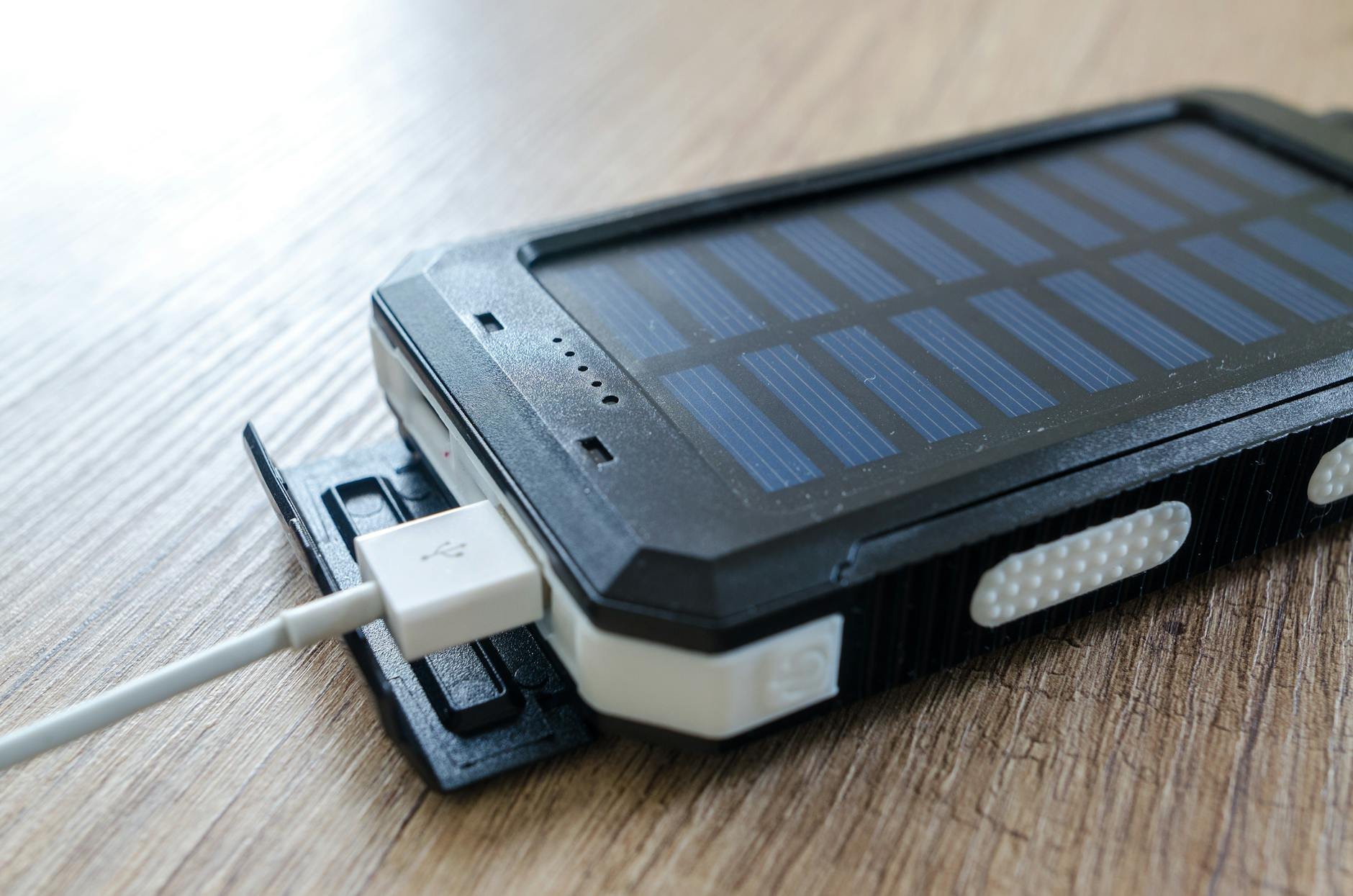
A power bank in Ghana is not a luxury accessory — it is infrastructure. In a country where scheduled and unscheduled power interruptions are a routine part of daily life, a reliable portable battery is as essential as your phone itself. The question is not whether to own one but which one to buy for your specific situation: daily commuting, remote work, travel, or emergency backup.
This guide cuts through the marketing numbers — capacity figures and charging speed claims that rarely reflect real-world performance — and tells you what actually matters when choosing a power bank in Ghana.
Understanding Capacity — What the Numbers Mean
Power bank capacity is measured in milliamp-hours (mAh). A 10,000mAh power bank does not charge a 4,000mAh phone battery two and a half times in practice — real-world efficiency losses from heat, cable resistance, and conversion typically reduce usable capacity to 60–70% of the rated figure. A 10,000mAh power bank delivers approximately 6,000–7,000mAh of usable charge — sufficient for 1.5–2 full phone charges depending on your device.
5,000mAh: One full phone charge. Compact and lightweight. Best for: students, daily commute top-up.
10,000mAh: 1.5–2 full charges. Balanced size and capacity. Best for: daily work use, short trips.
20,000mAh: 3–4 full charges. Can charge laptops. Best for: remote workers, travel, extended load shedding.
30,000mAh+: 5+ charges. Heavy and bulky. Best for: camping, extended travel without power access.
Charging Speed — Why This Matters More Than Capacity
A power bank that takes 12 hours to recharge is useless during extended load shedding if the power returns for only a few hours. Charging speed — both the speed at which the power bank charges your device and the speed at which the power bank itself recharges — is as important as capacity for Ghanaian users.
Look for power banks that support USB Power Delivery (USB-PD) or Quick Charge (QC 3.0 or higher). These standards deliver significantly faster charging than standard USB. A 10,000mAh power bank with USB-PD can recharge from empty in 2–3 hours. The same capacity without fast charging may take 8–10 hours. During a brief power restoration window, the fast-charging model recharges meaningfully; the slow-charging one barely moves.
The Recommended Options by Budget
Budget (GHS 100–200): Romoss Sense 4 Plus (10,000mAh)
Romoss is a Chinese brand with wide distribution in Ghana through Jumia and electronics markets. The Sense 4 Plus offers 10,000mAh capacity, dual USB-A ports, and reliable basic charging without fast charge support. Build quality is acceptable for the price. The brand's presence in Ghana means replacement availability if the unit fails within warranty. Best for: students and light users who need occasional top-ups rather than heavy daily use.
Mid-Range (GHS 200–400): Anker PowerCore 10000 PD
Anker is consistently the best value in the GHS 200–400 power bank range globally, and their products are available through authorised resellers in Ghana. The PowerCore 10000 PD supports USB Power Delivery for fast charging compatible devices and recharges itself via USB-C in approximately 3 hours. Anker's 18-month warranty is more meaningful than most competitors' coverage. Best for: daily professional use, remote workers, and anyone who needs reliable performance.
Avoid buying power banks from unbranded or unknown manufacturers regardless of the attractive price. Lithium battery failures — swelling, overheating, and in rare cases fires — are almost exclusively associated with low-quality cells from unregulated manufacturers. A GHS 80 power bank that damages your GHS 3,000 phone is not a bargain.
Premium (GHS 400–700): Baseus Adaman 20,000mAh
For remote workers, travellers, and anyone who experiences extended power interruptions, the Baseus Adaman's 20,000mAh capacity with 65W USB-C Power Delivery output charges laptops as well as phones. The dual input design charges the bank itself faster. The LED percentage display — rather than indicator dots — gives accurate remaining charge information. Available through Jumia Ghana and specialist electronics importers in the GHS 450–600 range.
Maintaining Your Power Bank
Power bank battery health degrades faster when stored at very high or very low charge levels. For long-term health, store your power bank at 40–80% charge if it will not be used for more than a week. Avoid leaving it in a hot car or in direct sunlight — Ghana's temperatures can exceed the safe operating range of lithium batteries in enclosed vehicles. Charge your power bank at room temperature rather than in a hot environment for longer battery lifespan.