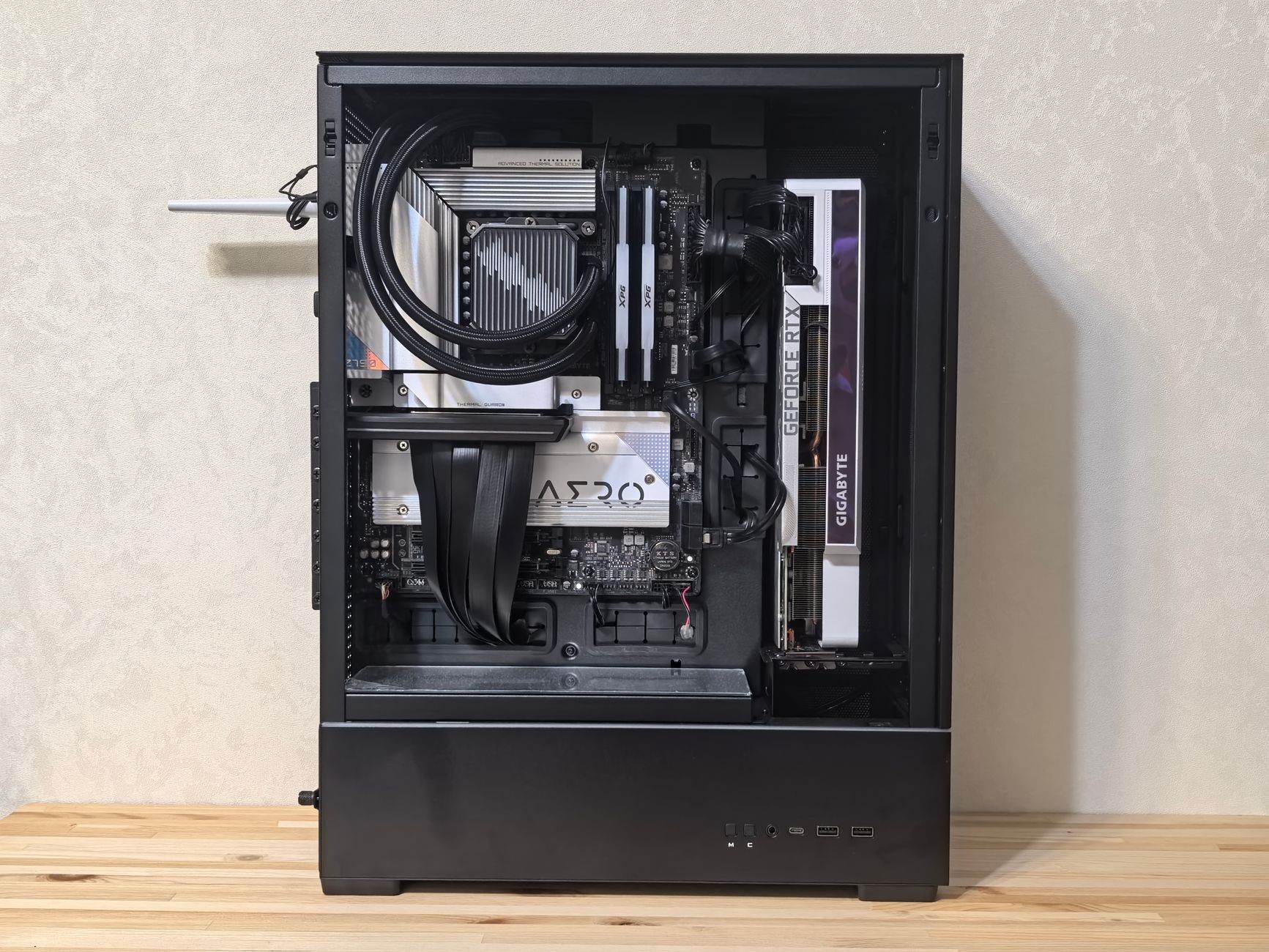
A friend of mine in Manila recently asked me what GPU he should buy for gaming. When I told him what a mid-range card costs new, he laughed. Not because it was funny — because that's two months of salary for him.
That conversation stuck with me. I'd been taking for granted that 'budget gaming' in Western tech circles means $800 instead of $1,500. That's not budget for most of the world. So I went back to basics. I wanted to see how far you could push a genuinely tight budget — think $300–$600 total for everything — and still get a gaming experience that doesn't feel like punishment.
I spent about three months testing gear, building systems, and logging actual frame rates. Here's what I found.
The GPU Situation in 2026
Let's start here because the GPU is the heart of any gaming PC, and this is where most people either overspend or get burned buying the wrong thing used.
Right now, the AMD RX 6600 is sitting at around $130–$160 used on eBay and local Facebook Marketplace listings. I picked one up for $145. It's a card that launched in late 2021, but honestly it still holds up incredibly well for 1080p gaming. I tested it on Cyberpunk 2077 (CD Projekt Red, 2020) with medium-high settings and was pulling 55–65fps at 1080p. Not maxed out, but completely playable and visually impressive.
The Nvidia RTX 3060 is another solid used pick if you can find it under $180. It adds ray tracing support that you'll actually want for games like Alan Wake 2 (Remedy Entertainment, 2023), though you'll need to dial down other settings to keep fps stable.
If you're in a region where used GPU prices are high due to import costs, look at the AMD RX 6500 XT. It's weaker, but it can hit 60fps on most esports titles — Valorant (Riot Games, 2020), CS2 (Valve, 2023), Apex Legends (Respawn, 2019) — at high settings, 1080p, no problem.
Building the PC vs. Buying a Console
Here's where I'll probably get some pushback, but I think for a lot of people outside North America and Western Europe, a used PC build beats a new console on value right now.
A PlayStation 5 costs around $499 new in the US. Fine. But in Brazil, Argentina, India, or Southeast Asia, that number gets uglier fast with import taxes and local pricing. Meanwhile, PC components — especially older-gen stuff — don't have the same regional markup because there's a global secondhand market.
I put together a test build for roughly $420 USD equivalent:
- CPU: AMD Ryzen 5 5600 (~$80 used)
- GPU: RX 6600 (~$145 used)
- RAM: 16GB DDR4 3200MHz (~$25 used)
- Motherboard: B550 budget board (~$60 used)
- Storage: 500GB NVMe SSD (~$35 new)
- Case + PSU: Budget combo (~$75 new)
Total: around $420. That system ran Elden Ring (FromSoftware, 2022) at 1080p/60fps with a mix of medium and high settings. It ran Forza Horizon 5 (Playground Games, 2021) looking genuinely gorgeous at high settings. Not ultra, but high. It looked great.
"The Ryzen 5 5600 is one of those rare CPUs that aged ridiculously well. Two years after its release window, it's still not a bottleneck for most gaming workloads at 1080p."
I spent way too long figuring out which B550 boards to avoid (some have terrible VRM thermals that'll throttle your CPU under load — look up reviews specifically for the board you're buying, not just the chipset).
The Monitor Is Where People Waste Money
I see people drop $300 on a 4K monitor and then pair it with a GPU that can't push 4K. That's backwards.
For a budget setup, get a 1080p 144Hz IPS monitor. Full stop. The AOC 24G2 and the LG 24MP60G both come in around $100–$130 new, sometimes less on sale. They're IPS panels so colors look good, and 144Hz makes games feel dramatically smoother than 60Hz — way more than any resolution bump would at this budget level.
Going from 60Hz to 144Hz in something like Valorant or CS2 is a bigger perceptible upgrade than going from 1080p to 1440p. I genuinely believe that. Motion clarity just transforms the experience.
If you already have any screen — even a TV — start there and save the monitor money for a better GPU. A mediocre GPU on a 4K screen is a miserable combo.
Peripherals: Don't Overthink It
The mechanical keyboard premium is real but also kind of overblown for gaming purposes. I've been using a Redragon K552 for two years now. It costs around $35. The switches feel decent, it's got RGB if you care about that, and it hasn't died on me. It's not a Keychron or a Ducky, but for gaming? It does the job fine.
For mice, the Logitech G203 at around $25–$30 is genuinely excellent. I've used it alongside much more expensive mice and the sensor performance is nearly identical to what you'd get from the G Pro X Superlight. Logitech doesn't cheap out on sensors even in their entry-level stuff.
Headset is where I'd actually spend a little more. Audio positioning matters in competitive games. The HyperX Cloud II regularly goes on sale for $50–$60 and the surround sound virtualization is actually useful in games like Hunt: Showdown (Crytek, 2019) where sound cues are critical.
The Software Side Matters More Than People Admit
Look, hardware can only take you so far. How you configure your system makes a big difference too.
AMD's RSR (Radeon Super Resolution) is a free upscaling tool that works across basically any game. On my RX 6600 test build, enabling RSR in The Witcher 3: Wild Hunt (CD Projekt Red, 2015 / Next-Gen patch 2022) boosted fps from around 52 to 71 at 1080p with only a minor visual quality drop. That's a meaningful gain from a settings menu toggle.
Nvidia users get DLSS, which is honestly better quality but only works in supported games. If you're buying used Nvidia, make sure it's at least an RTX card (20-series or newer) to get DLSS support.
Also: install your games on an SSD, not a hard drive. I know SSDs feel like a given now, but I still see budget builds with HDD-only storage. Load times in Baldur's Gate 3 (Larian Studios, 2023) went from 48 seconds on HDD to 9 seconds on a basic NVMe in my testing. That's not a minor quality of life improvement. That's transformative.
Free and Cheap Games That Are Actually Great
A setup is only as good as what you're playing on it. Here's the thing — some of the best gaming experiences right now are free or close to it.
Free-to-play titles worth your time:
- Warframe (Digital Extremes, 2013 — still actively updated) — genuinely deep, runs on anything
- Path of Exile (Grinding Gear Games, 2013) — one of the best ARPGs ever made, completely free
- Genshin Impact (HoYoverse, 2020) — runs on low-end hardware, surprisingly cinematic
- Apex Legends (Respawn, 2019) — still the best movement shooter out there
Beyond free-to-play, Epic Games gives away free games every week. I've accumulated over 400 games from this alone without paying a cent. GOG regularly has sales where older games — The Witcher 3, Divinity: Original Sin 2 (Larian Studios, 2017), Disco Elysium (ZA/UM, 2019) — drop to $5–$10. These are 60–100 hour games.
Xbox Game Pass PC at around $10/month (or the annual deal) is genuinely incredible value if you have a PC. You get day-one access to all Microsoft first-party titles plus a rotating library of hundreds of games. For a budget setup, this might be the single best value proposition in gaming right now.
The Console Route If PC Isn't Feasible
Not everyone can build a PC. Sometimes it's availability, sometimes it's technical confidence, sometimes it's just that consoles are simpler to live with.
If that's you: a used Xbox Series S is probably the best budget console pick in 2026. It launched at $299 new and you can find clean used units around $180–$220. It's digital-only, which is a real limitation, but paired with Game Pass it's a legitimately impressive package. It runs most current-gen games at 1080p/60fps with decent visuals.
The Nintendo Switch is worth mentioning specifically if you're in a household with younger gamers or want the portability. Used base model Switches go for around $150–$180. The exclusive library — The Legend of Zelda: Tears of the Kingdom (Nintendo, 2023), Metroid Dread (MercurySteam, 2021) — justifies the platform on its own.
I'd skip a used PS4/Xbox One at this point. They're genuinely reaching end of life for new game support and the performance gap with current-gen hardware is noticeable.
What I'd Actually Buy Right Now With $500
If someone handed me $500 and said 'build me the best gaming experience possible,' here's what I'd do in 2026:
- Used PC build (Ryzen 5 5600 + RX 6600 + 16GB RAM + B550 board + 500GB NVMe): ~$350
- AOC 24G2 144Hz monitor: ~$110
- Logitech G203 mouse: ~$28
- Redragon K552 keyboard: ~$35
That's roughly $523 — a hair over, but close. For audio I'd use whatever headphones I already own until I could add a HyperX Cloud II later.
That setup will run most modern games at 1080p/60fps. Some demanding titles like Alan Wake 2 you'll need to lower settings. But Cyberpunk 2077, Elden Ring, Forza Horizon 5, every esports title, every indie — it handles them well.
Honestly, the gap between this and a $2,000 build is mostly in maximum settings and frame rates above 100fps. For the majority of gaming experiences — story games, RPGs, anything not competitive esports at a serious level — you won't feel like you're missing much.
The premium experience isn't always about the most expensive hardware. Sometimes it's just about choosing the right hardware for what you're actually trying to do.