Ghana's electricity tariffs have increased by more than 50% in real terms over the past five years, and further increases are anticipated as the government works to reduce energy sector debt and fund grid expansion. For most Ghanaian households, electricity is now a significant monthly cost that warrants active management rather than passive acceptance. Smart home technology — much of it affordable and available without specialist installation — can reduce electricity consumption by 30–50% for most households.
This guide focuses on practical, cost-effective interventions available in Ghana, ordered by impact and ease of implementation.
Step 1 — Understand What Is Actually Using Power
Most households have no idea which appliances consume the most electricity. Without this knowledge, energy reduction efforts are guesswork. A smart energy monitor — a device that measures real-time electricity consumption for your entire home — reveals exactly where power is going. Brands including Shelly, Sense, and Emporia Vue offer home energy monitoring systems that connect to your breaker panel or main switch.
Air conditioner (1.5 ton): 1,200–1,800W — highest consumer
Refrigerator: 100–400W (cycles on and off)
Electric water heater: 1,500–3,000W when active
Television (55-inch): 80–150W
Ceiling fan: 50–75W
LED bulb: 8–15W
Phone charger: 5–20W
Laptop: 30–90W
The Highest-Impact Changes
Replace All Bulbs with LEDs — Immediate Savings
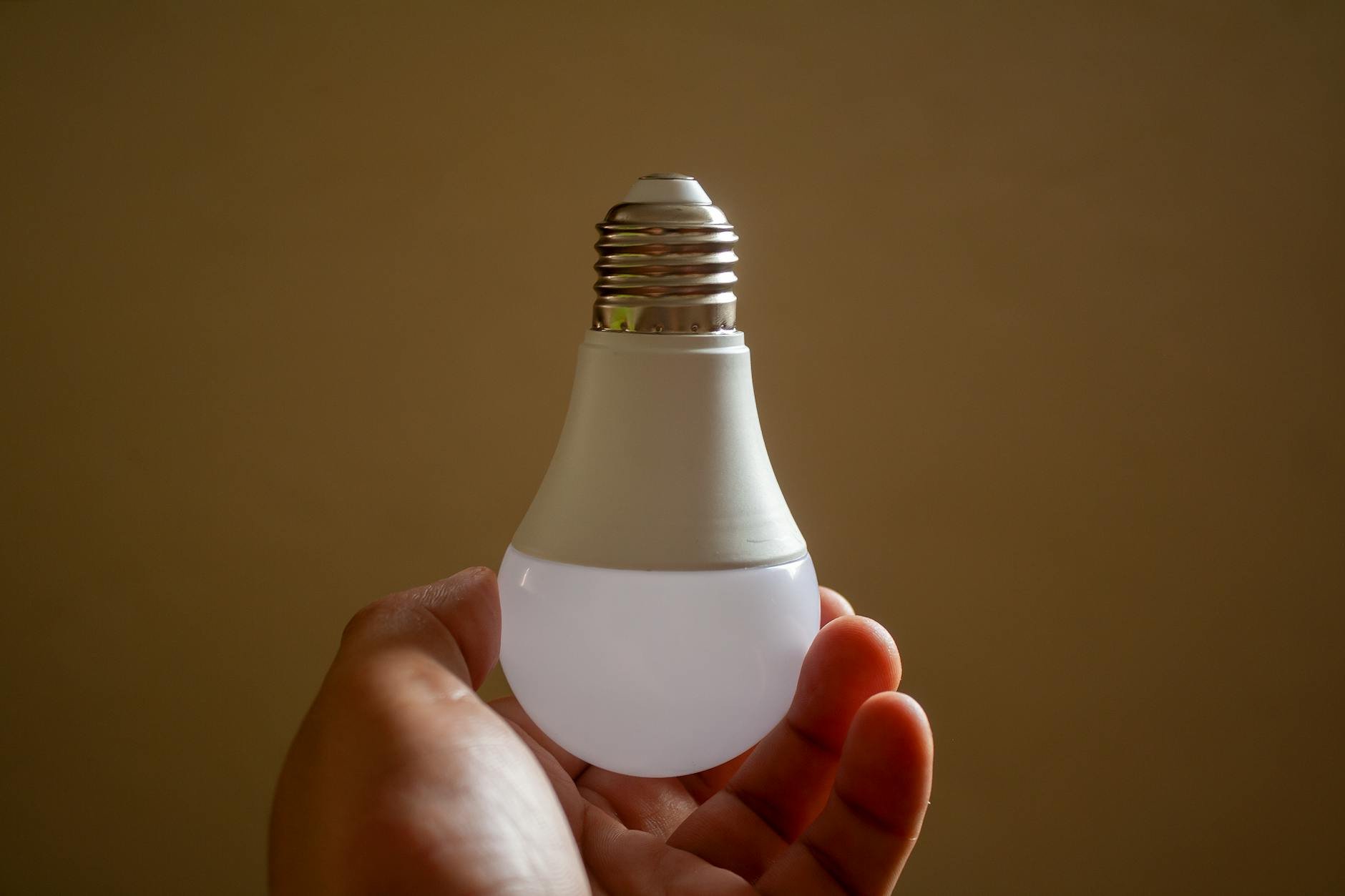
If any household in Ghana is still using incandescent bulbs (the old round yellowish bulbs) or CFL energy-saving bulbs, replacing them with LED equivalents delivers immediate electricity reduction. A 60W incandescent bulb replaced with an 8W LED delivers the same light output at 87% less energy. For a home with 10 bulbs used 6 hours per day, this change alone reduces lighting energy by GHS 30–60 per month at current ECG tariffs. LED bulbs cost GHS 10–25 each in Ghana and last 10–15 years with normal use.
Air Conditioner Management — The Biggest Opportunity
Air conditioning accounts for 50–70% of electricity consumption in homes that use it. Three changes reduce AC costs without sacrificing comfort:
Temperature setting: Each degree Celsius reduction in set temperature increases energy consumption by approximately 6%. Setting the AC to 24°C instead of 20°C reduces energy use by approximately 24% while remaining comfortable for most people.
Smart AC controller: A smart AC controller (GHS 200–400 from brands including Sensibo and Cielo Breez) adds scheduling to any air conditioner — automatically turning the AC off when you typically leave and on before you return. An AC running 4 hours daily rather than 8 hours cuts AC electricity cost in half.
Maintenance: A dirty AC filter increases energy consumption by 5–15% while reducing cooling effectiveness. Clean AC filters monthly in Ghana's dusty environment.
A ceiling fan uses approximately 60W. An air conditioner uses approximately 1,200–1,800W. Using a ceiling fan instead of air conditioning for 4 hours per day saves the electricity equivalent of running 20–30 LED bulbs. For nights when temperature allows fan use, this single substitution is the highest-impact change in most Ghanaian households.
Smart Plugs — Eliminating Phantom Load
Electronics in standby mode — televisions, sound systems, microwaves, desktop computers — consume electricity continuously. This "phantom load" or "standby power" accounts for 5–10% of total home electricity use for most households. Smart plugs (GHS 50–100 each) allow appliances to be completely powered off remotely or on a schedule, eliminating standby consumption. A smart power strip cutting power to your entertainment system overnight eliminates 4–8 hours of standby consumption daily.
Electric Water Heater Scheduling
Electric water heaters (geysers) maintain water temperature continuously — consuming electricity to offset heat loss even when no hot water is being used. A timer switch (GHS 50–100) set to heat water only during the hour before your typical shower time eliminates the continuous heating cycle. For a household with a 50-litre water heater used 2 hours per day instead of 24, electricity savings are GHS 50–120 per month depending on tariff rates and usage patterns.
The Cumulative Impact
LED lighting switch: GHS 30–60/month
AC temperature and scheduling optimisation: GHS 80–150/month
Smart plugs eliminating phantom load: GHS 20–40/month
Water heater scheduling: GHS 50–120/month
Total estimated reduction: GHS 180–370/month (36–74%)
The tools to achieve these savings cost GHS 300–800 for a complete implementation — a payback period of 1–3 months for most households. Unlike solar panels, which require significant capital and installation, these smart home energy measures are accessible to renters and homeowners alike, require no specialist installation, and deliver returns immediately.