I'll be straight with you: the first time I unfolded a Samsung Galaxy Z Fold, I thought it was the coolest thing I'd ever held. Then I used it for a week and started noticing the crease. Then I dropped it and spent three days anxious about the repair cost. Then I loved it again.
That push-pull is basically the foldable phone experience in a nutshell.
The category has been around since 2019, and we're now well into a second generation of genuinely polished hardware. So I think it's finally fair to ask the real question — are foldables actually useful, or are they still just a flex?
The Two Types of Foldable — And They're Very Different
Before anything else, you need to understand there are two distinct form factors here, and they suit completely different people.
Book-style foldables — like the Samsung Galaxy Z Fold 6 ($1,899) and the Google Pixel 9 Pro Fold ($1,799) — open up like a small tablet. You get a ~6.3-inch outer screen and a ~7.6-inch inner display. These are productivity machines. People use them to run two apps side by side, read documents, watch video, take notes with a stylus.
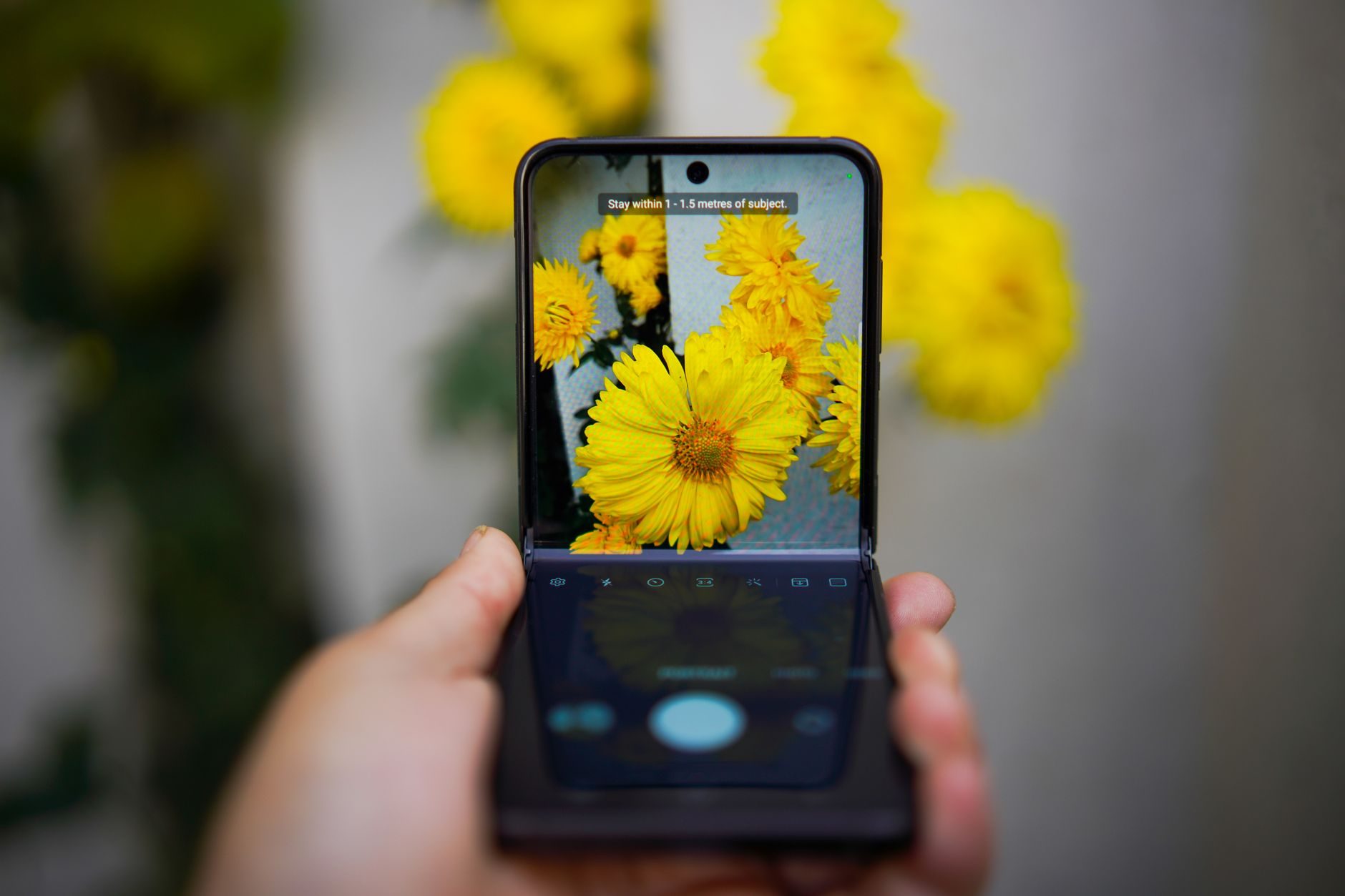
Flip-style foldables — like the Motorola Razr Plus 2024 ($999) and the Samsung Galaxy Z Flip 6 ($1,099) — fold in half vertically. They're basically a way to make a regular-sized phone more pocketable. The pitch here is style and portability, not extra screen real estate.
I've used both types. They're solving completely different problems, which means "are foldables good" is kind of a bad question. It depends which one and what you need it for.
Let's Talk Real-World Use — Because Specs Don't Tell the Full Story
The Galaxy Z Fold 6: I Actually Got Work Done
The Z Fold 6 runs on a Snapdragon 8 Gen 3 chip and comes with 12GB of RAM. It scored around 2.1 million on AnTuTu — that's in the same range as the Galaxy S24 Ultra. So performance isn't the issue.
What surprised me is how much I actually used the big screen. I'm a writer, and having a Google Doc open next to a browser tab genuinely saved me time. I spent way too long figuring out how to get the taskbar set up properly, but once I did, the multitasking felt natural. Not forced.
The outer screen is also perfectly usable on its own. You're not constantly forced to unfold just to answer a text.
Battery life on the Fold 6 is a 4,400mAh cell, which sounds reasonable but doesn't last as long as you'd hope. Running two apps at once on a 7.6-inch display burns through power faster than you'd expect. Expect to charge once mid-day if you're a heavy user.
The Pixel 9 Pro Fold: Google Got Serious
I want to mention this one specifically because Google's second foldable is a big deal. The Pixel 9 Pro Fold runs on the Google Tensor G4 chip, has a nearly crease-free inner display (noticeably better than the Fold 6 up close), and costs $1,799.
The software experience is excellent. Google's AI features feel more thoughtfully integrated here than on Samsung's One UI. And the camera system — 50MP main, 10.5MP ultrawide, 10.8MP telephoto — is genuinely great, even if I think Pixel cameras get overhyped in general.
My honest take: if you're in the Android ecosystem and considering a book-fold, the Pixel 9 Pro Fold is the one I'd actually recommend right now. Samsung has the brand recognition, but Google has the better overall package in 2024-2025.
The Real Problems Nobody Talks About Enough
The Crease Is Still There
Every foldable I've used has a crease where the display folds. Samsung has gotten better at minimizing it. Google's Pixel 9 Pro Fold has reduced it significantly. But it's still there, and depending on the lighting, it can be really obvious.
Some people genuinely don't care. Others can't unsee it once they notice. You need to handle one in a store before buying — don't let promo photos make this decision for you.
They're Fragile. Full Stop.
The Z Fold 6 has an IPX8 water resistance rating, which is progress. But the inner display uses a plastic OLED panel, not glass, because glass can't flex that way yet. That means it scratches more easily. It also means you can't use a traditional screen protector on the inner display.
"The hinge is rated for 200,000 folds on the Z Fold 6 — that's roughly 100 folds a day for five years. But that's a lab test. Real-world longevity with dust, lint, and daily drops is a different story."
Repair costs are also brutal. A Galaxy Z Fold 6 inner screen replacement through Samsung can run $479 or more without a protection plan. That's not a small number anywhere in the world.
The Price Is Still a Wall
Look, $1,099 for a Z Flip 6 is a lot. $1,799 for a Pixel Fold is a lot. And that's in USD — in markets like India, Brazil, or Nigeria, import duties and local pricing push these even higher.
For most people globally, a flagship like the iPhone 16 Pro at $999 or the Samsung Galaxy S25 Ultra at $1,299 gives you a better camera, better battery, and a more durable device for less money. The foldable premium is real, and right now you're partly paying for the novelty engineering, not just performance.
So Who Should Actually Buy One?
The Book Fold Makes Sense If...
- You regularly work on your phone — emails, documents, research, content creation
- You travel a lot and want something between a phone and a tablet without carrying both
- You watch a lot of video and hate squinting at a 6.7-inch screen
- You're willing to pay the premium and have access to good repair options
I'd genuinely recommend the Pixel 9 Pro Fold or Z Fold 6 to someone who spends 4+ hours a day on their phone for actual work. The productivity gains are real when you lean into the format.
The Flip Style Makes Sense If...
- You want a conversation-starting phone that fits in a small pocket or bag
- You like the aesthetic — the Razr Plus 2024 genuinely looks beautiful
- You don't need extra screen space, just a more compact form factor
Honestly though? The flip phones are harder for me to justify purely on utility. They don't give you more screen when open — just the same size as any other flagship. You're paying a premium mostly for the form factor. If that matters to you, go for it. No judgment. But don't expect it to change how you use your phone.
What's Coming in 2025 and 2026
This is where it gets interesting. The foldable market is moving fast right now.
Motorola has reportedly been working on a tri-fold concept. Samsung is expected to release an even thinner Z Fold 7 in mid-2025 with a redesigned hinge and a meaningfully reduced crease. Huawei's Mate X5 — available in China — already ships with a crease that's substantially less visible than anything on the Western market.
And then there's the wildcard: Apple. There's been consistent reporting from reliable leakers like Ming-Chi Kuo that Apple is developing a foldable iPhone, possibly arriving in 2026. If Apple enters this category, it changes everything — not because Apple always does it better, but because Apple normalizes things. The moment there's a foldable iPhone, millions of people who'd never consider a Samsung will start paying attention.
The tech is also improving fast. Ultra-thin glass that can flex — something Corning has been working on — could replace plastic inner displays within the next two to three product cycles. That alone would fix one of the biggest weaknesses in the category.
My Honest Take After Using These Things
Foldables aren't a gimmick. They're a genuinely different way to use a phone, and for certain people, they're already the best device available. The Pixel 9 Pro Fold in particular feels like a mature product, not an experiment.
But they're not for everyone yet. The price is high. The durability is still a valid concern. And if you're not someone who'd actually use a tablet-sized display regularly, you'd be overpaying for something you'd mostly ignore.
Here's how I'd frame it: right now, foldables are where electric cars were around 2017. The technology works. The early adopters love them. But the infrastructure, the price, and the refinement aren't quite there for mass adoption yet. Give it two or three more product generations and they'll be a serious mainstream option.
If you've got the budget and you work heavily on your phone, the Pixel 9 Pro Fold or Galaxy Z Fold 6 are worth serious consideration. If you're on the fence and mostly use your phone for social media and calls, save $700 and get a regular flagship. You won't be missing out.
The future of foldables is real. We're just not fully there yet.