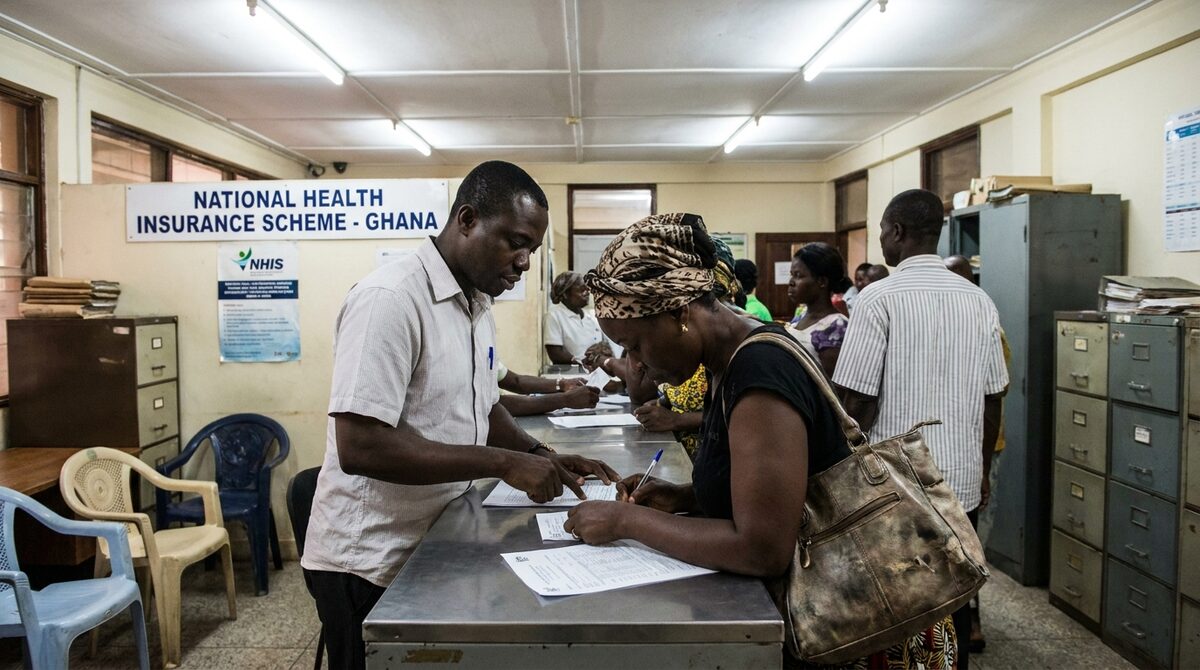
Millions of Ghanaians are enrolled in government programs they never applied for — and millions more are eligible for benefits they have never claimed. Studies by the Ghana Statistical Service indicate that awareness gaps, not eligibility gaps, are the primary reason social intervention programs consistently fall short of their enrollment targets.
The programs discussed below are not theoretical pilot projects. They are active, funded, and accepting applicants or registrants right now. The barrier for most people is simply not knowing they exist.
The National Health Insurance Scheme: Free Coverage Most People Underuse
The National Health Insurance Scheme (NHIS) is Ghana's flagship social health protection program, established under Act 650 and later amended by Act 852. What many Ghanaians do not realize is that certain categories of people receive completely free NHIS membership without paying any premium at all.
These exempted groups include children under 18 years old, pregnant women, persons aged 70 and above, persons with disabilities registered under the Department of Social Welfare, and beneficiaries of the Livelihood Empowerment Against Poverty (LEAP) program. Informal sector workers can also register at heavily subsidized rates ranging from GH₵7.20 to GH₵48 per year depending on their income category.
What the NHIS Actually Covers
A widespread myth is that the NHIS only covers basic consultations. In reality, the scheme covers over 95% of disease conditions Ghanaians commonly suffer from, including outpatient and inpatient care, surgical procedures, oral health, eye care for children, and emergency care.
Maternal health services are fully covered, including antenatal care, delivery, and postnatal care — at no cost to the patient. Many women in rural areas give birth without claiming these benefits simply because they were never registered.
How to register: Visit any District NHIS office with a Ghana Card or birth certificate. Pregnant women can register at any NHIS-accredited health facility during antenatal visits. The process takes less than 30 minutes.
LEAP: Cash Transfers for Extremely Poor Households
The Livelihood Empowerment Against Poverty (LEAP) program, administered by the Department of Social Welfare under the Ministry of Gender, Children and Social Protection, provides direct cash transfers to extremely poor households across Ghana. The program has been operational since 2008 and receives funding from the Ghana government alongside World Bank and DFID support.
What surprises many people is the breadth of households that qualify. Eligible households include those with orphans or vulnerable children, elderly persons aged 65 and above with no productive family support, persons with severe disabilities who cannot engage in productive work, and extremely poor households identified through community-based targeting processes.
The Transfer Amounts and Additional Benefits
LEAP payments in 2025 ranged from approximately GH₵64 to GH₵106 per month per household, paid bimonthly. While these amounts may appear modest, LEAP beneficiaries also receive automatic free NHIS registration, meaning the total value of benefits exceeds the cash transfer alone.
"LEAP has contributed to measurable reductions in child labor and school dropout rates in beneficiary communities, according to independent evaluations commissioned by the Ministry of Gender, Children and Social Protection."
How to apply: Contact the nearest Department of Social Welfare office or the Community Development Officer in the district. Applications go through a community targeting process — neighbors and community leaders participate in identifying eligible households, which means word-of-mouth awareness is essential.
The Ghana School Feeding Programme: Beyond School Lunch
Most Ghanaians know the Ghana School Feeding Programme (GSFP) exists, but few know how to advocate for it in their community or what it actually requires to get a school enrolled. The program provides one hot nutritious meal per school day to pupils in public primary schools and kindergartens across all 16 regions.
The myth is that only certain districts are eligible. The reality is that any public primary school can be enrolled. The challenge is that communities must actively engage their District Assembly representatives and the Ghana School Feeding Programme Secretariat to have their school placed on the program roster.
How Communities Can Get Their Schools Enrolled
The enrollment process begins at the district level. School Management Committees and Parent Teacher Associations can formally petition the District Director of Education, who then coordinates with the GSFP District Coordinator. Schools in food-insecure areas and those with lower enrollment rates receive priority consideration.
In 2026, the program targets coverage of over 3.8 million pupils across Ghana. Communities that are not yet covered often simply lack an advocate who understands the enrollment process.
TVET Voucher and Scholarship Programs: Free Skills Training
The Council for Technical and Vocational Education and Training (COTVET) administers several programs that provide free or heavily subsidized skills training to Ghanaians — and enrollment awareness remains critically low. The Skills Development Fund and related voucher schemes fund training in areas including auto mechanics, welding, garment construction, construction trades, catering, and ICT.
The Ghana TVET Voucher Program specifically targets youth between ages 15 and 35 who are out of school and unemployed. Selected beneficiaries receive vouchers that cover tuition at accredited TVET institutions, and some programs include a modest stipend for living expenses during training.
The Youth Employment Agency Programs
The Youth Employment Agency (YEA) operates multiple modules that place young Ghanaians in paid training and service roles across public institutions. The Community Protection Module, Youth in Agriculture, and the Health Extension Worker Module are among the active programs offering monthly stipends while participants build sector-specific skills.
Many young Ghanaians assume these programs are politically distributed. While community engagement matters, formal applications through YEA district offices follow documented criteria. Age (18–35), Ghanaian citizenship, and proof of unemployment are the core eligibility requirements for most modules.
How to apply: Visit any YEA district or regional office, or check the official YEA Ghana website during announced recruitment windows. Applications open multiple times per year depending on module funding cycles.
Planting for Food and Jobs: Agricultural Support for Smallholder Farmers
The Planting for Food and Jobs (PFJ) initiative, launched by the Ministry of Food and Agriculture, provides subsidized seeds, fertilizers, and agrochemicals to registered smallholder farmers across Ghana. In its current phase, the program also includes extension service support and links farmers to formal markets.
The common misconception is that PFJ benefits are reserved for large-scale or commercial farmers. In fact, the program was specifically designed for smallholder farmers cultivating as little as one acre. Crops covered include maize, rice, soybean, sorghum, vegetables, and several others depending on the regional agricultural calendar.
How Farmer Registration Works
Registration is conducted through District Directorates of Agriculture. Farmers must present a Ghana Card and basic information about their farm location and size. Registered farmers are added to the national farmer registry, which also qualifies them for other agricultural interventions including the Rearing for Food and Jobs livestock program.
"Over 1 million farmers have accessed input subsidies through the PFJ program, yet Ministry of Food and Agriculture data consistently shows that farmer registration rates in northern and rural regions remain below 40% of the estimated eligible farming population."
Women farmers are particularly encouraged to register independently rather than under a male household member's name, as the program includes gender-disaggregated targeting in several regions.
The National Entrepreneurship and Innovation Programme
The National Entrepreneurship and Innovation Programme (NEIP) provides business support — including grants, mentorship, incubation, and access to finance — to Ghanaian entrepreneurs between ages 18 and 40. What many do not know is that NEIP support is not limited to technology startups or university graduates.
NEIP programs cover enterprises in agriculture, manufacturing, trade, services, and creative industries. The program has an incubation tier that provides physical workspace and equipment access, and a separate funding tier that offers business grants of up to GH₵100,000 to qualifying enterprises through a competitive but open application process.
How to apply: Applications are submitted through the official NEIP Ghana portal during open call windows. Applicants need a business plan, proof of Ghanaian citizenship, and evidence of an existing business or a developed business concept. NEIP regional offices also conduct outreach workshops where prospective applicants receive application guidance at no cost.
Disability Support and Social Welfare Grants
The Department of Social Welfare administers several programs specifically for persons with disabilities that extend beyond LEAP enrollment. These include assistive device provision through partnerships with the Ghana Federation of Disability Organisations, support for vocational rehabilitation, and access to the District Assembly Common Fund disability set-aside.
By law, 3% of the District Assembly Common Fund is reserved for persons with disabilities in each district. These funds can be accessed for business support, education, assistive devices, and mobility aids through registered disability organizations at the district level. Very few individuals with disabilities are aware this mechanism exists or how to access it.
How to access: Register with the Department of Social Welfare at the district level and connect with the District Disability Working Group or registered disability-focused NGOs in the area. The process begins with a disability assessment and registration under the Social Welfare disability registry.
Practical Steps Every Ghanaian Should Take in 2026
The pattern across all of these programs is consistent: eligibility is broad, awareness is narrow, and the enrollment process requires physical engagement with district-level government offices. Below is a structured starting point for anyone seeking to access these programs.
- Register for a Ghana Card — nearly every program above requires it as a foundational identification document. The National Identification Authority has expanded registration points to all district capitals.
- Visit the District Social Welfare office to assess eligibility for LEAP, disability grants, and child welfare programs in one appointment.
- Contact the District NHIS office to confirm whether household members qualify for premium-free registration under any of the exemption categories.
- Speak with the District Director of Agriculture if farming any land — even a small plot — to register under PFJ and access the national farmer registry.
- Check NEIP and YEA websites for open application cycles, which are announced periodically throughout the year.
- Engage local Assembly Members — elected District Assembly members are a legitimate and underused channel for learning about and accessing district-level social programs.
Government programs in Ghana are more accessible than public perception suggests. The distance between an eligible citizen and a meaningful benefit is, in most cases, one informed conversation and one district office visit.
In 2026, as Ghana continues to expand digital public service infrastructure through the Ghana.gov portal and mobile-based service access, the barriers to entry will continue to fall. The first step remains the same: knowing that these programs exist and that qualification is far more common than most people assume.