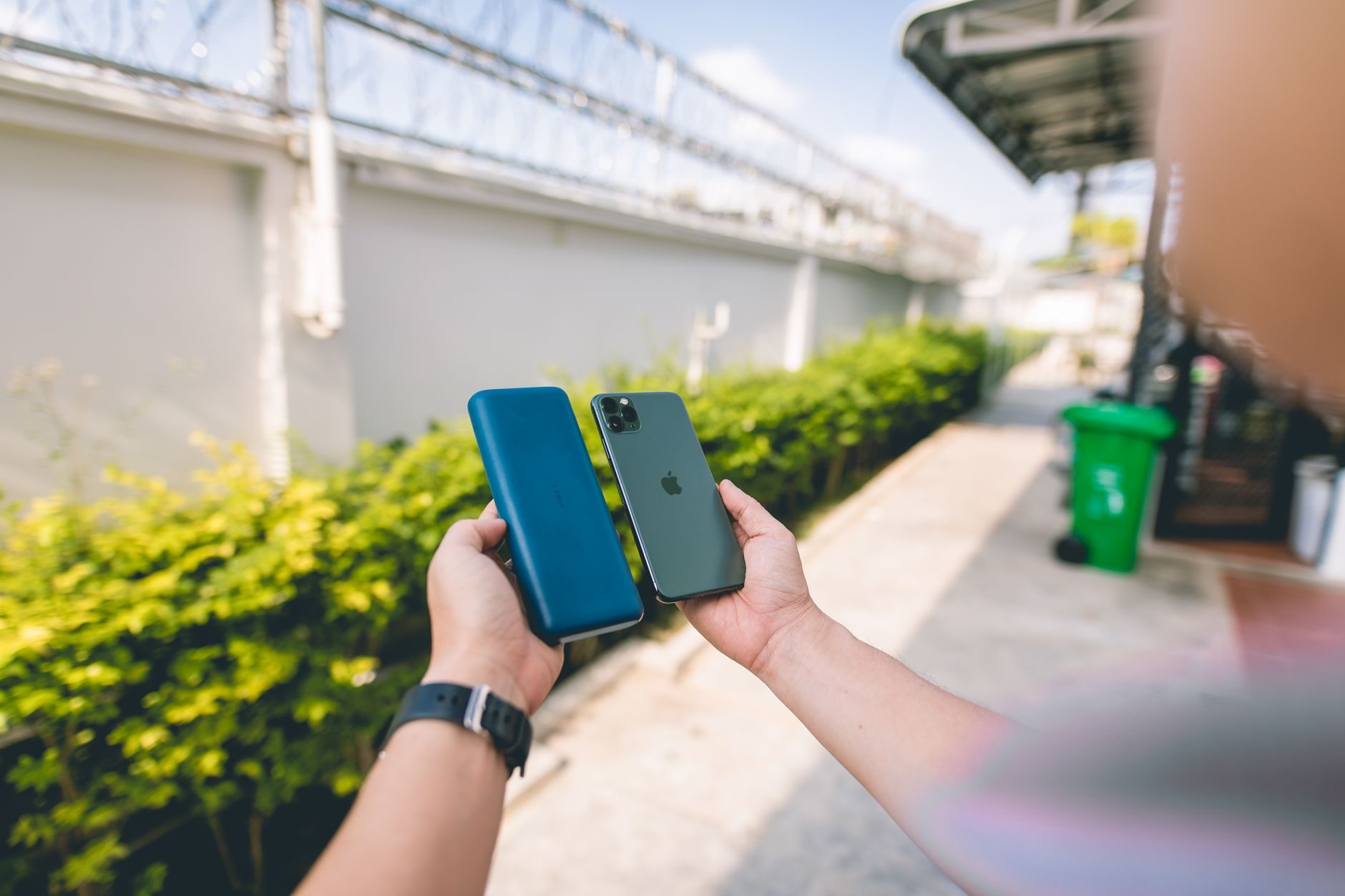
I bought a 26,800mAh Anker power bank last year. Paid good money for it. Took it on a two-week trip thinking I'd never have to worry about charging. Then I actually started tracking how many times it charged my phone before dying — and the numbers didn't add up the way I expected.
Spoiler: the bank never delivered 26,800mAh worth of charge to my devices. Not even close. And after spending way too long digging into why, I now have opinions about this that I can't stop sharing with people.
Here's the short version: every power bank lies to you, to varying degrees. The question is just how much.
Why the Numbers Are Always Wrong
Power bank capacity is measured in milliamp-hours (mAh) at the battery's internal voltage — usually 3.7V. But your phone charges at 5V (or higher with fast charging). To step up the voltage, the power bank runs its electricity through a circuit called a boost converter, and that process loses energy as heat.
This is physics. It's not a scam. It just means the mAh number on the box was never a real-world number — it's the raw cell capacity before any of that conversion happens.
The math: 20,000mAh × 3.7V ÷ 5V = 14,800mAh, and then you multiply by efficiency. At 80% efficiency that's about 11,840mAh. For a 20,000mAh bank. You're getting barely half what the label suggests in usable phone charge.
I didn't fully grasp this until I started using a USB power meter — specifically a Fnirsi FNB58 (around $18 on Amazon) — to measure actual watt-hours delivered during charging sessions. That little device changed how I buy power banks entirely.
What I Actually Tested
I ran tests on five power banks I either own or borrowed from friends. I charged each one fully, then discharged them into a consistent load while measuring actual watt-hours out. Here's what I found:
Anker 737 PowerCore 26,800mAh — $110
This is a big, heavy unit with 140W output — one of Anker's flagship portable chargers as of late 2024. Claimed capacity: 26,800mAh. In my tests using the FNB58, I got roughly 88Wh of actual output across three discharge cycles. That works out to about 17,600mAh at 5V — so roughly 66% efficiency. Not great for the price, honestly.
The 140W output is real and impressive for laptops. But if you're buying this purely for phone charging? You're paying a premium for capacity that won't fully show up.
Baseus Blade 20,000mAh — $65
This one surprised me. Slim, almost credit-card-thickness (12mm), supports 100W USB-C output. I measured around 71Wh out, which is about 14,200mAh equivalent — around 71% efficiency. Basically average, but the form factor makes it feel worth it. I genuinely like carrying this one.
Xiaomi 33W Power Bank 10,000mAh — $25
This is the one I recommend to most people in countries where budget really matters. Real-world output came in at roughly 33Wh, equivalent to about 6,600mAh at 5V. That's 66% efficiency — similar to the Anker, weirdly — but the price is proportionally honest. Two full charges for most mid-range phones. It does what it says it'll do in terms of practical use.
Cygnett ChargeUp Pro 20,000mAh — $50
This brand is popular in Australia and Southeast Asia. I was skeptical. Output came in at about 68Wh — around 13,600mAh equivalent, or 68% efficiency. Mid-range performance for a mid-range price. Nothing special, nothing broken.
A No-Name 30,000mAh Amazon Unit — $22
You know the type. Random brand, suspiciously cheap, sold by a seller with 47 reviews and a name like "TOPCHARGE PRO." I measured 52Wh out. That's roughly 10,400mAh — only 35% efficiency from a supposedly 30,000mAh battery. The claimed capacity was almost certainly fake from the start. The cells inside probably aren't 30,000mAh at the internal voltage either.
"The no-name 30,000mAh bank delivered less usable charge than the Xiaomi 10,000mAh unit. That's not a rounding error — that's fraud."
The Efficiency Gap by Brand Tier
From everything I've tested and read — including ChargerLAB's teardown series and Wirecutter's power bank testing methodology (they measure watt-hours out vs. claimed capacity) — you can broadly expect:
- Premium brands (Anker, Baseus, Ugreen, RavPower): 65–80% real-world efficiency
- Mid-tier brands (Xiaomi, Veger, Cygnett): 60–72% efficiency
- No-name / ultra-cheap units: 35–60%, and the stated capacity is often inflated too
Wirecutter tested the Anker 521 PowerCore 22,500mAh and found it delivered about 15,500mAh in real use — 69% efficiency. That's consistent with what I'm seeing across the board.
Higher efficiency doesn't always mean better product. Sometimes it just means better power circuitry inside. You can have a well-built 70%-efficient bank that's safer and longer-lasting than a poorly-built 80%-efficient one with cheap cells.
Fast Charging Makes the Efficiency Gap Worse
Here's something I didn't expect when I started testing: fast charging actually reduces efficiency. When you're pushing 45W or 65W through a power bank, more heat is generated, and more energy is lost to that heat.
I tested this directly. Charging my Samsung Galaxy S24+ at 25W from the Baseus Blade gave me roughly 2.2 full charges from the 20,000mAh bank. Throttling it back to a slower 10W charge? I got almost 2.6 full charges from the same bank. Slower charging is legitimately more efficient.
This doesn't mean you should avoid fast charging — sometimes you need speed more than you need efficiency. But it's worth knowing that your power bank's real-world performance drops when you're using its fastest speeds.
How to Actually Compare Power Banks Before You Buy
Stop looking at mAh. Start looking at watt-hours (Wh). Some brands — especially ones targeting the laptop charging market — list Wh on the box now, and that number is a far more honest representation of what you're getting.
The Ugreen 145W Power Bank 25,000mAh ($129) lists its capacity as 90Wh on the packaging. That's the number I'd use to compare it against anything else. At typical efficiency, 90Wh should give you around 16,000–18,000mAh equivalent at 5V.
If a brand only gives you mAh and not Wh, you can estimate real capacity yourself:
- Take the mAh number and multiply by 3.7 (internal voltage)
- Divide by 1000 to get Wh
- Multiply by 0.7 for a conservative real-world estimate
So a 20,000mAh bank: 20,000 × 3.7 ÷ 1000 × 0.7 = 51.8Wh of actual usable energy. That's roughly 3–4 full charges for a phone with a 4,500mAh battery, accounting for its own charging inefficiency.
Other Things Worth Checking
- Self-discharge rate: Cheap power banks lose charge just sitting in your bag. I've had no-name units lose 15–20% charge in a month of storage. Good ones (Anker, Baseus) hold 90%+ over 3 months.
- Pass-through charging: Can the bank charge your device while it's also plugged into a wall? Some cheaper units don't support this or do it really inefficiently.
- Cell quality: Look for banks that mention Sony, LG, or Samsung cells in their marketing. It's not a guarantee, but it's better than silence on the subject.
- Airline limits: Most airlines cap carry-on power banks at 100Wh (some allow up to 160Wh with approval). Anything listed as over 27,000mAh is likely over 100Wh — check before you travel.
What I'd Actually Buy Right Now in 2026
If you want the best balance of honest capacity and price, here's where I'd put my money:
Best overall: Anker Prime 27,650mAh (~$130) — it actually lists Wh on the box (99.54Wh), charges at 250W output total, and has a companion app that shows real-time wattage. Anker's testing tends to be more transparent than most brands.
Best mid-range: Baseus Blade 2 20,000mAh (~$70) — still slim, 100W output, and Baseus has been consistently honest with their Wh ratings. The form factor is genuinely useful.
Best budget for phone-only charging: Xiaomi 10000mAh PB100DZM (~$20–25 depending on region) — small, light, and you know roughly what you're getting. No laptop charging, no fancy features. Just reliable.
Avoid: Anything on Amazon or Shopee claiming more than 25,000mAh for under $25 with zero brand recognition. The capacity claims are almost certainly inflated and the cells are probably recycled or grade-C.
The Honest Bottom Line
The capacity gap between what's printed on a power bank and what you actually get isn't going away — it's built into how the technology works. Even the best power banks top out around 80–85% real-world efficiency. That's not a defect. That's thermodynamics.
What is a problem is brands exploiting that confusion to sell you 30,000mAh banks with 10,000mAh cells inside. Or listing inflated mAh numbers knowing most buyers won't question it.
My advice: buy from brands that publish Wh ratings, grab a cheap USB power meter if you really want to know what you're getting, and just mentally knock 30–40% off whatever mAh number is on the box. You'll set better expectations and make smarter buying decisions.
And maybe stop buying those suspiciously cheap Amazon units. I know they're tempting. I've bought them too. They're almost never worth it.