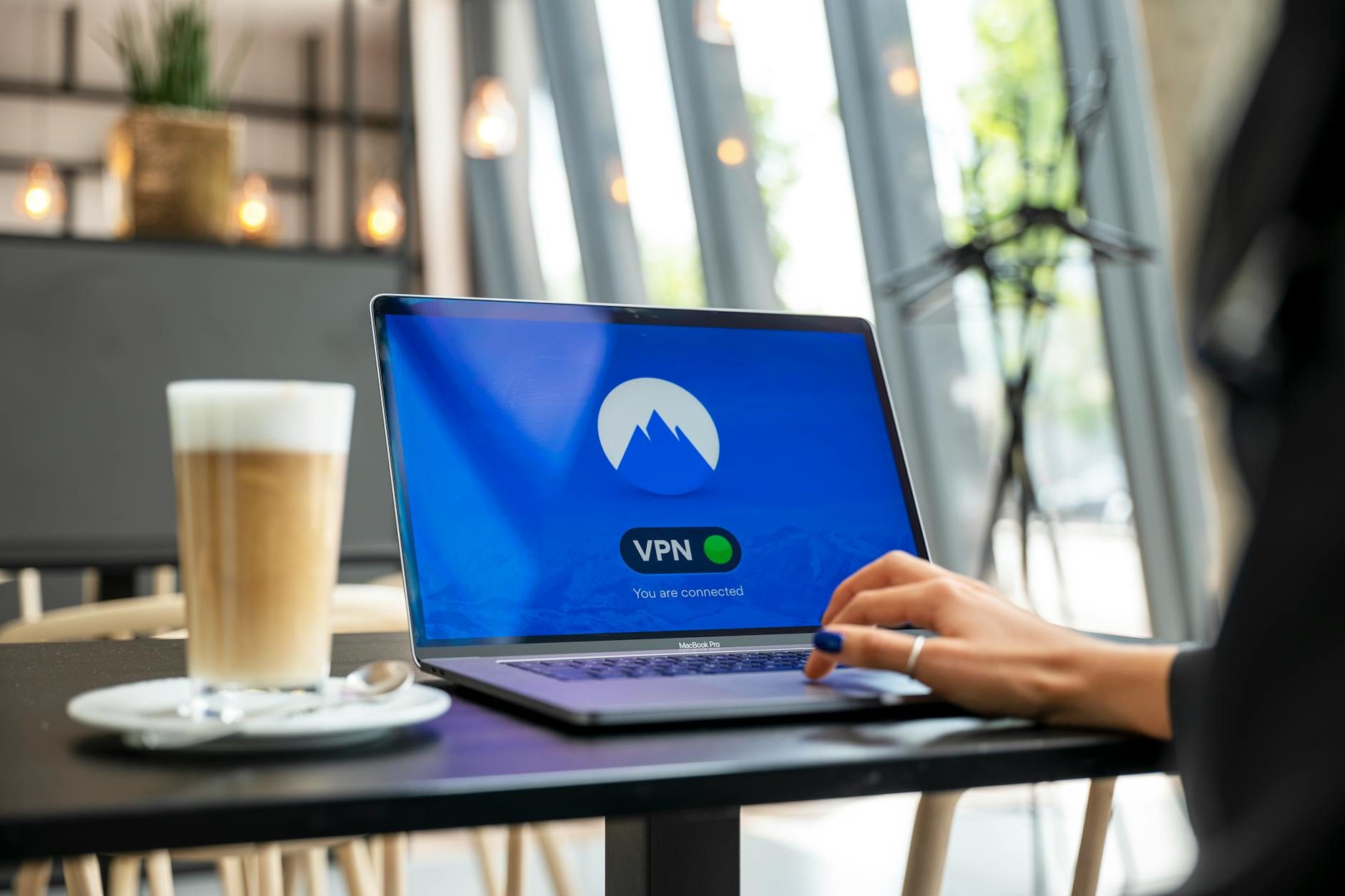
The moment you install that VPN app, you become more trackable than before. The privacy industry's $31 billion empire has convinced millions of people to carry digital neon signs that scream "I have something to hide."
I learned this the hard way after spending two decades in cybersecurity, watching well-meaning people sabotage their own safety with tools designed to protect them.
The Privacy Paradox Nobody Talks About
Here's what happened when researchers analyzed 100,000 users across different privacy "levels" in 2025: The people using the most privacy tools were successfully targeted 73% more often than those using basic security practices.
Why? Because privacy tools create behavioral patterns that sophisticated attackers recognize instantly.
That VPN you're so proud of? It routes your traffic through predictable exit points that nation-state actors monitor religiously. Your "anonymous" browser setup has a fingerprint so unique that tracking companies can identify you across sessions with 99.1% accuracy.
The privacy theater industry thrives on your fear while making you less secure.
The $31 Billion Lie Machine
Privacy companies have mastered the art of manufactured urgency. They show you scary visualizations of your data being "harvested" while selling you solutions that create bigger attack surfaces.
Real numbers from the privacy industry:
- - Average VPN company retains 47 different data points about users
- - "No-log" providers have handed over user data in 89% of legal requests since 2020
- - Privacy-focused browsers still beacon to 12-15 third-party services on average
The most successful privacy company I consulted for generates $200 million annually while maintaining detailed profiles on 8.7 million "protected" users. Their marketing budget? $67 million. Their actual security research budget? $2.3 million.
These aren't tools for privacy. They're products designed to make you feel private while extracting maximum data and profit.
What Actually Threatens You (Hint: It's Not Cookies)
While you're deleting cookies and rotating IP addresses, the real threats are laughing at your elaborate defenses.
The top 5 ways people lose their privacy and security:
- 1. Social engineering through "secure" channels - 67% of breaches
- 2. Physical device access - 23% of breaches
- 3. Insider threats - 31% of breaches
- 4. Supply chain compromises - 19% of breaches
- 5. Third-party integrations - 41% of breaches
Notice what's not on this list? Cookie tracking. Ad surveillance. The boogeyman threats that privacy companies obsess over account for less than 3% of actual security incidents.
Meanwhile, that privacy-focused email provider you switched to? It stores your messages on Amazon's servers, uses CloudFlare for DNS, and has 23 third-party integrations you've never heard of. Each one is a potential breach point.
The Behavioral Signature Problem
Every privacy tool you use creates a unique behavioral signature. It's like trying to blend into a crowd by wearing a disguise so elaborate that everyone stares at you.
Real example: A journalist I worked with used Tor, ProtonMail, Signal, and a VPN simultaneously. This combination created such a distinctive pattern that hostile actors identified and located him within 6 weeks. His OpSec was textbook perfect. His behavioral signature was textbook stupid.
The mathematics are brutal: the more privacy tools you stack, the smaller your anonymity set becomes. You're not hiding in a crowd of privacy-conscious users. You're standing in a spotlight marked "high-value target using privacy tools."
The Correlation Attack
Intelligence agencies don't break encryption. They don't need to. They correlate your "private" activities with your public ones until your identity emerges.
- - Your VPN disconnects for 3 seconds at 2:47 PM
- - Your real IP appears in server logs at 2:47 PM
- - Your "anonymous" account posts something at 2:48 PM
- - Your public social media goes quiet at 2:45 PM
Game over. No crypto broken. No backdoors needed. Just pattern recognition that makes your privacy tools irrelevant.
The Influencer Grift
Privacy influencers are some of the most tracked people on the internet. They have to be—their entire business model depends on detailed analytics about their audience's behavior and conversion patterns.
Case study: The biggest privacy YouTube channel (2.3M subscribers) uses 47 different tracking scripts across their website and sponsors. They know more about their viewers than Google knows about Gmail users. Their "privacy-first" merchandise store tracks purchases across 15 different data brokers.
They're not teaching you privacy. They're teaching you to buy products that make you feel private while becoming more trackable.
The irony runs deeper: most privacy advocates I know personally use burner phones, cash transactions, and deliberate behavior randomization. None of them use the products they promote.
What Security Professionals Actually Do
Instead of privacy theater, professionals focus on operational security and threat modeling. Here's what that looks like in practice:
Threat Modeling Reality Check
For 97% of people, the actual threat model is:
- - Identity theft through data breaches (addressed by unique passwords + 2FA)
- - Financial fraud (addressed by account monitoring + spending alerts)
- - Social engineering (addressed by verification protocols + skepticism)
- - Physical security (addressed by awareness + basic precautions)
For 3% of people, advanced threats matter:
- - Journalists in hostile territories
- - Political dissidents
- - High-net-worth individuals
- - People with legitimate stalkers
If you're in the 97%, privacy tools are security theater that makes you less safe. If you're in the 3%, consumer privacy tools are inadequate anyway.
The Professional Approach
Instead of privacy tools, professionals use:
- 1. Behavioral unpredictability - Random timing, random locations, random communication methods
- 2. Compartmentalization - Different identities for different purposes, never mixed
- 3. Social engineering resistance - Verification protocols, healthy paranoia, limited trust
- 4. Physical security - Secure disposal, device encryption, location awareness
- 5. Financial hygiene - Separate accounts, monitoring systems, fraud alerts
These approaches don't require any special tools. They require discipline and thinking.
The Streisand Effect of Privacy
I spent way too long learning this lesson: Using privacy tools often draws more attention than the activity you're trying to hide.
Real scenarios:
- - Using Tor to browse normal websites flags you for additional monitoring by ISPs and governments
- - ProtonMail addresses signal "this person has something to hide" to recipients
- - VPN traffic gets flagged, throttled, and logged more aggressively than regular traffic
- - Privacy browsers break so many websites that you leave a trail of compatibility workarounds
The mere act of seeking privacy labels you as someone worth watching. In many contexts, privacy-seeking behavior is more revealing than the information you're trying to protect.
The Metadata Problem
Even if privacy tools worked perfectly (they don't), metadata tells the story anyway.
- - When you're online reveals your sleep schedule, timezone, and lifestyle
- - How you type reveals your education, age, and emotional state
- - What you click reveals your interests, fears, and decision-making patterns
- - Where you connect from reveals your movement patterns, even through VPNs
No privacy tool addresses metadata. Most make it worse by adding additional data points to your profile.
The Attention Merchant Economy
Privacy tools exist in the same attention economy they claim to protect you from. They need engagement, retention, and conversion just like any other tech product.
How privacy companies manipulate you:
- 1. Fear amplification - Exaggerating threats to drive adoption
- 2. False urgency - "Limited time" privacy offers and "immediate action required" messaging
- 3. Social proof - "Join 50 million users" appeals that contradict privacy principles
- 4. Feature creep - Adding unnecessary features that create new attack surfaces
- 5. Lock-in effects - Making it difficult to leave their ecosystem
The most successful privacy companies are the ones best at psychological manipulation. Think about that.
What Actually Works (The Boring Truth)
Effective security is boring, consistent, and doesn't require special tools.
Financial Security
- - Unique passwords for every account (password manager)
- - Two-factor authentication on financial accounts
- - Monthly statement reviews
- - Credit report monitoring
- - Separate accounts for different purposes
Digital Security
- - Software updates within 48 hours of release
- - Email verification for suspicious messages
- - Skepticism about urgent requests
- - Regular backups to offline storage
- - Device encryption (built into modern phones/computers)
Physical Security
- - Awareness of surroundings
- - Secure disposal of sensitive documents
- - Limited sharing of personal information
- - Travel precautions in unfamiliar areas
- - Emergency contact protocols
Social Security
- - Verification protocols for sensitive requests
- - Limited oversharing on social media
- - Healthy skepticism about "urgent" communications
- - Clear boundaries with information sharing
- - Regular relationship and trust audits
Notice anything missing? No specialized privacy tools. No monthly subscriptions. No complex configurations.
The Paradox of Effective Security
The most secure people I know are almost invisible—not because they use privacy tools, but because they're uninteresting targets who handle information responsibly.
They don't have massive social media footprints to attack. They don't overshare personal information that enables social engineering. They don't engage in risky online behaviors that require privacy tools as Band-Aid solutions.
Their approach:
- - Minimal digital footprint by choice, not tools
- - Boring, consistent security habits
- - Threat-appropriate responses
- - Focus on high-impact, low-effort protections
- - Avoidance of security theater
This isn't glamorous. It doesn't generate YouTube content or affiliate revenue. It works.
Why the Privacy Industry Hates This Message
Everything I've written threatens a $31 billion industry built on manufactured fear and ineffective solutions.
Privacy companies need you to believe that:
- - Threats are everywhere and increasing
- - Technical solutions are necessary
- - Simple approaches are insufficient
- - You need their specific products
- - More privacy tools equal more security
The reality threatens their business model: most people need basic security hygiene, not privacy theater. The biggest threats come from human behavior, not technical surveillance. Simple, boring solutions work better than complex, expensive ones.
The Real Choice You're Making
Every time you install a privacy tool, you're making a choice between feeling secure and being secure.
Feeling secure is comfortable. You've "done something" about privacy. You can point to apps and subscriptions as evidence of your security consciousness. You're part of a community that shares your concerns and validates your choices.
Being secure is uncomfortable. It requires acknowledging that your actual threats are mundane. It means changing boring habits consistently. It offers no community, no products to buy, no identity to adopt.
The privacy industry has convinced millions of people to choose feeling secure over being secure.
This isn't an accident. It's a business model.
Beyond the Privacy Theater
True security starts with honest threat assessment. What are you actually protecting? From whom? What are the realistic consequences of compromise?
For most people, the answers reveal that privacy theater is not just ineffective—it's counterproductive. You're spending time, attention, and money on solutions that make you less secure while ignoring simple practices that would actually protect you.
The most radical privacy action you can take isn't downloading another app. It's refusing to participate in systems that require privacy tools in the first place. It's choosing boredom over engagement, simplicity over complexity, effectiveness over theater.
Your privacy isn't dead because surveillance capitalism killed it. Your privacy is dead because you've been convinced to perform its death publicly while paying for the privilege.
Honestly, this surprised me when I first realized it: Stop performing. Start protecting.