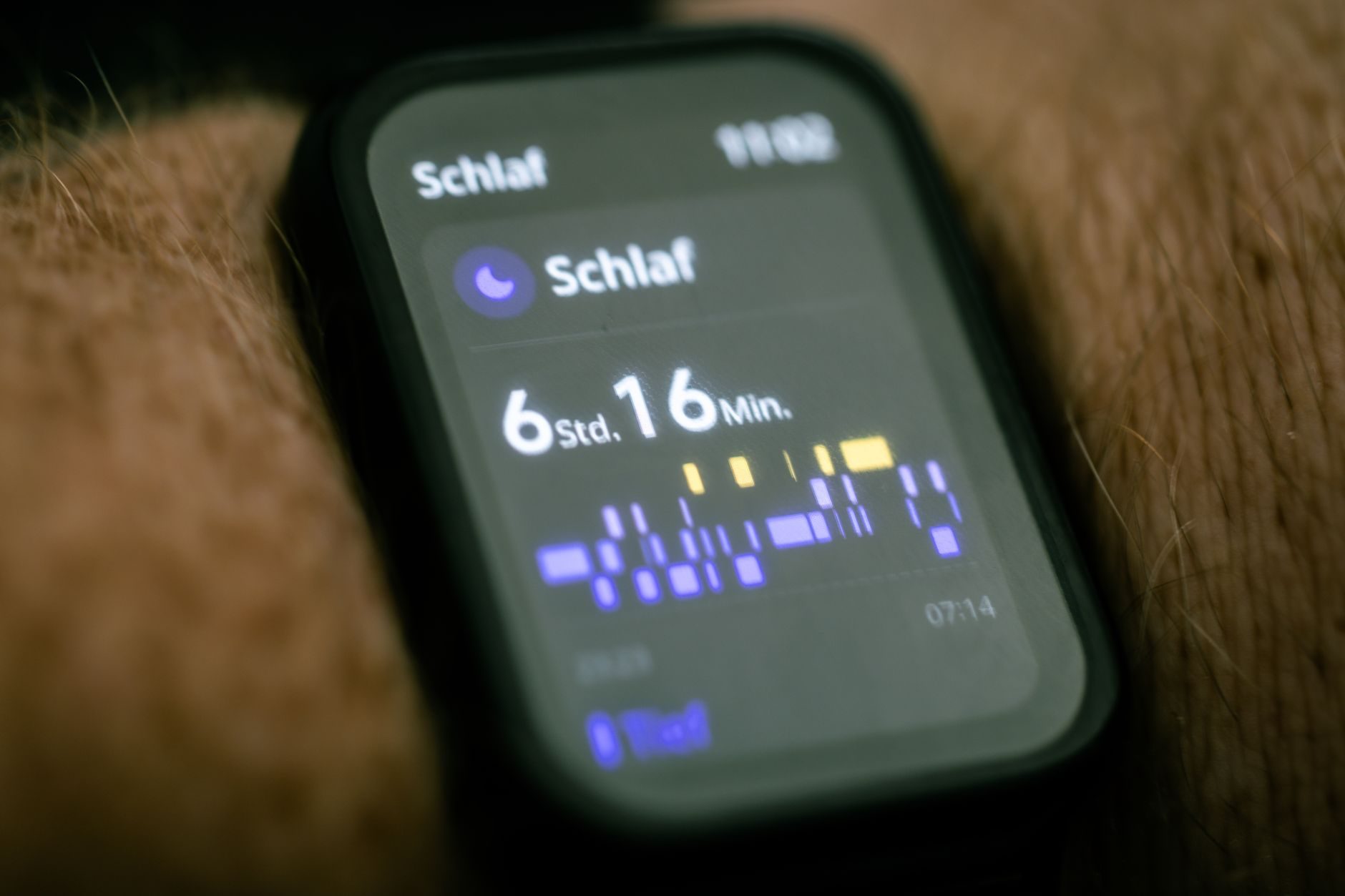
Four months ago I started taping a pulse oximeter to my finger every night alongside my other wearables. My partner called it "the sleep lab that ruined our bedroom aesthetic." But honestly? Worth it. Because I wanted to know if any of this data was actually real.
Sleep tracking is everywhere now. The Apple Watch Series 10 does it. The Oura Ring 4 ($349) does it. Whoop 5.0 ($239/year subscription) basically exists for it. Even $30 budget trackers on Amazon promise you deep sleep breakdowns. But here's the thing nobody tells you upfront: most of these devices are making educated guesses for a big chunk of what they report.
That's not necessarily a dealbreaker. But you need to know which guesses are good and which ones you should basically ignore.
How Sleep Trackers Actually Work
Real sleep tracking — the clinical kind — uses a polysomnography (PSG) test. Electrodes on your scalp, chest, and legs. It measures actual brain waves. That's the gold standard, and it costs hundreds of dollars per session in a hospital sleep lab.
Your wearable does none of that. What it actually does is measure movement (accelerometer data), heart rate, heart rate variability (HRV), and in some devices, blood oxygen saturation (SpO2) and skin temperature. Then it runs that data through an algorithm trained on PSG studies and makes a prediction about what sleep stage you were in.
That distinction matters a lot. Your watch isn't reading your brain. It's inferring from your body's behavior.
That's a wide range. And the accuracy depends heavily on which device you're using, how well it fits, and honestly, your individual physiology.
What's Actually Accurate
Total Sleep Duration
This one's solid. If your Oura Ring says you slept 6 hours and 42 minutes, that's probably pretty close to reality — within 15-20 minutes on most nights. A 2021 study in SLEEP (the journal, n=96 participants) validated the Oura Ring Gen 2 against PSG and found it had a mean absolute error of just 11.4 minutes for total sleep time.
Apple Watch has shown similar results in independent validation. Garmin's devices (I tested the Garmin Fenix 8 briefly) are also reasonably solid here. Total sleep time is the number I'd trust most.
Heart Rate and HRV During Sleep
Heart rate is reliably accurate on modern optical sensors, especially on still, sleeping bodies. This matters because resting heart rate and overnight HRV are genuinely useful health signals — separate from any sleep stage interpretation.
HRV specifically is one I pay attention to. Low overnight HRV consistently tracks with my stress levels, alcohol consumption the night before, and illness onset. I've caught three colds "early" just by noticing HRV tank before I felt symptoms. That's real-world useful, not theoretical.
Sleep Timing and Consistency
Wearables are excellent at tracking when you went to sleep and when you woke up. Over time, that consistency data — your sleep regularity score — is actually one of the most valuable things you can track. A 2022 study in Scientific Reports (n=88,000 participants from the UK Biobank) found that irregular sleep timing was independently associated with higher all-cause mortality risk, even after controlling for total sleep duration.
Your tracker is good at catching this. Use it for that.
What's Basically Guesswork
Deep Sleep and REM Percentages
Okay, here's where I'm going to be blunt. The specific percentages your device shows for deep sleep and REM? Treat them as rough estimates, not facts.
I spent way too long stressing about my "deep sleep" numbers before I actually looked at the research. The same npj Digital Medicine meta-analysis I mentioned earlier found that consumer devices frequently underestimate deep sleep and show inconsistent REM identification — with some devices performing barely better than chance for REM staging.
The Whoop 5.0 and Oura Ring 4 are among the better performers in this category. But even they're not lab-grade. The problem is that different algorithms interpret the same physiological signals differently, which is why you can wear two devices to bed and get wildly different sleep stage reports.
I did this. Same night, Apple Watch said 1h 12min REM, Oura said 1h 48min. One of them is more right. Neither of them knows for certain.
"Consumer sleep trackers are useful behavioral tools, but patients and clinicians should be cautious about interpreting specific sleep stage data as diagnostic." — Dr. Rebecca Robbins, sleep researcher at Harvard Medical School, speaking at SLEEP 2023 annual meeting.
Sleep Scores
Every platform has a proprietary score. Oura gives you a "Sleep Score" out of 100. Whoop gives you a "Recovery Score." Apple has a "Vitals" summary. These are useful as general trend indicators, but the actual number is a black box. You don't really know what's being weighted, and the algorithms change with firmware updates — sometimes your "average" shifts without your actual sleep changing at all.
Use scores for trends over weeks, not as daily report cards.
Nap Detection and Daytime Drowsiness
Most devices are genuinely bad at this. They miss naps under 20 minutes. They sometimes log you as asleep when you're lying still watching TV. Don't rely on this data.
Device Breakdown: What I Actually Recommend
Oura Ring 4 — Best Overall for Sleep
At $349 upfront plus $5.99/month for the subscription, it's not cheap. But the ring form factor means better sensor contact than a wrist device, and Oura's sleep algorithm has the most independent validation behind it. The temperature sensor is genuinely useful for detecting illness and tracking cycle patterns for people who menstruate.
I think it's the best dedicated sleep tracker you can buy right now. The companion app is clean and doesn't try to overwhelm you with data.
Apple Watch Series 10 — Best if You're Already in Apple's Ecosystem
The Series 10 starts at $399 and sleep tracking is essentially a bonus feature — the watch does a hundred other things. Sleep data is decent, HRV tracking is solid, and the AFib detection is FDA-cleared, which matters. If you're already wearing an Apple Watch for other reasons, you don't need a separate sleep tracker.
It's not better than Oura for sleep specifically. But it's good enough.
Whoop 5.0 — Best for Athletes and Recovery Focus
Whoop's subscription model ($239/year, no device cost) divides people. I get it. But the recovery and strain system is genuinely well-designed for people who train regularly. Whoop leans hard into HRV-based recovery data and it does that part really well. Sleep staging is solid but not Oura-level.
If you don't care about recovery metrics, there's probably a better option for your money.
Garmin Fenix 8 — Best for Outdoor Athletes Who Want Everything
Starting at $899, the Fenix 8 is a beast of a watch. Sleep tracking is competent — Garmin calls their system "Body Battery" and "Sleep Score" — but sleep isn't really why you'd buy this watch. GPS accuracy, battery life, and durability are the selling points. Sleep data here is good, not great.
How to Actually Use This Data Without Driving Yourself Crazy
Here's where I want to be real with you, because there's a trap a lot of people fall into with sleep trackers. It's called orthosomnia — and yes, that's an actual clinical term. It was coined in a 2017 paper in the Journal of Clinical Sleep Medicine describing patients who developed anxiety and insomnia specifically because they were obsessing over their sleep tracker data.
I've been there. One bad "deep sleep" reading and suddenly I'm spiraling at 2am wondering why my numbers look off. That's not healthy, and it's not the point.
Look at Weekly Trends, Not Nightly Numbers
Night-to-night variation is normal. One bad night doesn't mean your health is declining. What matters is the pattern over two to four weeks. Is your average sleep duration trending shorter? Is your HRV declining over time? Is your resting heart rate creeping up? Those patterns are signal. A single night's data is mostly noise.
Correlate Data With How You Feel
This is the move that actually made sleep tracking useful for me. I started keeping a simple note — just one line in my phone — every morning rating how I felt: energized, okay, or rough. After six weeks I started seeing clear patterns. For me, nights with HRV below 35ms consistently led to rough mornings. Alcohol within three hours of bed tanks my scores reliably. Late-night screen time? Surprisingly smaller effect than I expected.
Your patterns will be different from mine. That's the point — you're building a personal dataset, not following generic sleep advice.
Use It to Test Changes, Not to Achieve a Perfect Score
Want to know if that magnesium glycinate supplement actually does anything for you? Track your sleep for two weeks before and two weeks after. Want to know if your new 10pm wind-down routine helps? Same approach. The tracker is a feedback mechanism. Use it like one.
Chasing a perfect sleep score every single night is how you end up anxious and worse off than when you started.
Flag Potential Issues Without Self-Diagnosing
If your SpO2 is regularly dropping below 90% overnight, that's worth mentioning to a doctor — it could be a sign of sleep apnea. If your resting heart rate is consistently elevated by 10+ bpm over your baseline for more than a week, that's worth paying attention to. These are the cases where wearable data actually has clinical relevance, even if it isn't diagnostic.
The Apple Watch Series 10's sleep apnea detection feature (FDA-cleared in 2024) is legitimately useful here. It's not a diagnosis, but it can prompt people to seek evaluation who otherwise wouldn't have known there was a problem.
The Bottom Line on All of This
Sleep trackers are useful tools with real limitations. The best ones — Oura Ring 4, Apple Watch Series 10, Whoop 5.0 — give you genuinely actionable data on sleep duration, timing consistency, and recovery metrics. The sleep stage breakdowns are informative but imprecise, and you should treat them accordingly.
What I actually recommend: pick one device, give it six weeks of consistent wear, and focus on patterns rather than nightly scores. The data gets more useful the longer you wear it, because you start to understand your own baselines.
And if you're waking up exhausted despite your app saying you got eight hours of "quality sleep" — believe your body, not the algorithm. That's still the most accurate sensor you've got.