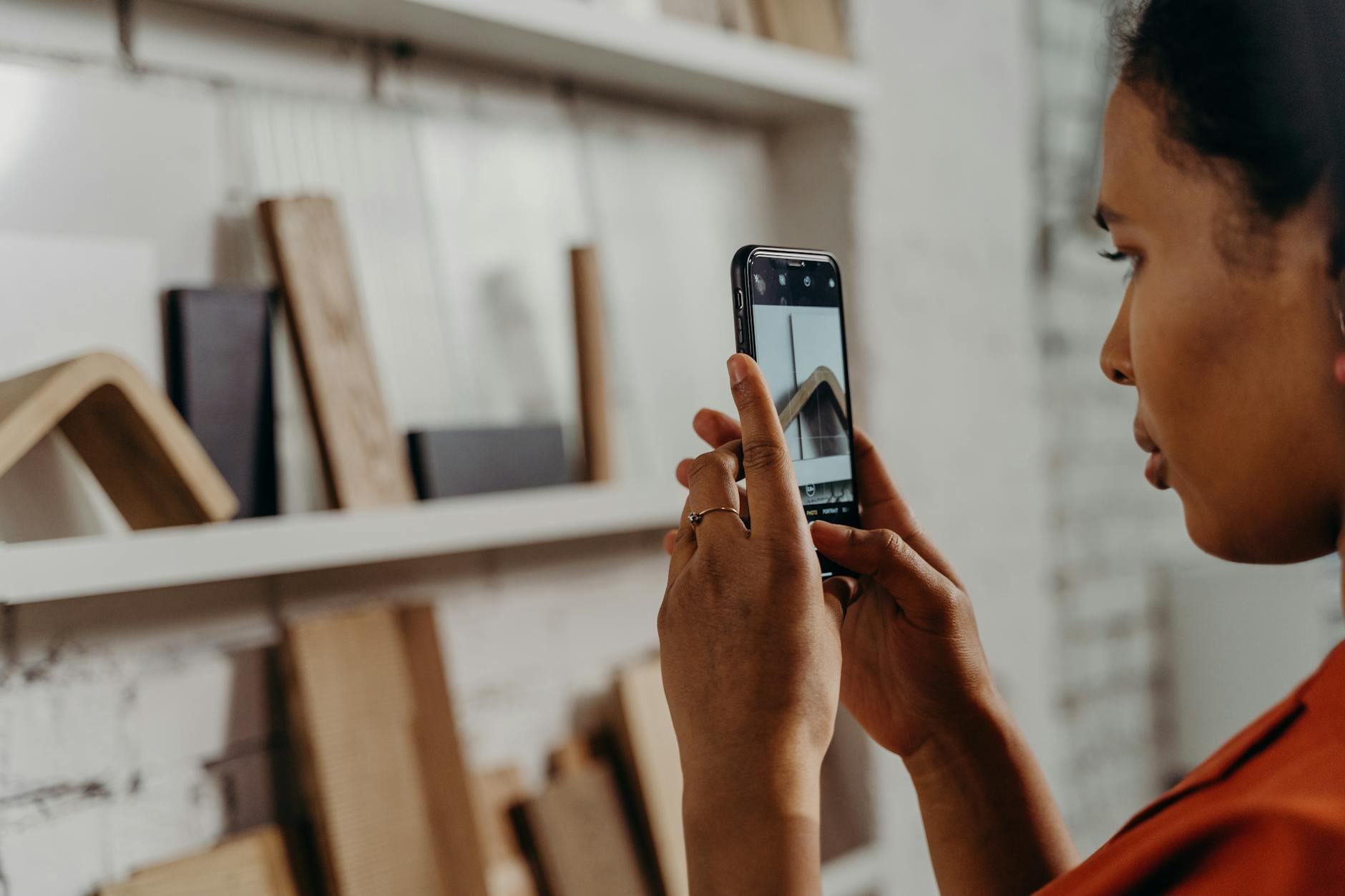
7 Smartphone Photo 'Rules' That Make Professional Photographers Cringe
That "always use the rule of thirds" advice you see everywhere? Professional photographers are quietly rolling their eyes.
I've been shooting for three decades now, and the last five years watching smartphone photography explode have been... interesting. There's something that bothers me about the "rules" taking over Instagram tutorials and YouTube channels. They're not just oversimplified—they're often completely backwards from what actually creates compelling images.
The Great Photography Rule Rebellion
Last month, I sat in on a workshop where Annie Leibovitz was reviewing smartphone photos. Her first comment? "Forget everything you think you know about phone camera rules."
She wasn't being dramatic. The photography principles that worked for film cameras—and even early digital cameras—don't translate directly to the computational photography powering your iPhone 15 Pro or Galaxy S24 Ultra.
Your smartphone isn't just a tiny camera. It's a supercomputer that happens to take photos, running algorithms that would have seemed like magic to Ansel Adams.
Why Traditional Rules Fall Apart
Smartphone cameras work fundamentally differently than traditional cameras. They capture multiple exposures in milliseconds, blend them using AI, and apply computational adjustments before you even see the result.
This means the "rules" written for manual cameras often work against your phone's strengths instead of using them.
Rule #1: "Always Use Portrait Mode for People"
Why Pros Hate It: Portrait mode is smartphone photography's most overused crutch.
I spend time in photography forums, and professionals constantly lament the "portrait mode plague." The artificial bokeh effect that seemed revolutionary in 2016 now screams "amateur" to trained eyes.
The Real Problem: Portrait mode algorithms struggle with complex backgrounds, hair details, and glasses. That dreamy background blur often comes with telltale artifacts—unnaturally smooth skin, missing hair strands, and backgrounds that look like they were smudged with vaseline.
Professional photographer David Burnett puts it bluntly: "Portrait mode is training people to think shallow depth of field equals good photography. It doesn't."
What Professionals Do Instead
They embrace the natural depth of field that smartphone cameras provide. That "everything in focus" look that amateurs try to hide? It's actually a superpower.
Try This: Take the same portrait shot with and without portrait mode. Notice how the non-portrait version captures environmental context, clothing details, and authentic moments that portrait mode erases.
Street photographer Vivian Maier would have loved smartphone cameras precisely because they keep everything sharp and detailed.
Rule #2: "The Rule of Thirds is Sacred"
Why Pros Hate It: It's become a creative straightjacket.
The rule of thirds—placing subjects along imaginary grid lines—is photography's most parroted advice. It's also the fastest way to make your photos look like everyone else's.
The Psychology Problem: Your brain craves novelty. When 2.3 billion photos are uploaded daily (Instagram's latest figures), rule-of-thirds compositions blend into visual wallpaper.
Magnum photographer Alex Webb breaks this rule constantly: "I'm interested in the spaces between the obvious subjects, the visual chaos that the rule of thirds completely ignores."
What Creates Visual Impact Instead
Dynamic Symmetry: Place subjects along diagonal lines that create natural eye movement.
Edge Placement: Put your main subject at the very edge of the frame. This creates tension and makes viewers work slightly harder—which paradoxically makes them more engaged.
Dead Center: Sometimes the most powerful placement is exactly what the rules say to avoid. Center your subject when you want to create impact through directness.
Try This: Take five shots of the same subject in different positions: rule of thirds, dead center, far left, far right, and along a diagonal. The rule of thirds shot will probably be the most forgettable.
Rule #3: "More Megapixels Mean Better Photos"
Why Pros Hate It: It misses the entire point of smartphone photography.
This misconception drives people to obsess over 108MP modes while ignoring fundamental image quality factors that actually matter.
The Technical Reality: Your iPhone 15 Pro's 48MP main camera produces better images in most conditions than Android phones advertising 200MP sensors.
Why? Pixel size, lens quality, and computational processing matter infinitely more than raw megapixel count.
The Megapixel Trap
Higher megapixel modes often mean:
- Slower processing
- Larger file sizes
- Reduced low-light performance
- No access to computational photography features
Professional photographer Peter McKinnon switched from carrying a DSLR to shooting primarily with his iPhone 14 Pro. His reason? "The computational photography produces more consistently usable images than my $3,000 camera."
Try This: Shoot the same scene in your phone's highest megapixel mode and standard mode. View them on your phone screen (where 99% of photos are consumed). You probably can't tell the difference.
Rule #4: "Never Use Digital Zoom"
Why Pros Hate It: This advice is five years out of date.
The "never use digital zoom" rule made sense when digital zoom meant cropping and enlarging pixels until your photo looked like digital abstract art.
Modern smartphone zoom is different. Your iPhone 15 Pro Max combines optical zoom with AI-powered digital enhancement that preserves detail better than many dedicated telephoto lenses.
The Zoom Revolution
Hybrid Zoom Technology: Current flagship phones use multiple lenses and computational processing to maintain image quality at 5x, 10x, even 30x zoom levels.
Real-World Test: Photography website DPReview compared iPhone 14 Pro zoom shots with images from a $1,200 telephoto lens. The iPhone won in sharpness and detail retention.
Wildlife photographer Joel Sartore regularly uses his Samsung S24 Ultra's 100x zoom for shots that would be impossible with traditional equipment.
Try This: Find a distant subject and zoom in gradually. Note where image quality actually degrades versus where you think it should based on old digital zoom fears.
Rule #5: "Shoot Everything in the Highest Quality Mode"
Why Pros Hate It: It ignores how photos are actually used.
Every camera app defaults scream "SHOOT IN 4K! MAXIMUM QUALITY!" But professionals understand something counterintuitive: the highest quality mode is often the wrong choice.
The Workflow Reality: If you're sharing on Instagram (which compresses everything anyway), shooting in maximum quality just fills your storage and slows your workflow.
Magazine photographer Joey Lawrence shoots 90% of his smartphone photos in standard quality: "I can take more shots, edit faster, and the final output is identical for my actual use cases."
Quality vs. Practicality
Standard Mode Advantages:
- Faster capture and processing
- Better low-light performance
- Full access to computational features
- Reasonable file sizes
When to Use Maximum Quality:
- Photos you plan to print large
- Images that need heavy cropping
- Professional work requiring archival quality
Try This: Shoot a series in both modes, then share them normally. Time how much longer the high-quality versions take to process and upload.
Rule #6: "HDR Makes Photos Look Fake"
Why Pros Hate It: This rule ignores how smartphone HDR actually works.
The "HDR looks fake" complaint stems from early HDR implementations that created over-saturated, halo-filled nightmares. Modern smartphone HDR is completely different.
The Evolution: Your phone's HDR doesn't create the gaudy, over-processed look of 2010-era HDR software. Instead, it captures multiple exposures in milliseconds and blends them so seamlessly you often don't realize it's active.
Landscape photographer Marc Adamus, known for his detailed post-processing work, admits: "My iPhone's HDR produces results that would take me hours to recreate in Photoshop."
Honestly, this surprised me when I first started testing it seriously.
Smart HDR vs. Traditional HDR
Traditional HDR Problems:
- Obvious tone mapping
- Unnatural color saturation
- Visible halos around objects
- Flat, lifeless shadows
Modern Smartphone HDR:
- Invisible processing
- Natural color reproduction
- Preserved contrast
- Enhanced detail without artifacts
Try This: Compare the same challenging lighting scene (like a sunset) with HDR on and off. The HDR version likely looks more like what your eye actually saw.
Rule #7: "Manual Controls Make Better Photos"
Why Pros Hate It: It fights against your phone's biggest advantage.
Photography forums overflow with advice to download manual camera apps and adjust ISO, shutter speed, and aperture manually. This completely misses the point of smartphone photography.
The Computational Advantage: Your phone's automatic mode doesn't just set exposure—it analyzes the scene, identifies subjects, optimizes for skin tones, balances multiple light sources, and applies the best processing pipeline for that specific image.
National Geographic photographer Stephen Alvarez explains: "I spent 20 years learning to do manually what my phone now does automatically and better."
When Automation Beats Manual
Scene Recognition: Modern phones identify hundreds of scene types and adjust accordingly.
Multi-Frame Processing: Automatic mode captures and blends multiple frames for better dynamic range and noise reduction.
AI Optimization: Machine learning models trained on millions of images make better technical decisions than most photographers.
Try This: Shoot the same challenging scene in manual mode (trying to get perfect settings) and auto mode. Time how long each takes and compare the results.
The Psychology of Rule Breaking
Why do these outdated rules persist? Because they provide comfort in an overwhelming medium.
With infinite creative possibilities, rules feel like safety nets. But they're actually creative cages.
I spent way too long following these rules before I realized the most compelling smartphone photography happens when you understand your phone's unique capabilities and work with them, not against them.
What Professional Photographers Actually Focus On
Instead of obsessing over technical rules, pros concentrate on:
Moment Recognition: Being ready when something interesting happens
Light Quality: Understanding how different light affects mood
Composition Variety: Trying multiple angles and perspectives quickly
Storytelling: Ensuring each image communicates something specific
Technical Reliability: Trusting their phone's automation to handle the mechanics
The Real Smartphone Photography Rules
Rule #1: Understand your phone's computational capabilities
Rule #2: Shoot for your actual output, not theoretical perfection
Rule #3: Take advantage of what makes smartphone photography unique
Rule #4: Focus on moments and emotions over technical perfection
Rule #5: Experiment constantly—pixels are free
Beyond the Rules
The most successful smartphone photographers I know share one trait: they're constantly experimenting and questioning conventional wisdom.
They understand that smartphone photography isn't trying to replicate traditional photography—it's creating something entirely new.
Your phone camera represents the most significant advancement in photography since the transition from film to digital. Don't handicap it with rules designed for technologies that no longer exist.
The next time someone shares a smartphone photography "rule," ask yourself: does this use what makes my phone camera special, or does it try to make it behave like something it's not?
Your most interesting photos are waiting on the other side of those rules you've been following.