I talk to AI assistants way more than I talk to some of my actual friends. That's either a sign of the times or a personal problem — probably both. Either way, it means I've had a front-row seat to how these things have evolved, and honestly, the gap between the best and worst ones right now is bigger than I expected.
So I ran a proper comparison. Three weeks, four major voice assistants, tested across the same set of tasks: natural conversation, follow-up questions, accent handling, noisy environments, and real-world utility stuff like setting reminders, answering complex questions, and controlling smart home devices.
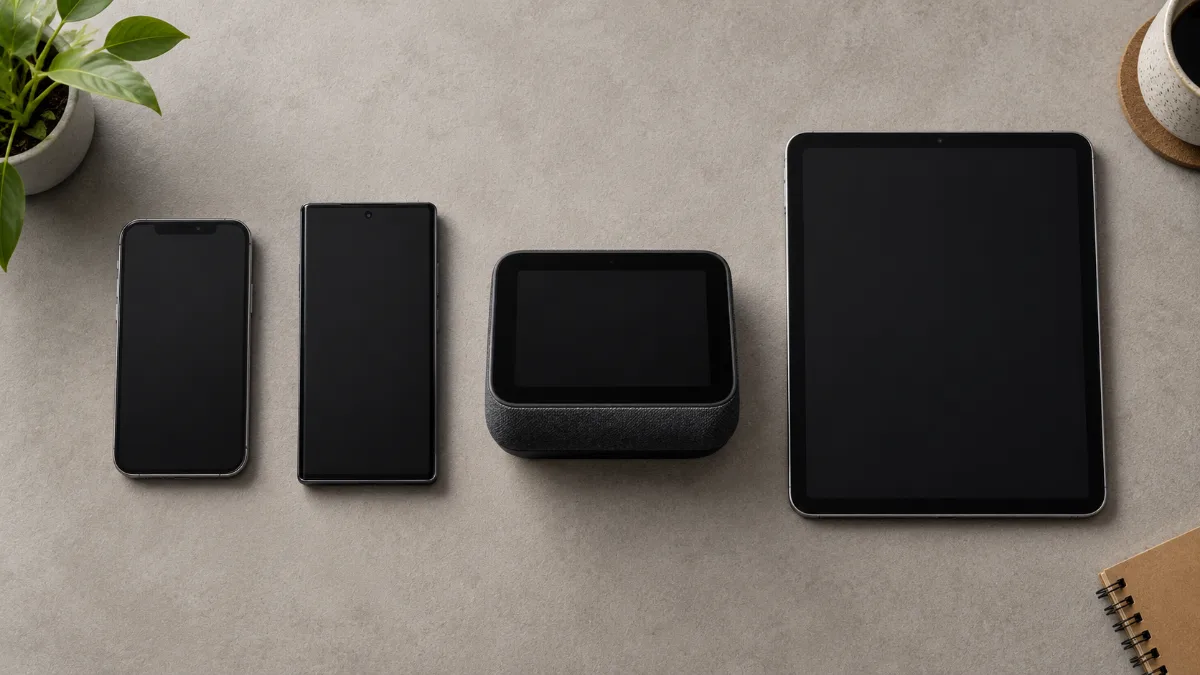
The assistants I tested: Apple Siri (with the iOS 18.3 update), Google Gemini Live (on a Pixel 9 Pro), Amazon Alexa (on an Echo Show 10), and ChatGPT's voice mode powered by GPT-4o (on iPhone via the OpenAI app). Yes, I know ChatGPT voice mode isn't a traditional "assistant" in the same way — but it's being used like one by millions of people, so it deserves a seat at the table.
The Main Thing Everyone Gets Wrong About Voice AI
Most comparisons focus on "accuracy" — like, did the assistant hear the right words? That's the easy part. Speech-to-text is largely a solved problem at this point. The hard part is understanding what you meant.
There's a big difference between an assistant that transcribes your words correctly and one that actually figures out your intent. I'd ask something like "remind me about that meeting tomorrow morning" without specifying a time, and some assistants would freeze up asking for clarification while others would just pick 9am based on context and move on. The latter is way more useful in real life.
That last point tells you a lot. People aren't using voice assistants for complex stuff because they've been burned too many times. I was one of those people. This comparison made me rethink a few of those assumptions.
Google Gemini Live: The One That Felt Most Like Talking to a Person
I'll cut to it — Gemini Live on the Pixel 9 Pro was the best experience I had, and it wasn't particularly close. The thing that stood out immediately was how it handles interruptions. You can cut it off mid-sentence and it adjusts. It doesn't finish its thought and then acknowledge you said something. It just... stops and listens. That sounds like a small thing but after using other assistants it felt massive.
The context retention across a conversation was also genuinely impressive. I had a back-and-forth about planning a trip to Lisbon — asking about weather, neighborhoods, whether I needed a visa from the UK — and it kept the thread going without me having to repeat myself. Older Gemini versions would lose the plot after 2-3 exchanges. This version held on for 8-10 without breaking.
Where Gemini Live Stumbles
It's not flawless. Gemini Live struggled when I tested it in loud environments — a busy café, specifically. Google says the Pixel 9 Pro's microphone array is optimized for voice, but the model kept mishearing "calendar" as "calendar" (fine) and "Colombo" as "Columbus" in a noisy street setting. Not catastrophic, but noticeable.
Also, if you're not on a Pixel or a recent Samsung Galaxy, the experience isn't as smooth. The tight hardware-software integration matters here. On a mid-range Android, Gemini feels more like a regular assistant.
"The gap between Gemini Live on Pixel hardware versus a generic Android device is wider than Google would probably like to admit."
ChatGPT Voice Mode (GPT-4o): Smartest, But Not the Most Convenient
Here's the deal with ChatGPT's voice mode: it's the most intellectually capable thing on this list by a significant margin. If you ask it something genuinely complex — explain a legal concept, help me think through a decision, summarize this situation and tell me what's weird about it — it handles that better than any traditional assistant.
The emotional range is also kind of wild. GPT-4o's voice mode can be playful, serious, or empathetic depending on the tone of the conversation. I had a genuinely funny back-and-forth with it about a tech product I was frustrated with. It matched my energy. Gemini does this too, but GPT-4o felt more natural to me personally — though I'll admit that might just be familiarity bias.
The Practical Problem
You have to open an app. That's the killer. When I'm driving or cooking and want to ask something quickly, I'm not unlocking my phone, finding the ChatGPT app, and tapping the microphone. The friction kills the use case for casual, quick voice interactions.
OpenAI does have a Mac desktop app now with voice mode built in, and that's actually great for people working at a computer. I use it that way pretty often. But as a phone assistant replacement? It's not there yet — at least not in 2026 without deeper OS integration.
The ChatGPT Plus plan at $20/month gets you full GPT-4o voice access. The free tier gives you limited access. For most people testing this out, the free tier should be enough to get a real feel for it.
Apple Siri: Finally Getting Better, Still Playing Catch-Up
I want to be fair to Siri because I think it gets dunked on unfairly sometimes. The iOS 18 updates did genuinely improve it. On-device processing is faster, it handles Apple ecosystem tasks (messages, calendar, Apple Music, HomeKit) really well, and the privacy angle matters to a lot of people — especially outside the US.
But here's my honest take: Siri still struggles the moment you go off-script. Ask it something it wasn't trained to handle smoothly and you get either a web search dump or a confusing non-answer. I asked it "what's the vibe of the Eixample neighborhood in Barcelona?" and it gave me Wikipedia stats about population density. That's not what I asked.
The Apple Intelligence Gap
Apple Intelligence — the broader AI suite Apple announced — was supposed to close this gap. And some features are genuinely good: the writing tools, the photo cleanup, the notification summaries. But the Siri improvements tied to Apple Intelligence have rolled out slowly and unevenly.
I spent way too long figuring out which Siri features were "Apple Intelligence Siri" versus regular Siri, because the experience isn't consistent. Sometimes it's clearly smarter. Other times it reverts to the old behavior. That inconsistency is frustrating when you're trying to build a habit around it.
Amazon Alexa: The Smart Home Champ That's Falling Behind Everywhere Else
Alexa is in a weird spot. For smart home control, it's still the best. The device compatibility is unmatched — Alexa works with over 140,000 smart home products as of 2025. If you've got a house full of connected devices, Alexa's voice control is seamless in a way the others aren't.
But the moment you try to have an actual conversation with it, the limitations show hard. Alexa's conversational AI got a major update with the rollout of "Alexa+" — Amazon's attempt to inject LLM-level smarts into the assistant. And it is better. But it still feels like a patchwork.
The responses can be weirdly verbose. I asked a simple question about whether I should take an umbrella tomorrow and got a two-paragraph answer that included cloud cover percentages, UV index, and wind speed. I just wanted a yes or no. GPT-4o would've given me "yeah, probably grab one, looks like afternoon showers around 3pm." That kind of judgment — knowing when to be brief — is something Alexa hasn't nailed.
Alexa+ Pricing and Availability
Alexa+ launched in the US in early 2025 at $19.99/month, or free for Prime members (with some feature limits). Global rollout has been slow — if you're outside North America, you're likely still on the older Alexa. Which is fine for smart home stuff but noticeably behind for conversation.
The Accent Test — This Is Where Things Got Interesting
I asked three friends to help me test accent handling — one from Lagos, one from Bangalore, and one from rural Scotland. I'm not going to pretend this was a scientific study, but the results were pretty revealing.
Gemini Live handled all three the best. It wasn't perfect — my Scottish friend had to repeat "Stirling" twice — but the overall accuracy was noticeably higher than the others.
Siri did well with the Bangalore accent, probably because of how large the Indian Apple user base is and how much training data exists there. Struggled more with Nigerian English phrasing.
Alexa was the most inconsistent. It handled standard American and British English fine but really stumbled with non-Western accents and phrase structures. This is a real issue for anyone using these tools outside English-speaking Western markets.
ChatGPT voice mode was surprisingly strong across all three, likely because GPT-4o was trained on a much broader text and audio corpus. It's not the most convenient assistant but it's definitely the most globally capable.
So Which One Should You Actually Use?
Look, it depends on what you want from it. Here's how I'd break it down:
- Best overall voice understanding and conversation: Gemini Live (especially on Pixel hardware)
- Best for genuinely complex questions and tasks: ChatGPT voice mode with GPT-4o
- Best for Apple ecosystem users: Siri — not because it's smarter, but because the integration is tighter
- Best for smart home control: Alexa, and it's not close
- Best for non-Western accents and global use: Gemini Live, with ChatGPT voice as a close second
If I had to pick one to use every day as my primary voice assistant right now, I'd go Gemini Live. The conversational quality, the context retention, and the interruption handling are just ahead of the pack. But I'd keep ChatGPT voice mode around for the times I need to actually think something through.
What I'm watching in 2026 is whether Apple can close the gap with whatever comes after Apple Intelligence's current rollout phase. The hardware is there. The user base is there. The AI smarts just need to catch up to the ambition. If that happens, the ranking could look very different by the end of the year.
For now, though? Google's got the lead on understanding what you actually mean when you talk to it. And in voice AI, that's really the whole game.