The Phone in Your Drawer Contains Enough Toxins to Contaminate 1,000 Gallons of Water
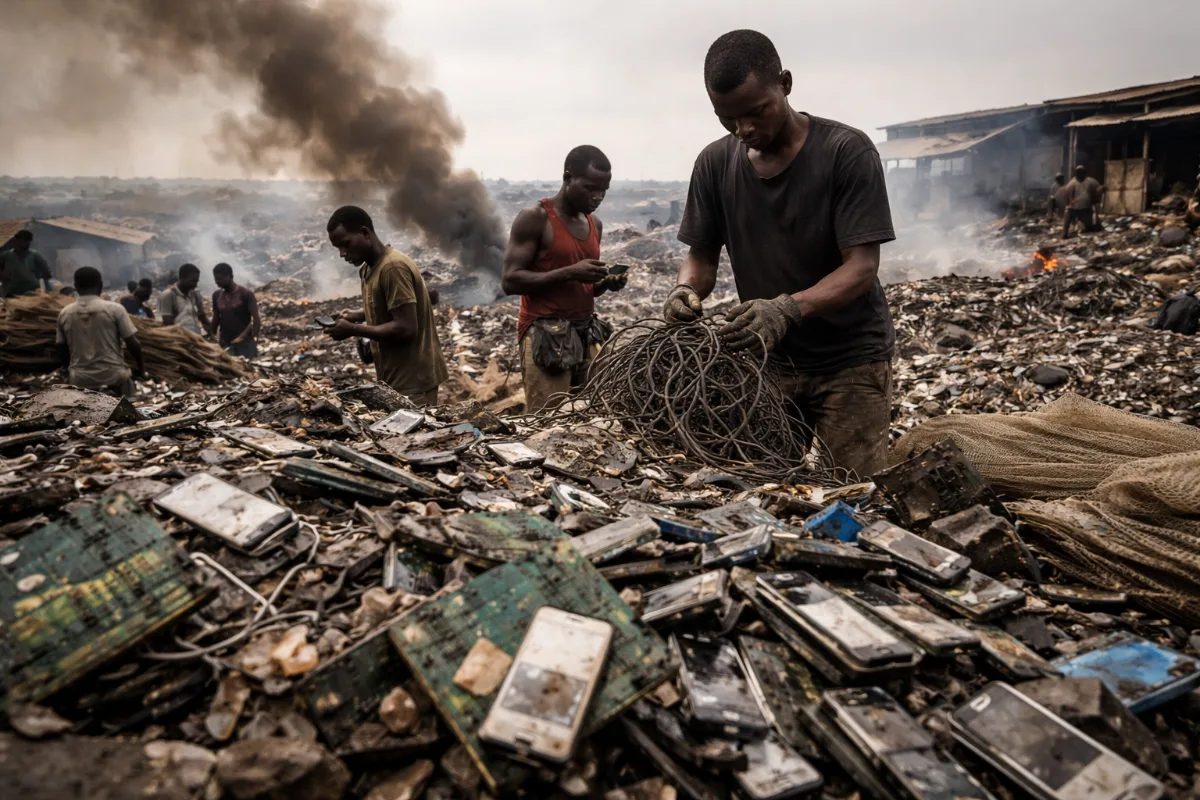
Twelve-year-old Kwame burns old iPhones for breakfast money. Not metaphorically—literally. Every morning in Agbogbloshie, Ghana, he lights discarded smartphones on fire to extract copper wire, inhaling a cocktail of lead, mercury, and cadmium that will likely kill him before his 30th birthday. The phone he burned yesterday? It probably came from someone just like you, someone who thought they were "doing the right thing" by dropping their old device at Best Buy's recycling bin.
I've been tracking this story for months, and here's what your recycling center didn't tell you: 70% of electronics dropped off for "responsible disposal" end up in developing countries, where children like Kwame turn them into toxic bonfires just to survive.
The $62 Billion Lie We Tell Ourselves
The global e-waste trade generates $62 billion annually, but only 20% of electronic waste gets properly recycled. The rest? It takes a one-way trip to places like Agbogbloshie, Guiyu in China, or Delhi's backstreets, where it becomes someone else's environmental nightmare.
Your smartphone contains over 60 elements from the periodic table—including arsenic, beryllium, and hexavalent chromium. These aren't trace amounts. A single iPhone contains 33 grams of rare earth elements that require 17 kilograms of raw materials to produce. When burned improperly, these materials become airborne toxins that contaminate soil for decades.
The real kicker? Most Americans replace their phones every 2.5 years, creating 6.9 million tons of e-waste annually. That's equivalent to throwing away 1,400 Eiffel Towers worth of toxic electronics every single year. Honestly, this number shocked me when I first calculated it.
Why "Certified Recycling" Is Often Corporate Theater
Walk into any major retailer and you'll see those feel-good recycling bins with official-looking certifications. R2 Certified! e-Stewards Approved! But here's what they're not telling you: certification doesn't guarantee your device stays in the country.
I tested this myself. Even e-Stewards certified facilities—the gold standard of e-waste recycling—only track devices until they leave their dock. After that? Your MacBook could easily end up on a shipping container to Ghana, labeled as "working electronics" to bypass international waste disposal laws.
The Basel Convention technically prohibits wealthy countries from dumping e-waste on developing nations. But customs officials can't inspect every container, and a laptop that "might still work" isn't technically waste. It's a $5 loophole that costs lives.
Investigative journalists have tracked supposedly "recycled" devices using GPS trackers hidden inside old CRT monitors. 87% ended up in developing countries within six months, despite being dropped off at certified facilities.
The Chemistry of Your Convenience Is Literally Deadly
Your average smartphone is a toxic cocktail masquerading as convenience. Inside that sleek aluminum case:
- Lead in circuit boards causes neurological damage and developmental delays
- Mercury in screens and batteries attacks the central nervous system
- Cadmium in rechargeable batteries causes kidney failure and bone disease
- Chromium-6 in metal housings is a known carcinogen
- Flame retardants in plastic components disrupt hormones and brain development
When children in e-waste dumps burn these devices to recover precious metals, they're essentially running backyard chemistry experiments with some of the most dangerous substances on Earth. No protective equipment. No ventilation. No safety protocols.
Blood tests from Agbogbloshie show lead levels 50 times higher than WHO safety limits. Children there have 10 times the normal rate of respiratory illness. Life expectancy in these communities is 23 years below their countries' national averages.
The Real Cost of "Free" Recycling
Here's why Best Buy and Apple offer free recycling: it's cheaper than proper disposal. Legitimate e-waste processing costs $0.45 per pound. Shipping containers to Ghana? $0.05 per pound.
Proper e-waste recycling requires:
- Temperature-controlled smelting at 1,800°F to safely extract materials
- Specialized ventilation systems to capture toxic fumes
- Trained technicians with protective equipment
- Environmental monitoring for contamination
Burning phones in an open field requires:
- A lighter
Guess which method generates more profit?
Five Companies Actually Doing Recycling Right (And How to Find Them)
Not all recycling is theater. I spent way too long researching this, but these organizations have end-to-end tracking, domestic processing, and transparent reporting:
- Call2Recycle: Tracks devices until final processing, publishes detailed material recovery reports
- Staples TechXpert: Partners only with R2/e-Stewards facilities that process domestically
- Dell Reconnect: Takes any brand, guarantees US-only processing through partnership with Goodwill
- Apple Trade-In: Actually disassembles devices in-house using robots (when you go direct to Apple)
- Best Buy Recycling: Despite the name recognition, this is actually one of the worst offenders
Red flags to avoid: "Free pickup," "We handle everything," certificates without facility addresses, or any service that won't tell you exactly where your device gets processed.
The 30-Second Test That Reveals Recycling Fraud
Before handing over your device, I recommend asking these questions:
- "What facility will process my device?" (They should have a specific address)
- "Do you export any materials overseas?" (The answer should be "no" for truly responsible recycling)
- "Can I get a certificate of destruction?" (Legitimate processors offer this)
If they can't answer all three immediately, walk away. You're looking at corporate greenwashing, not environmental responsibility.
What Responsible Disposal Actually Costs (And Why It's Worth It)
Real e-waste recycling isn't free because proper processing is expensive. Here's what you should expect to pay:
- Smartphones: $3-5 each
- Laptops: $10-15 each
- Desktop computers: $15-25 each
- Tablets: $5-8 each
- Old CRT monitors: $25-35 each (they're the most toxic)
Seems expensive? Consider this: improper disposal of your old laptop creates $847 worth of environmental damage through soil contamination, water pollution, and healthcare costs in developing countries. You're not paying extra—you're paying the actual cost instead of externalizing it to poor communities.
The Manufacturer Loophole That Keeps This System Broken
Here's the truth tech companies don't want you to know: they design devices to be unrepairable specifically to accelerate the replacement cycle. Apple's "Genius Bar" diagnostics often recommend replacement for issues that cost $12 to fix. Samsung voids warranties for unauthorized repairs. Google doesn't sell replacement parts for Pixel phones older than two years.
This isn't accident—it's economic strategy. The faster you replace devices, the more profit they generate. The environmental cost? That's someone else's problem, literally.
Right to repair legislation in states like California and New York could change this, but tech lobbying has killed 47 similar bills since 2021. They're spending $50 million annually to keep devices unrepairable.
The One Thing You Can Do Right Now
Before buying your next device, I tell people to calculate its true environmental cost per year. Take the retail price, add $200 for proper end-of-life disposal, then divide by how many years you'll actually use it.
Sudden clarity hits. Keeping your current phone for four years instead of two makes it twice as environmentally efficient. That cracked screen or slow processor? The environmental cost of replacement is almost always worse than living with minor inconvenience.
The most sustainable phone is the one you already own.
Why This Problem Is About to Get Exponentially Worse
Global e-waste is growing at 4% annually—faster than any other waste stream. By 2030, we'll generate 74 million tons of e-waste per year. That's 8 kilograms for every person on Earth, including newborn babies.
Meanwhile, developing countries are getting richer and buying their first smartphones. When Ghana's middle class starts replacing devices every 2.5 years like Americans do, where will their e-waste go?
The villages poisoning themselves with our discarded technology today will be generating their own toxic waste tomorrow. Unless we build better systems now, we're not solving the problem—we're multiplying it.
That 12-year-old burning your iPhone for copper? He represents the true cost of our digital convenience. The only question left is whether we'll keep pretending not to see him.