The global film industry is gripped by anxiety over artificial intelligence — and one of Ghana's most celebrated filmmakers is not mincing words about it. Shirley Frimpong-Manso says the industry is in full "panic mode," with AI already eating into jobs that once defined film production.
Speaking on Breakfast Daily on Channel One TV on Friday, October 30, 2026, Frimpong-Manso laid out exactly how deep the disruption runs — from scriptwriting to music scoring to on-set camera operations.
"The film industry around the world, I mean everybody, is all in panic mode because it is already taking a lot of jobs away. Sometimes when you see the films, some of the films that we are making now, you can clearly see that these are AI-written scripts that you get, and music is also having the same thing."
Jobs Disappearing Across the Board
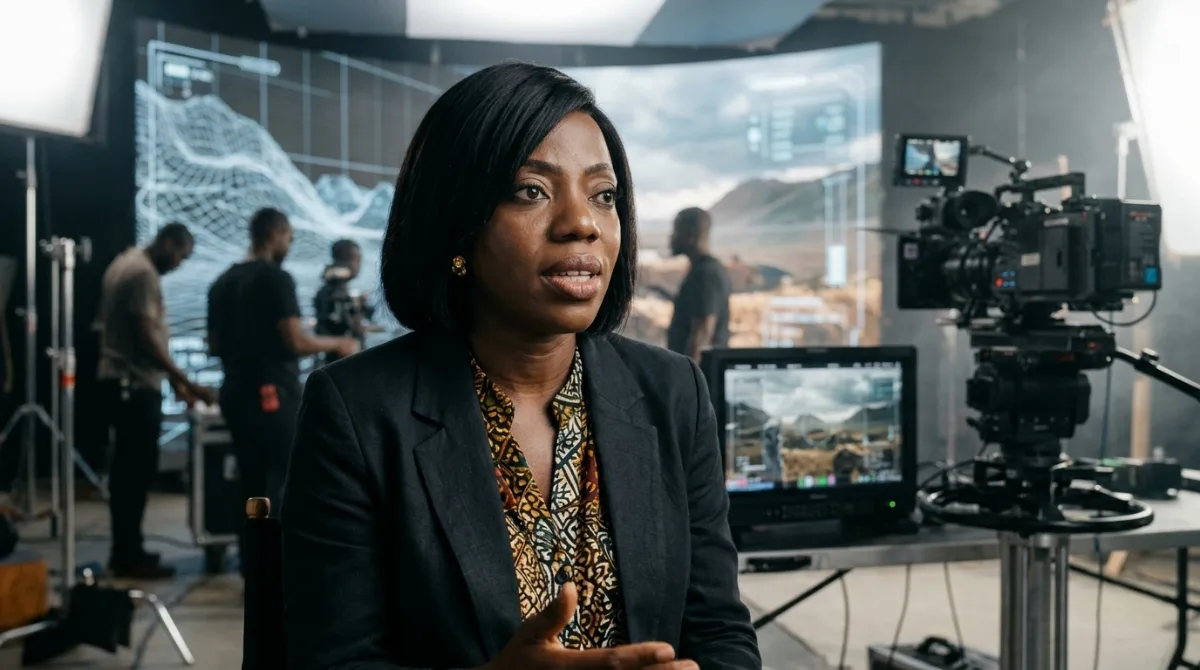
Frimpong-Manso pointed to digital operator cameras — systems that no longer require human operators standing behind them — as one visible sign of how fast the shift is happening. She described how AI can now transform a bare studio space into an entirely different environment without any physical construction.
"All you need to probably do is to put chairs in there, and you could change the entire backdrop of this place into a palace, all with AI," she said. "These things are happening, and they are happening very, very fast."
That kind of capability is threatening grip-and-lighting crews, set designers, location scouts, and production assistants — roles that have been staples of the industry for decades. The rapid evolution of AI tools across creative industries has been well-documented, but Frimpong-Manso's comments put a sharp, local lens on what it means for African filmmakers navigating the same storm.
Adapt or Get Left Behind
Despite the alarm, Frimpong-Manso's message was not defeatist. She is pushing for adaptation over resistance — and says she is doing it herself.
"Are you just going to sit back and cry about it? No, you have to learn what the dynamics are, train the crew. Even I am learning very much how to use these tools to my benefit."
That call to train crews and understand AI's capabilities is particularly relevant in markets like Ghana's, where production budgets are typically leaner than Hollywood. Learning to use these tools well could level a playing field that has long been tilted by cost.
A Door Opening for African Stories
Here is where the conversation takes an interesting turn. Frimpong-Manso sees real opportunity buried inside all the disruption — specifically for the kind of epic, historically rich African stories that budgets have traditionally made impossible.
She singled out a Yaa Asantewaa film as her example: a story of the legendary Asante queen mother who led a rebellion against British colonial forces in 1900. For years, telling that story with the visual scale it deserves would have cost, in her words, "an arm and a leg."
"Now with AI, it is possible to go back and tell a Yaa Asantewaa film, but done very well. Emphasis on the done very well."
That qualifier matters. She is not suggesting AI is a shortcut to quality — she is arguing it is a tool that, used skillfully, could finally make certain productions financially viable.
Beyond Film
Frimpong-Manso also noted that the anxiety is not unique to the creative sector. She described AI's disruption as a broader, cross-industry challenge that is forcing workers and businesses in many fields to rethink how they operate.
It is a tension playing out in boardrooms and production studios alike — and as the conversation around AI and jobs intensifies globally, voices from African creative industries are increasingly part of that debate. Frimpong-Manso's willingness to name the fear plainly, while still leaning into the technology, signals a pragmatism that many in the industry will need to find sooner rather than later.