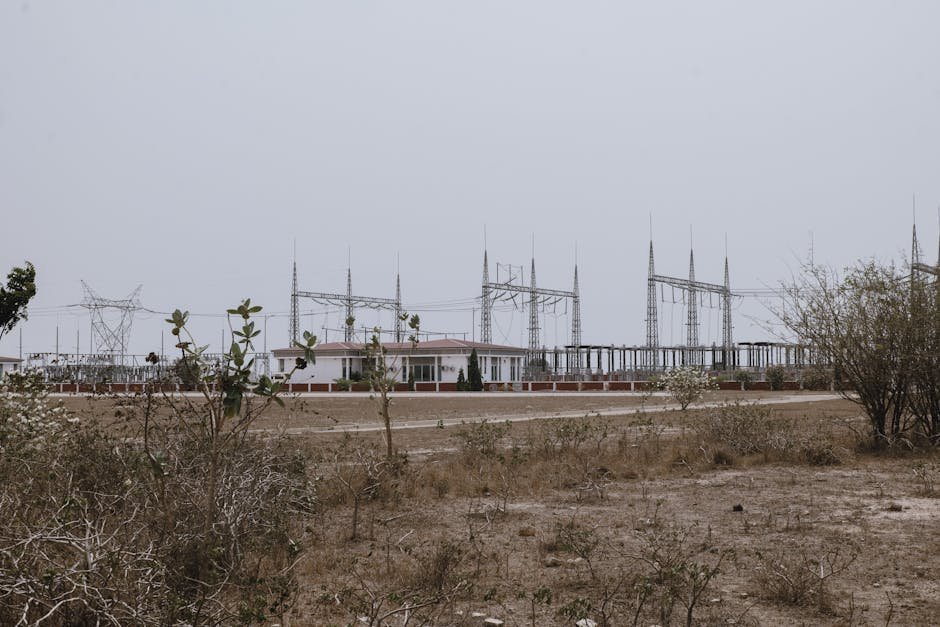
The Electricity Company of Ghana (ECG) has announced an ambitious plan to install more than 900 transformers across the Ashanti Region by the end of 2026. This massive infrastructure push aims to tackle the persistent power outages that have plagued businesses and communities throughout one of Ghana's most economically important regions.
Speaking on Luv FM on Tuesday, April 21, Benjamin Obeng Antwi, Public Relations Officer for ECG Ashanti West, revealed that each of the three operational units in the region must install at least 300 transformers before year-end. What struck me about this announcement is the scale and urgency behind it.
"We have started these projects at Bantama, another at Kpakala in Abuakwa, also Ejisu and Ampabame. Each region intends to install not less than 300 transformers before the year ends," Antwi stated.
Part of Massive National Investment
The transformer rollout represents just one component of a broader GH¢3.46 billion investment programme by ECG. The national scope includes deploying 2,500 distribution transformers across Ghana to relieve pressure on aging and overloaded networks.
The timing could not be more critical. Businesses across the Ashanti Region have been hemorrhaging money due to unreliable power supply. Shops, salons, cold stores and other enterprises continue reporting significant losses from frequent outages.
Nine Major Projects Beyond Transformers
Antwi revealed that ECG has earmarked nine major projects specifically for the Ashanti Region to strengthen electricity distribution. These go far beyond the transformer installations.
One flagship project involves constructing a sub-transmission line from Adoato to Offinso through Barekese. The upgrade will boost conductor capacity from 120 to 400 while replacing older structures with stronger installations.
Another key initiative involves building a direct transmission line from Anwomaso to the Airport substation. This will replace the current inefficient route through Achiase and Fawoade, improving power distribution to Ridge, Anwomaso, and the Magazine enclave.
Industrial Areas Get Priority Attention
ECG also plans conductor upgrades in the Kaase and Boankra industrial areas, increasing capacity from 120 to 400. This investment acknowledges the growing electricity demand in the Ashanti Region, which serves as one of Ghana's busiest commercial hubs.
"In the Ashanti Region, we have nine projects. These are critical infrastructure which, when completed, will significantly boost power supply," Antwi emphasized.
It is notable that ECG appears to be taking a comprehensive approach rather than just addressing symptoms. The combination of new transformers, upgraded transmission lines, and increased conductor capacity suggests they understand the interconnected nature of power distribution challenges.
Long-Overdue Infrastructure Investment
The announcement addresses years of complaints from Ashanti Region communities and businesses about unstable electricity supply. This investment represents one of the most significant infrastructure commitments ECG has made to the region in recent years.
For businesses that have struggled with power reliability, this news offers hope for improved operations by 2026. The question remains whether ECG can deliver on these ambitious timelines while maintaining quality installations across such a large geographic area.
The success of this programme could serve as a model for addressing infrastructure challenges in other regions across Ghana, particularly as the country continues its economic development trajectory.