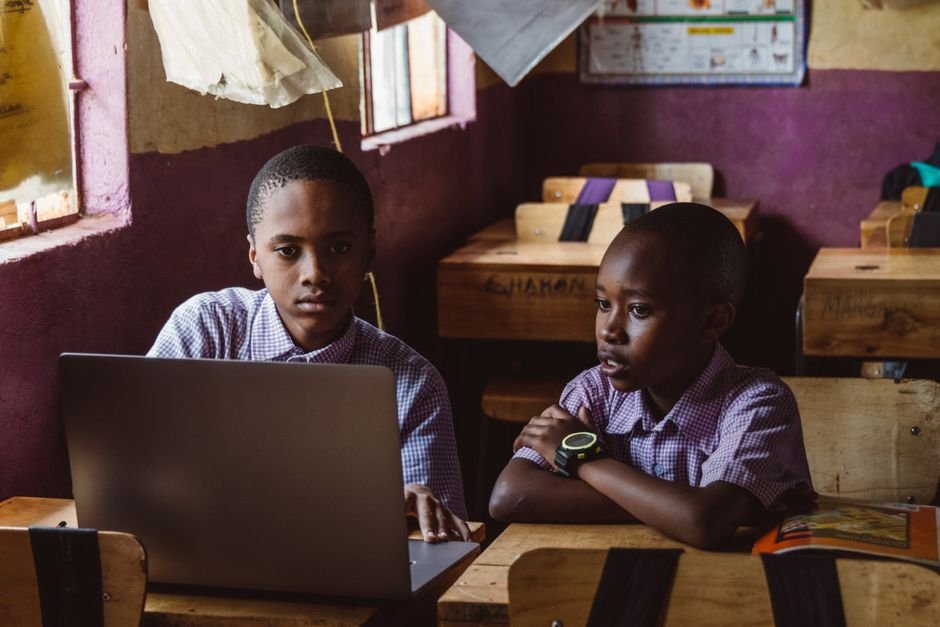
Ghana could soon be teaching artificial intelligence and coding to kindergarteners. Education Minister Haruna Iddrisu made the announcement Monday at the Government Accountability Series press briefing in Accra, unveiling a revised national curriculum drafted by the National Council for Curriculum and Assessment (NaCCA) — though the plan still needs Cabinet and parliamentary sign-off before a single lesson is taught.
The proposed curriculum would cover every classroom from kindergarten through junior high school. If it clears the approval chain, it would rank among the most consequential education reforms of the Mahama administration.
What the Curriculum Includes
Iddrisu described the NaCCA document as a "smart start curriculum" designed to strengthen science, technology, engineering and mathematics teaching at the basic level. It goes beyond just tech subjects.
"We have promised to introduce coding, electronics, artificial intelligence and TVET," Iddrisu said, referring to Technical and Vocational Education and Training.
Ethics, patriotism and civic responsibility would also become integral parts of the revised programme, according to the minister. The reform is set to replace the standards-based curriculum introduced in 2019.
The Approval Road Ahead
The document was formally handed over on Wednesday, July 23, starting a multi-step process: it goes first to the Ministry of Education, then to President John Dramani Mahama, then Cabinet, and finally Parliament. Iddrisu confirmed that Wednesday handover himself at the Monday briefing.
The minister gave no implementation date. That is a significant gap — and it is not the only one.
This announcement did not come out of nowhere. Iddrisu had first signalled plans to bring AI, robotics, coding and electronics into basic education at a digital education conference in Accra in June, and the National Curriculum Review Committee completed its work since then. Monday's briefing was the most formal step yet.
The Hard Questions Nobody Has Answered
Teaching AI and electronics to six-year-olds requires trained teachers, functioning electricity, connected devices — and thousands of Ghana's basic schools still lack all of these. The ministry has not published a costed rollout plan, a teacher retraining schedule, or an implementation timeline.
Iddrisu himself acknowledged the structural gap, noting that basic education has historically received less investment than secondary education, even though literacy, numeracy and critical thinking are built at that foundational level. It is a candid admission that makes the ambition of the proposal even sharper in contrast. Tracking how Ghana's broader AI adoption push translates into classroom infrastructure will be worth watching.
Alongside the curriculum announcement, Iddrisu shared figures on girls' education — saying the government has distributed 12.2 million sanitary pads nationwide to support about 2.5 million female students in basic and secondary schools, as part of efforts to keep girls in class during menstruation.
Proposal vs. Policy
Until Parliament approves the document, this remains a proposal, not a policy. What follows through the approval chain — and critically, what budget accompanies the document — will determine whether Ghana's children actually open a coding textbook or whether this stays as a well-intentioned press briefing.
The reform's ambition is clear. The execution plan, less so. Parliament's response and any accompanying budget figures will be the real story when they come.