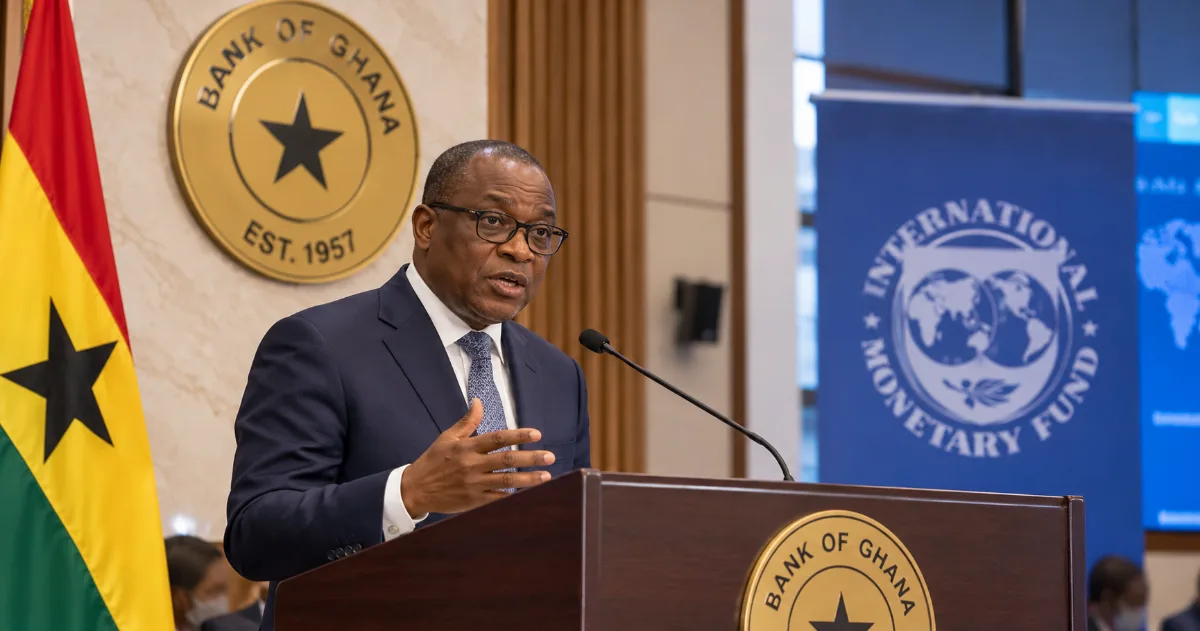
Bank of Ghana Governor Dr. Johnson Asiama has taken Africa's digital sovereignty argument directly to the International Monetary Fund, urging the global lender to put institutional weight behind the continent's push to control its own digital financial infrastructure.
The call came on October 15, 2026, as Asiama made the case that Africa cannot keep building digital economies on frameworks and platforms designed elsewhere — and that the IMF has both the reach and the responsibility to help change that.
What Asiama Is Asking For
At the heart of Asiama's appeal is a straightforward argument: African nations are rapidly digitalising their economies — from mobile money to central bank digital currencies — but too much of the underlying architecture, data governance, and policy direction originates outside the continent. That is a vulnerability, not just a technical one, but a strategic and economic one.
The Governor's push to the IMF is a call for the fund to actively support African-led digital frameworks, rather than simply assessing or advising on them after the fact. It is a distinction that matters enormously for countries trying to assert economic self-determination in a fast-shifting global tech order.
Ghana's Position at the Centre of the Debate
Ghana is not speaking from the sidelines here. The country has been one of the more aggressive movers on digital finance in sub-Saharan Africa — from its early mobile money regulations to the Bank of Ghana's work on a digital cedi pilot. Asiama's credibility on this issue comes partly from Ghana's own track record of trying to build domestic digital infrastructure with real regulatory teeth.
The broader argument — that African nations need sovereignty over their digital economies — has been gaining momentum across the continent. But having a sitting central bank governor take it directly to the IMF, one of the most powerful financial institutions in the world, gives it a different weight entirely. This is not advocacy from the margins; it is a formal diplomatic push from within the global financial system.
The tension Asiama is pointing to sits at the intersection of artificial intelligence governance, fintech regulation, and geopolitical competition — all areas where Africa has historically been a rule-taker, not a rule-maker.
Why the IMF's Role Is Being Questioned
The IMF has increasingly inserted itself into digital economy conversations — publishing frameworks on crypto regulation, central bank digital currencies, and cross-border payment systems. But critics, including voices from within African finance ministries and central banks, argue that these frameworks often reflect the priorities of wealthier member states rather than the structural realities of emerging economies.
Asiama's intervention appears aimed squarely at that gap. The message to the IMF, as reported by the Ghana News Agency, is that backing Africa's digital sovereignty is not charity — it is essential to the kind of stable, inclusive global financial system the fund says it wants to build.
For Ghana, and for African central bankers watching this play out, the stakes go well beyond rhetoric. How digital financial infrastructure gets built — who owns the data, who sets the standards, who profits from the platforms — will shape economic outcomes for decades. Questions about data sovereignty and digital security are inseparable from that conversation.
What Comes Next
It remains to be seen how the IMF responds to Asiama's appeal. The fund has not yet issued a formal statement on the Governor's call. But with Africa's digital economy projected to grow substantially through the decade, the pressure on multilateral institutions to take continental digital ambitions seriously is only going to intensify.
Asiama has put a clear marker down. The question now is whether the IMF treats it as a policy discussion — or a structural commitment.