Ghana's ICT sector has been on a tear for years — clocking average annual growth of 20.5% between 2014 and 2022, the fastest of any industry in the country. Yet when researchers measured how much of that momentum actually spilled into the broader economy, the answer was almost nothing.
The Ghana Digital Economy Outlook 2026, commissioned jointly by the Ministry of Communication, Digital Technology and Innovations and Germany's development agency, the Deutsche Gesellschaft für Internationale Zusammenarbeit (GIZ), found that ICT sector growth had a statistical correlation of just 0.03 with overall GDP growth over that eight-year period. In plain terms: the digital boom and the rest of the economy have largely been moving in separate orbits.
Despite that blistering pace of expansion, the sector's contribution to annual GDP growth stayed at or below 1.2 percentage points throughout the period. The gap between digital growth and economic-wide productivity gains is the central problem the report puts on the table.
Digital Growth, Analogue Economy
The findings are particularly striking when it comes to sectors you would expect digital tools to be reshaping. The report recorded a negative correlation of -0.78 between ICT growth and the finance and insurance sector, and -0.66 between ICT growth and trade. The researchers are careful not to claim that ICT expansion caused those sectors to underperform — but the numbers point sharply to a disconnect.
The report attributes this to limited integration between digital services and traditional industries, as well as possible regulatory fragmentation that is stopping technology from generating wider economic benefits. Manufacturing, agriculture, and trade — the backbone of most Ghanaian livelihoods — have not been pulled along by the digital tide.
The study drew on a survey of 1,112 respondents across all 16 regions of Ghana, supplemented by 28 key informant interviews and eight focus group discussions, making it one of the more methodologically thorough assessments of Ghana's digital economy to date.
Mobile Money's Paradox
Nowhere is the story more contradictory than in mobile money. Transaction volumes surged from GH¢1.1 trillion in 2022 to GH¢1.9 trillion in 2023, and 88.9% of respondents said they use mobile money services. Those are genuinely impressive numbers for financial inclusion.
But the security picture is alarming. A staggering 82.9% of respondents reported experiencing fraud, while only 7.3% said they felt very secure when conducting transactions online. For a payments ecosystem processing nearly GH¢2 trillion a year, that level of consumer anxiety is a serious structural problem — and one that ties directly into growing concerns about digital safety across West Africa.
The report flags cybersecurity weaknesses and inadequate consumer protection as constraints that could stall the expansion of digital financial services, especially as mobile payments become more embedded in everyday commerce.
The Connectivity Gap
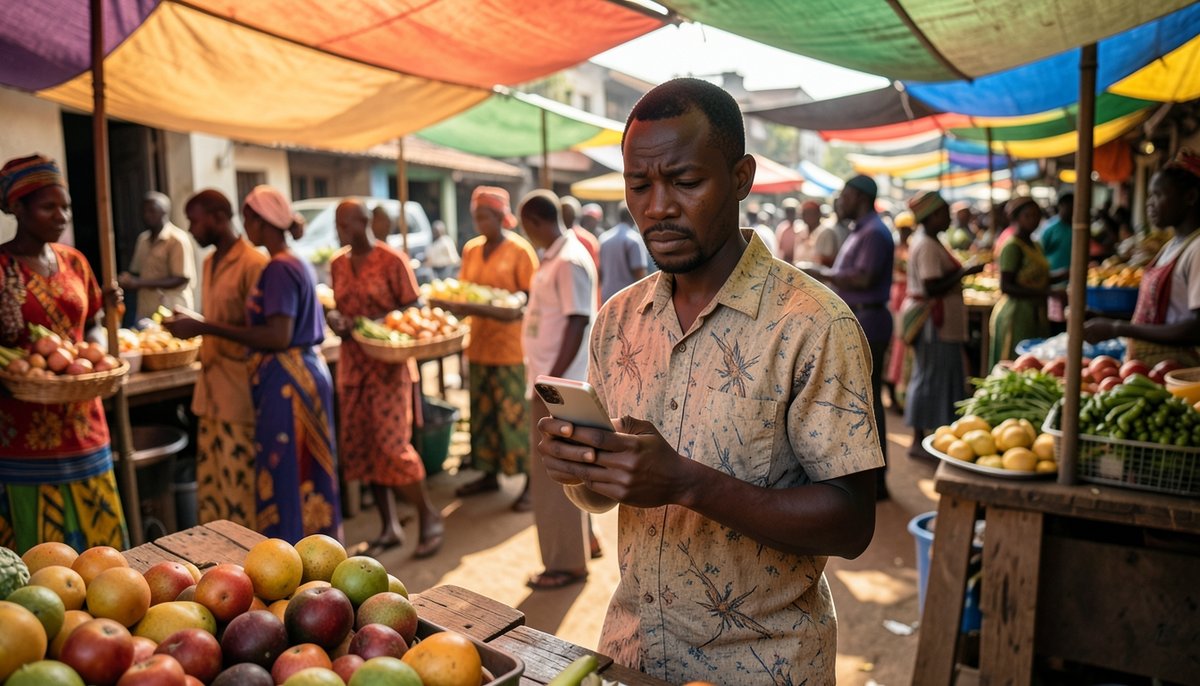
Access to the internet is also more fragile than headline figures suggest. While 92.5% of respondents used smartphones to access digital services, 68.6% pointed to data affordability and poor connectivity as major barriers to meaningful participation in the digital economy. Having a smartphone and reliably using digital services are two very different things.
These disparities — between urban and rural users, between those with reliable data and those priced out of consistent access — are part of why Ghana's digital transformation agenda keeps running into structural limits even as the ICT sector posts impressive headline numbers.
What Needs to Change
The core challenge the report lays out is converting digital access into measurable economic productivity — across manufacturing, trade, agriculture, and employment. Right now, Ghana's digital economy is thriving in payments and services while the industries that employ the most people remain largely untouched.
That is a policy problem as much as a technology one. With both the government and GIZ behind this report, the question is whether the findings will translate into concrete shifts in how Ghana approaches digital integration — or become another well-researched document that gathers dust.