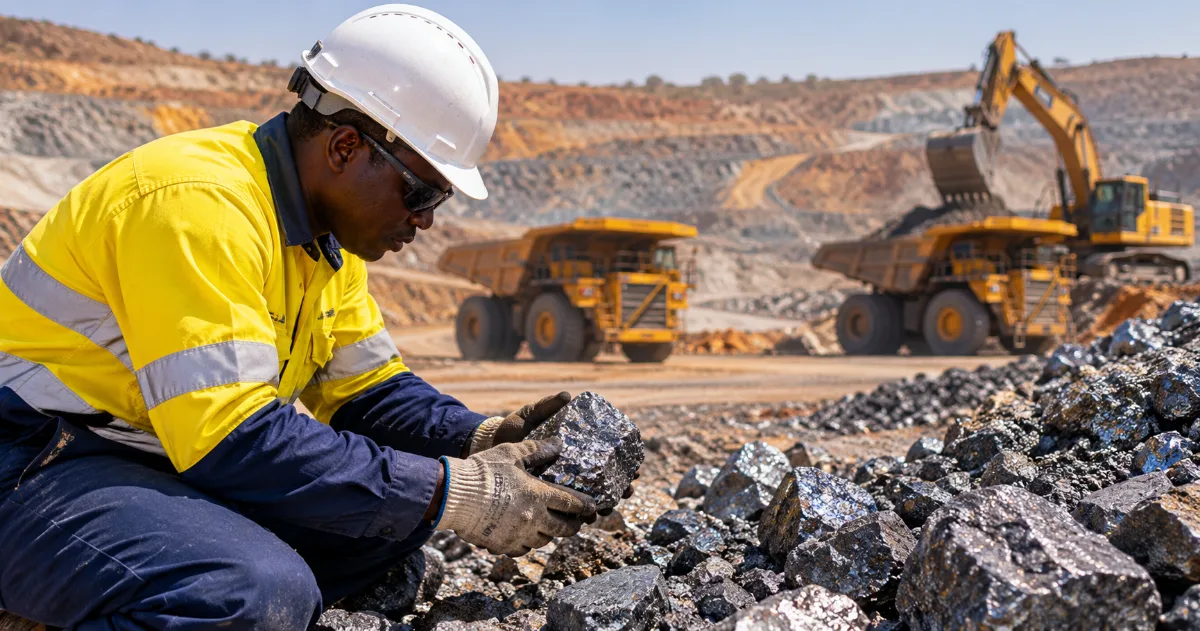
Africa holds 30 per cent of the world's critical mineral reserves — and the International Monetary Fund says that number is about to matter enormously, as global appetite for AI infrastructure and clean energy technologies accelerates faster than at any point in history.
The IMF made that assessment on Thursday at a briefing in Bangkok tied to its October 2026 Regional Economic Outlook Update for Sub-Saharan Africa. The event brought sharp focus to Africa's growing strategic importance in the global economy, not just as a recipient of development finance, but as a potential supplier of the raw materials powering the world's next technological era.
Minerals, AI, and the Energy Transition
Mr Zeine Zeidane, Director of the IMF's African Department, told the Bangkok briefing that countries across the continent stand to gain directly from the global energy transition and the resource demands of AI data centres and computing infrastructure.
"All the countries that export critical minerals will be benefiting from the energy transition, the energy needs of AI, and the technology itself. The Democratic Republic of Congo is one of them, but it is not only DRC," Zeidane said.
His point was pointed and deliberate: this opportunity is not exclusive to one country. Across Sub-Saharan Africa, nations sitting on cobalt, lithium, manganese, and other minerals essential to batteries, semiconductors, and power infrastructure are in a structurally stronger position than they were even five years ago.
Beyond minerals, the IMF's report argues that Africa's own adoption of artificial intelligence could reshape economic output from the inside. Zeidane highlighted agriculture, education, healthcare, and government services as sectors where AI-driven productivity gains could close efficiency gaps that have historically held back growth.
Growth Projections Revised Upward
The IMF's October 2026 update projected economic growth in Sub-Saharan Africa at 4.5 per cent in both 2026 and 2027 — a 0.2 percentage point upgrade from the April forecast, despite ongoing conflict in the Middle East and a difficult global trade environment.
The Fund credited the region's resilience to improved fiscal discipline, noting that Sub-Saharan Africa entered the current global uncertainty with near-balanced fiscal positions and stabilised debt by the end of 2025. Earlier debt restructurings helped, as did specific policy reforms: Ethiopia and Nigeria's subsidy and exchange rate adjustments, and structural reforms in South Africa that bolstered macroeconomic stability.
Minerals Alone Will not Cut It
Zeidane was careful not to oversell the mineral windfall narrative. He was explicit that resource wealth without reform delivers very little — a lesson several African economies have already learned the hard way.
"Africa could be tomorrow the engine of global growth, for that, it needs to mobilise more capital to grow. Capital is not only coming from outside, but it will also come from inside, so you can better mobilise the domestic savings in the continent," he said.
The IMF's call to mobilise domestic savings is significant. It shifts the conversation away from the traditional aid-and-foreign-investment framing and toward internal capital formation — channelling African savings into productive sectors that generate jobs and investment returns locally.
The report also pointed to governance reform as a multiplier. Addressing even half of the continent's governance and business environment gaps, it said, could raise GDP by more than 20 per cent over a decade. That is not a marginal gain — it is transformational, if governments can deliver.
What Comes Next
The timing of this IMF assessment matters. As global tech companies and governments scramble to secure mineral supply chains for EV batteries, AI chips, and power grids, Africa's negotiating position is strengthening. The question is whether African governments can convert geological advantage into lasting economic benefit — through smarter contracts, local processing, and investment climate reforms that keep more value on the continent.
The IMF's October 2026 outlook suggests the foundation is more solid than it is been in years. Whether that foundation holds depends on choices being made right now in capitals from Kinshasa to Pretoria to Accra.