VR Training Revolutionizes Lagos Emergency Response
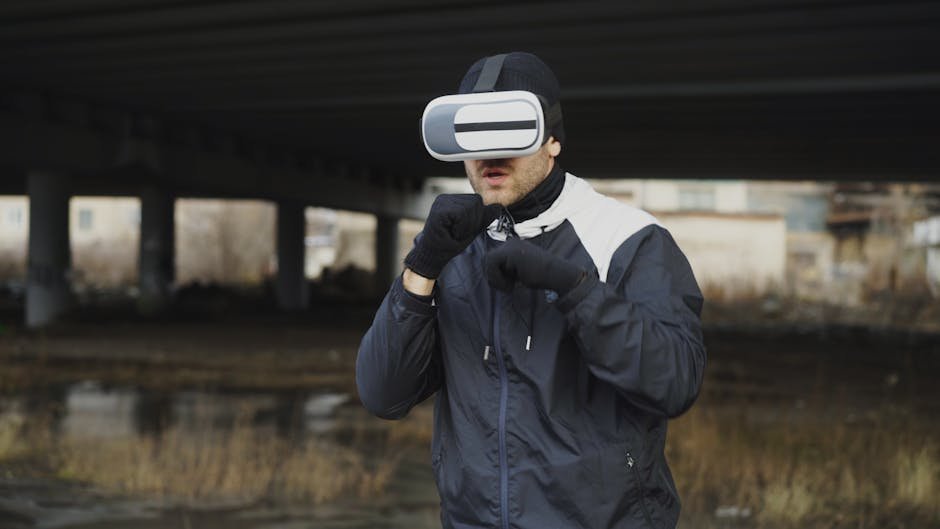
Over 300 emergency service professionals in Lagos are now getting their training inside virtual reality headsets rather than traditional classrooms. Notably, how MacTay has managed to recreate one of Lagos's most challenging locations—the Lekki-Ikoyi link bridge—as a training ground for life-threatening scenarios.
The simulation places responders directly on the bridge during a major accident, forcing them to apply emergency protocols in real-time without any actual risk. Tunde Rotimi, who leads Strategy and Innovation at MacTay, makes a compelling case for why this approach works better than conventional training methods.
"It is very challenging to duplicate a high-risk environment. We modelled the Lekki-Ikoyi link bridge and trained over 300 people there. You cannot have more than seven participants on that bridge at once; imagine training everyone there."
From HR Consulting to Tech Innovation
MacTay's journey into VR training represents a dramatic pivot for a company that started as an HR consulting firm over four decades ago. Rotimi describes this transformation as more than just adding technology to existing services.
The company is now positioning itself as what Rotimi calls a "technology company deploying HR solutions" rather than the reverse. This strategic shift centers around what MacTay terms "precision AI solutions" designed to enhance rather than replace human workers.
Partnership with Lagos State Government
The VR training program operates under MacTay's Better Lagos Initiative, focusing on low-cost, high-impact technology solutions for the state government. The collaboration extends beyond emergency services into healthcare and other public sector systems.
The training allows responders to build muscle memory through repetition without the logistical nightmare of organizing real emergency drills. I find this approach particularly smart given Lagos's traffic congestion and the practical challenges of conducting large-scale training exercises on actual infrastructure.
From Education to Emergency Response
The technology actually started in a completely different sector. MacTay originally developed its immersive learning tools for STEM education in Lagos schools, allowing students to explore human anatomy from the inside or interact with microchips in ways textbooks simply cannot match.
The pivot to emergency services training happened after discussions with the Lagos State Ministry of Health, according to Rotimi. The same three-dimensional visualization capabilities that helped students understand complex scientific concepts proved equally valuable for emergency responders learning to navigate high-stakes situations.
What impresses me most about this initiative is how MacTay identified the scalability problem inherent in traditional emergency training. Physical simulations are expensive, dangerous, and can only accommodate small groups at a time. VR eliminates these constraints while maintaining the immersive experience necessary for effective learning.
As AI and immersive technologies continue evolving, MacTay's approach could serve as a model for other African cities struggling with emergency response training challenges. The company appears to be betting heavily that virtual training environments will become the standard for high-risk professions across the continent.