Five organisations. One $7.5 million pot of funding. And a clear mandate: turn Nigeria's homegrown AI research into something the average person actually benefits from.
That was the pitch the Nigeria AI Scaling Hub (NAISH) brought to Moonshot by TechCabal 2026, where the Gates Foundation-backed initiative gave its most public showcase yet of the organisations it is nurturing across healthcare, agriculture, and indigenous language technology.
What NAISH Is, and Why It Exists
NAISH was built around a problem that is frustratingly common in African tech: promising AI research that never makes it out of the lab. The hub's model centres on shared digital infrastructure and institutional partnerships designed to bridge that gap — moving local innovations from proof-of-concept into commercial-scale deployment.
The Bill & Melinda Gates Foundation is backing the effort with $7.5 million, a figure that signals serious institutional confidence in Nigeria's capacity to develop AI that solves African problems on African terms.
The Five Organisations on Stage
At Moonshot, NAISH spotlighted five member organisations, each tackling a distinct and pressing challenge. mDoc, a digital health provider, is one of them — using AI to improve patient outcomes and extend healthcare access beyond urban centres where specialist care is thin on the ground.
On the agriculture side, Extension Africa is deploying AI through its agritech platform, helping smallholder farmers access the kind of advisory support that was previously only available to large commercial operations. It is the sort of applied AI work that tends to get less attention than flashy consumer apps but arguably matters more.
The third member, Data Science Nigeria — a research enterprise — rounds out the publicly named cohort. The organisation has long been one of the most visible forces in building Nigeria's AI talent pipeline, and its inclusion in NAISH connects grassroots research capacity to a structured commercialisation pathway.
Shared Infrastructure as the Key Ingredient
What makes NAISH distinct is not just the funding — it is the architecture. Rather than each organisation building its own stack from scratch, the hub offers shared digital infrastructure that lets members focus on their core applications instead of reinventing foundational tools.
That kind of resource-pooling is especially meaningful for local language AI, which is notoriously expensive and data-hungry to develop. Nigeria has over 500 languages, and building AI systems that work in Hausa, Yoruba, or Igbo requires significant data collection and model training efforts that few startups can absorb alone.
The hub's institutional partnership model is also designed to fast-track regulatory navigation and market access — two areas where African AI startups routinely lose momentum. Connecting digital health solutions like mDoc's to hospitals and clinics at scale, for instance, requires more than good technology; it requires trust-building with health systems, and NAISH is positioned to help broker those relationships.
Moonshot as the Launchpad
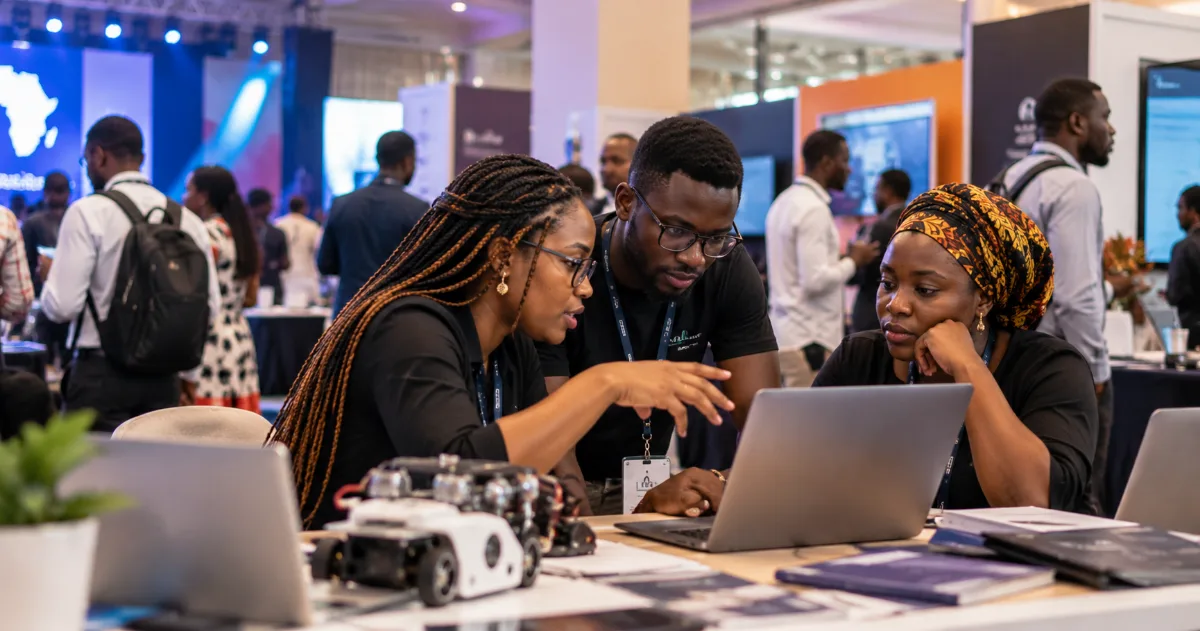
Moonshot by TechCabal has become one of West Africa's most-watched annual tech events, and NAISH's decision to use the platform for this showcase reflects a deliberate push for visibility. The audience at Moonshot includes investors, policymakers, and journalists — exactly the stakeholders that AI startups need to reach if they are going to scale.
The October 29, 2026 showcase did not just highlight what these five organisations are building. It made a broader argument: that Nigeria has the talent, the ideas, and now the institutional backing to lead AI development on the continent — not just consume it.
Whether NAISH's model of shared infrastructure and Gates-level funding translates into widespread commercial adoption will take time to measure. But the hub's public debut at Moonshot suggests it is moving past the quiet early stages and into a phase where results will be expected.