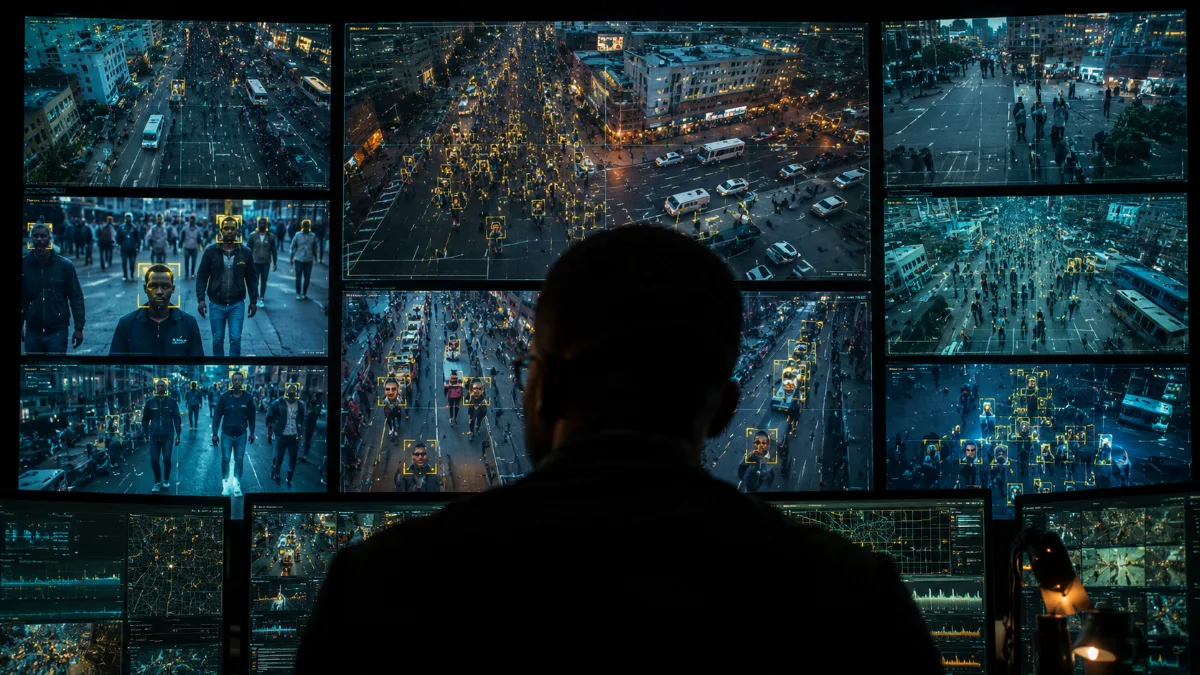
South Africa is throwing R600 million ($35.5 million) and its most extensive technology-driven security operation on record at a single day of expected civil unrest — and the scale of what is being deployed is striking.
Ahead of Tuesday's anti-illegal immigration demonstrations organised by the movement March and March, authorities have positioned 33,000 CCTV cameras, drones, helicopters, and 13,000 law enforcement officers across Gauteng Province. The operation is set for June 30, 2026, and represents a sharp pivot in how South Africa's state security apparatus is choosing to manage public order.
A Surveillance Web Years in the Making
The roots of this moment stretch back five years. The July 2021 unrest exposed deep failures in South Africa's intelligence gathering, coordination, and public-order policing — failures that cost lives and billions in economic damage. Since then, the South African Police Service (SAPS) has been quietly building out a surveillance infrastructure that now blends state systems with private-sector networks.
June 30 is, in many ways, the public unveiling of that effort.
Gauteng Police Commissioner Lieutenant-General Tommy Mthombeni made the deployment official during a media briefing in Eldorado Park on June 25, laying out exactly what authorities have put in place.
"We have made arrangements to deploy CCTV cameras, helicopters and drones. Indeed, we have mobilised extensively, and we will have what is called a downlink so that we can observe activities as they happen in real time." — Lt-Gen Tommy Mthombeni
Mthombeni did not mince words when it came to accountability. "The drones and helicopters will be able to identify who is doing what. So, if you get arrested, do not say you were not warned," he said. Authorities say they have already mapped several hotspots across the province where trouble is most likely to flare.
State and Private Systems Are Merging
What makes this operation particularly significant is not just the scale — it is the architecture behind it. Much of the surveillance infrastructure being tapped on June 30 is not owned by the government at all.
Chad Thomas, director at IRS Forensic Investigations and a 32-year veteran of South Africa's security and law enforcement industry, told TechCabal that the operation marks a meaningful shift in how the country thinks about policing technology.
"It is necessary, and it is good to see that the state is finally investing in making use of technology. Most other countries are already making use of these technologies, whereas in South Africa everything tends to be labour-intensive." — Chad Thomas, IRS Forensic Investigations
Thomas says the June 30 operation will lean heavily on cameras owned by municipalities, private security firms, and community security networks — all feeding into a centralised picture for law enforcement. "There is so much CCTV in the hands of the private sector that can be utilised and onboarded by the state during operations," he said.
That blending of public and private surveillance is the defining feature of what South Africa is building. It is not a single government system — it is an integrated web, and it is increasingly always on. For those following digital rights and surveillance issues across the continent, the model being tested in Gauteng this week is one worth watching closely.
Migrants Seek Refuge as Tensions Rise
On the ground, the atmosphere is tense. Foreign nationals in Johannesburg and Cape Town have been seeking refuge at embassies and consulates, with many fleeing homes and businesses ahead of the marches. The fear is visceral — South Africa's history of xenophobic violence means migrant communities have real reason to take threats seriously.
March and March, the movement behind Tuesday's demonstrations, is pushing against illegal immigration. But the optics of a mass tech-surveillance rollout timed to a protest with ethnic and nationalist overtones will raise questions that go beyond operational security — questions about who is being watched, how that data is stored, and what happens to all those integrated systems once June 30 is over.
South Africa's turn toward AI-assisted policing is no longer hypothetical. It happened this week, at scale, in Gauteng.