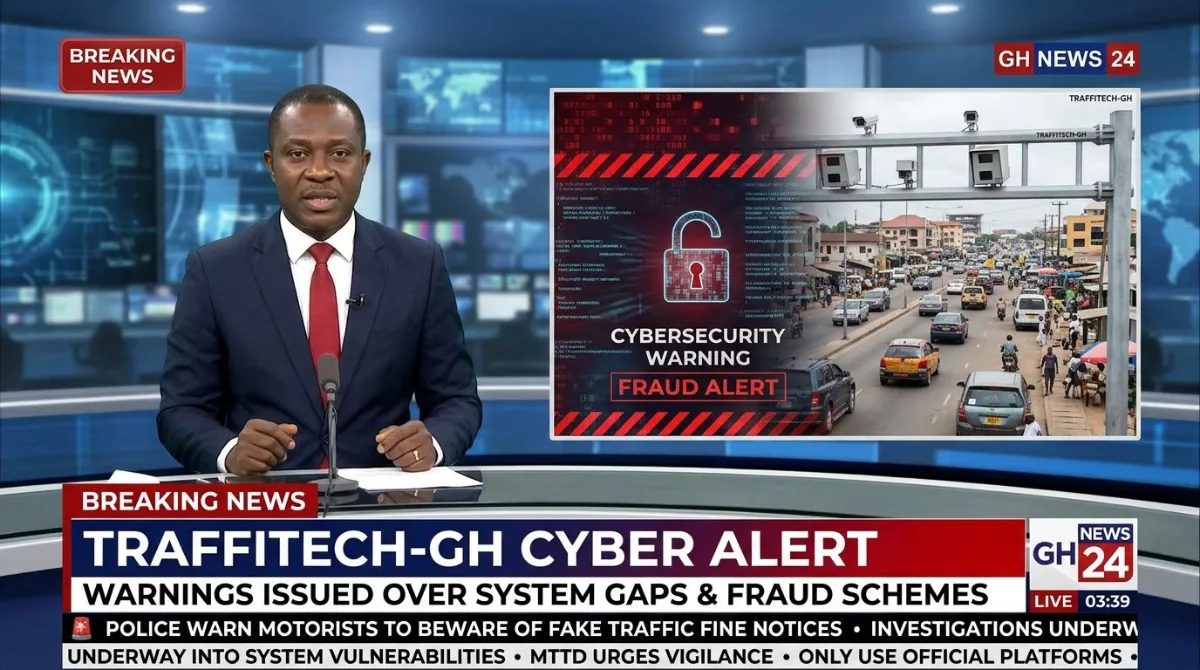
Ghana's newly launched automated traffic enforcement system, Traffitech-GH, has barely been operational a week — it went live on November 1 — and already a cybersecurity warning has landed on the Ghana Police Service's desk.
Technology consultant Maximus Amertogoh is calling on the police to urgently clarify which phone numbers, sender IDs, and websites are officially authorised to send traffic violation notices and collect fines under the programme. Without that clarity, he argues, the door is wide open for scammers to impersonate the system and steal from motorists.
"We do not know which number or website must send us the alerts. Got an alert from a number," Amertogoh wrote in a Facebook post, urging authorities to introduce additional security measures to protect users.
His concern is straightforward: if motorists cannot tell a genuine Electronic Notice of Violation (ENV) from a fake one, fraudsters will exploit that confusion. The timing matters. Traffitech-GH is new, it is nationwide, and millions of drivers are receiving SMS-based violation notices for the first time — many of them unsure what a legitimate message even looks like.
How Traffitech-GH Actually Works
The system uses cameras and sensors to capture vehicles committing traffic offences, starting with speeding. Footage and data are reviewed by authorised personnel before an ENV is issued by SMS to the registered vehicle owner. Each notice is supposed to include the vehicle registration number, location, date and time of the offence, the applicable fine, and a payment deadline.
The Ghana Police Service says the system is designed to reduce dependence on manual enforcement — essentially, confronting drivers with hard evidence of their own behaviour rather than relying on roadside stops. This kind of digital enforcement infrastructure can be effective, but it also creates new attack surfaces that bad actors are quick to notice.
What the Police Say
The Ghana Police Service has published official guidance on how to spot authentic Traffitech notifications. According to its FAQ, genuine ENVs will carry the sender identification GPS-MTTD. The police are also warning motorists not to make payments through unofficial links, private phone numbers, or individuals.
All Traffitech fines must be paid through the designated government payment portal. Any motorist who receives a suspicious message or call is advised to report it on 191 or 18555.
The Bigger Picture
Amertogoh's warning points to a gap that often shows up when governments roll out new digital enforcement tools: the technology launches, but the public education campaign lags behind. Motorists need to know not just what offences attract fines, but how to verify every notice they receive and how to protect their personal and financial information in the process.
The Ghana Police Service's published guidance is a start. But Amertogoh's core point — that the official sender ID, website, and payment channel must be aggressively publicised before confusion becomes exploitation — deserves a faster response than a FAQ page alone can provide.
With nationwide enforcement now underway, the window to get ahead of potential fraud is narrowing quickly.