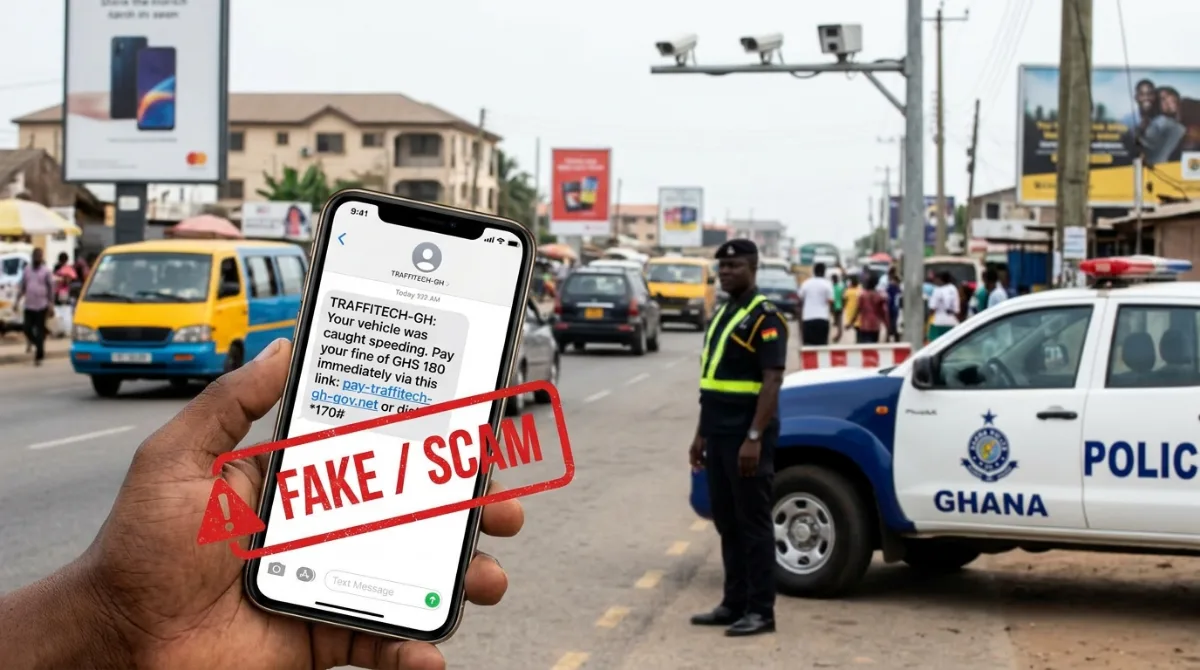
Just three days after Ghana's new TraffiTech-GH traffic management system went live, scammers are already exploiting it. The Ghana Police Service issued an urgent public warning on Wednesday, November 4, 2026, alerting motorists to fraudulent messages circulating in the Service's name and directing people to pay traffic fines through unofficial channels.
TraffiTech-GH commenced enforcement on Sunday, November 1, 2026, making it one of the most significant shifts in road traffic management the country has seen. The system sends electronic notices directly to vehicle owners — and it did not take long for bad actors to mimic those notifications.
How to Spot a Genuine Notice
The Police Service says the first line of defence is checking the sender ID. Legitimate traffic violation notifications will only come from the sender ID GPS-MTTD — not from an ordinary mobile phone number.
"First check if the official Sender ID is GPS-MTTD. Genuine traffic violation notifications will not be sent from an ordinary mobile phone number," the Police statement read.
Beyond the sender ID, motorists are advised to open their Electronic Notice of Violation (ENV) — the official digital ticket — and cross-check several details: the vehicle's photograph, registration number, the location of the alleged offence, and the date and time it occurred. Where a video recording is available, the Police are encouraging drivers to watch it before taking any action.
Only Two Approved Payment Channels
The Ghana Police Service has been explicit: there are exactly two approved ways to pay a TraffiTech-GH traffic fine, and anything outside these should be treated as a scam.
The first option is the National Investment Bank (NIB) payment portal at https://traffitech-ghpay.nib.com.gh. Motorists visit the site, select 'Make Payment', enter their ticket number, verify the details shown, and follow the on-screen payment instructions.
The second option is a USSD shortcode — dial *7100#, follow the prompts, and complete the payment using the ticket number. That is it. No third-party apps, no links sent via WhatsApp, no payment into someone's personal account.
The Mobile Money Warning
Mobile money fraud is a persistent threat across Ghana, and this scam follows a familiar playbook — impersonate an authority, create urgency, and redirect payment to a personal number. The Police addressed this directly.
"Motorists and vehicle owners are strongly advised to remain vigilant and avoid falling victim to fraud. Never pay a traffic fine into a personal mobile-money number or through any unofficial account," the statement warned.
The concern is real. With TraffiTech-GH being new, many motorists may not yet know what a genuine ENV looks like — which makes them easier targets for convincing fakes. Staying alert to these kinds of digital scams is part of broader online safety in an increasingly cashless Ghana.
What Motorists Should Do Now
The Ghana Police Service's advice boils down to three steps: verify the sender ID is GPS-MTTD, confirm the violation details inside the ENV match your vehicle, and pay only through the NIB portal or the *7100# USSD code. Any message pushing a different payment route — especially to a mobile money number — should be reported and ignored.
As more Ghanaian traffic systems move toward digital enforcement, awareness of how those systems communicate officially becomes essential. TraffiTech-GH is a step forward for road management, but its rollout has opened an immediate window for fraud that the Police are now racing to close.