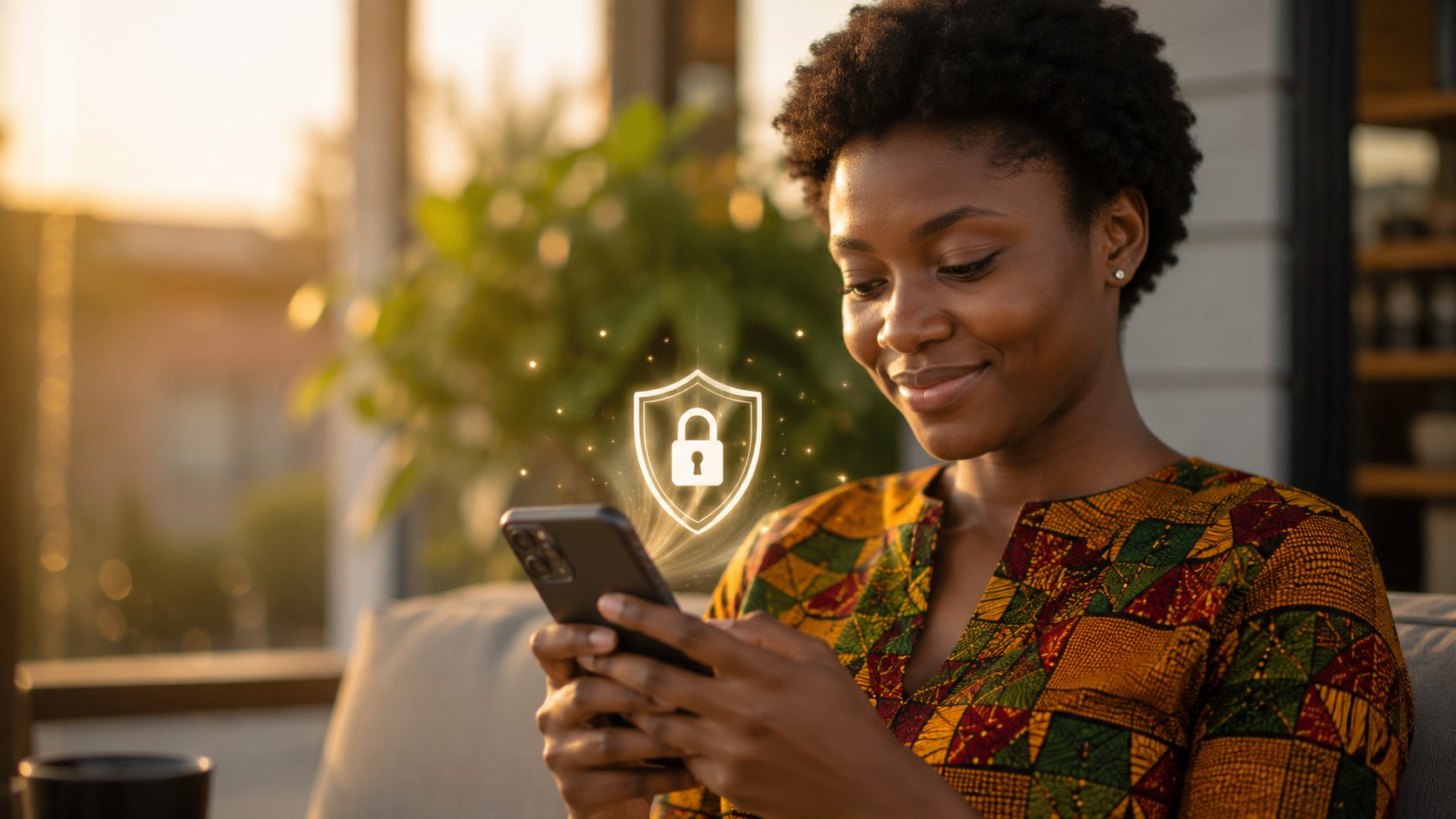
Let's be honest about something. If you have ever felt that little jolt of panic — a text saying your MoMo will be blocked in ten minutes, a "recruiter" who needs a small fee before you start, a stranger online who got very close very fast — you are not careless, and you are not alone. Scams in Ghana grow more sophisticated every year, built by people whose full-time job is to catch good, busy, trusting people off guard. Falling for one does not make you foolish. It makes you human.
This guide exists to put the advantage back in your hands. No jargon, no fear-mongering — just clear, practical ways to protect yourself and the people you love. We have drawn the guidance straight from Ghana's own authorities: the Cyber Security Authority (CSA) and the Securities and Exchange Commission (SEC). And because scams change constantly, we keep this guide and its linked pages updated as new tricks appear.
The three habits that stop most scams
Before we get into specific scams, understand this: almost every scam, no matter how clever, depends on one of three things going right for the criminal. Take these three habits to heart and you have already closed the door on the large majority of them.
Pick the threat you want to understand
Scams in Ghana tend to fall into recognisable families. Each guide below covers what the scam looks like, the real warning signs, and exactly what to do.
- Mobile money fraud — preys on the system most of us use every day.
- Investment & Ponzi schemes — target your savings and can cost people everything.
- Romance scams & sextortion — use affection and shame as weapons.
- SIM-swap fraud — criminals steal your very phone number.
- Phishing & WhatsApp takeovers — the single links and messages that open the door to everything else.
- Job, recruitment & visa scams — exploit the hope of honest work.
- Fake business listings — the "help line" you searched for robs you.
- Scams circulating right now — our regularly updated list of what is active.
Not sure about a message you have just received? Run it through our Ghana Scam Checker before you reply, click, or send anything.
If you have already been caught
First, breathe. Being scammed is not a moral failing, and acting quickly can limit the damage — and help protect the next person.
Cyber Security Authority (CSA): call or text 292, WhatsApp 0501603111, email [email protected]
Investment schemes (SEC): toll-free 0800 100 065, email [email protected]
Ghana Police Cybercrime Unit: 18555
Save any evidence — screenshots, phone numbers, links, payment details — before you delete anything.
You are allowed to feel angry or shaken. But you are not powerless, and you are not alone. Use the guides above, share them with the people you love — especially older relatives and young job-seekers, who are targeted most.
About this guide
This guide is part of TechTrendi's Online Safety series for Ghana. The advice here is drawn from official sources, including Ghana's Cyber Security Authority (CSA) and the Securities and Exchange Commission (SEC). Written by Edmund A. and reviewed by the TechTrendi editorial team. Last reviewed: June 2026.
Spotted an error, or a scam we should cover? Email us at [email protected]. To report a crime, contact the CSA on 292.