Ghana's central bank wants to fundamentally change how lenders assess creditworthiness — and mobile money transaction histories could be at the centre of that shift.
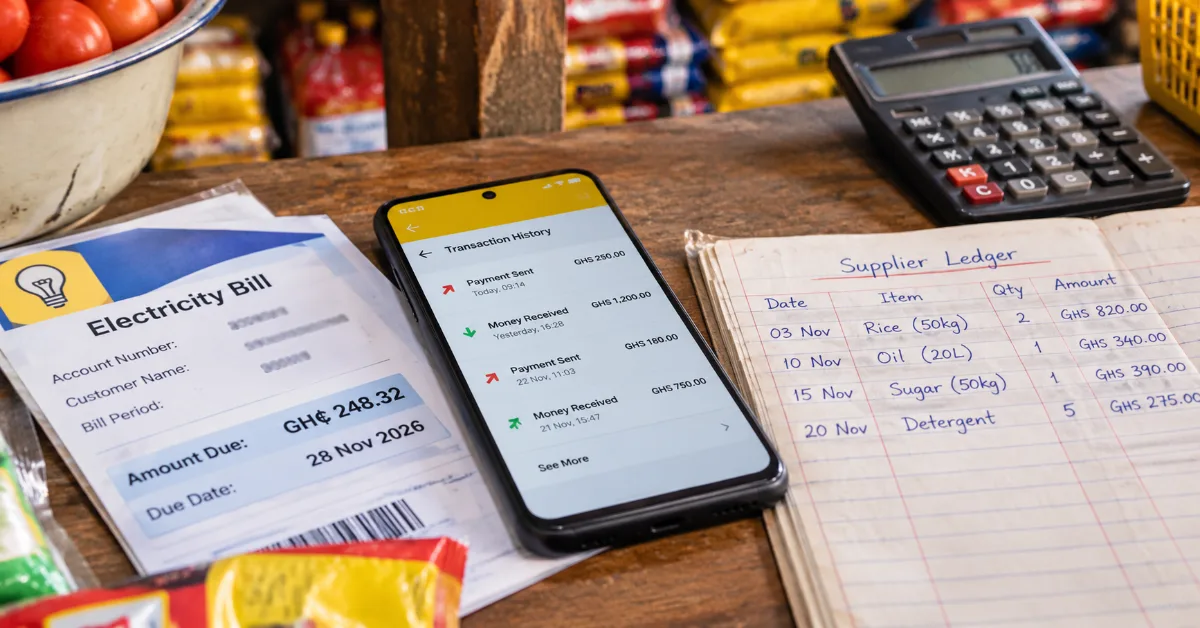
The Bank of Ghana (BoG) is pushing for alternative data — including mobile money records, utility bill payments, supplier dealings and other digital financial activity — to be used in credit assessments, specifically to unlock financing for micro, small and medium-sized enterprises (MSMEs) in the informal sector.
Speaking at the Ghana Credit Data Providers Conference
Dr. Settor Kwabla Amediku, Special Aide to the Governor on Financial Stability, made the case at the Ghana Credit Data Providers Conference. He was representing Second Deputy Governor Mrs Matilda Asante-Asiedu at the event.
Dr. Amediku argued that many informal businesses already have transaction records that demonstrate their capacity to sustain their operations — but traditional credit systems rarely capture them.
"Their economic activities are real. Their transactions are recorded. Their potential is considerable. We can see them in our markets. They are visible on our digital platforms and visible in our communities. Yet, they remain invisible to the formal credit system."
That invisibility has real consequences. The Ghana Statistical Service figures cited at the conference show that 78.3 per cent of the population works in the MSME sector — yet limited access to affordable financing remains one of the biggest drags on their growth.
The Cycle That Keeps Businesses Locked Out
Dr. Amediku described the problem as a self-reinforcing trap: businesses cannot get loans because they lack credit histories, and they cannot build credit histories without first getting loans.
Under the proposed framework, records of regular sales, inventory purchases and timely supplier payments could substitute for the audited financial statements that many informal businesses simply do not have. This could open the door for fintech companies, banks and mobile money operators to design lending products specifically for underserved businesses.
Not Lower Standards — Better Information
Dr. Amediku was careful to frame this as a quality upgrade, not a risk trade-off. Financial institutions, he stressed, are not being asked to relax their lending standards.
"We are not asking financial institutions to lower their credit standards. We are asking them to raise the quality of information which they use to assess borrowers."
The BoG is advocating for safeguards to ensure that any collection and use of alternative data meets standards of integrity, privacy, transparency and fairness — a nod to the data protection concerns that come with pulling in utility and telecom records for financial decisions.
What Comes Next
Dr. Amediku called for deeper collaboration among banks, credit bureaus, telecommunications companies, utility providers and fintech firms to establish integration standards. He also challenged industry stakeholders to develop a concrete implementation roadmap with clear responsibilities, timelines and monitoring mechanisms — not just broad commitments.
The BoG says the success of the entire initiative should ultimately be judged by one measure: whether more underserved businesses can actually secure appropriate financing and make sound borrowing decisions.