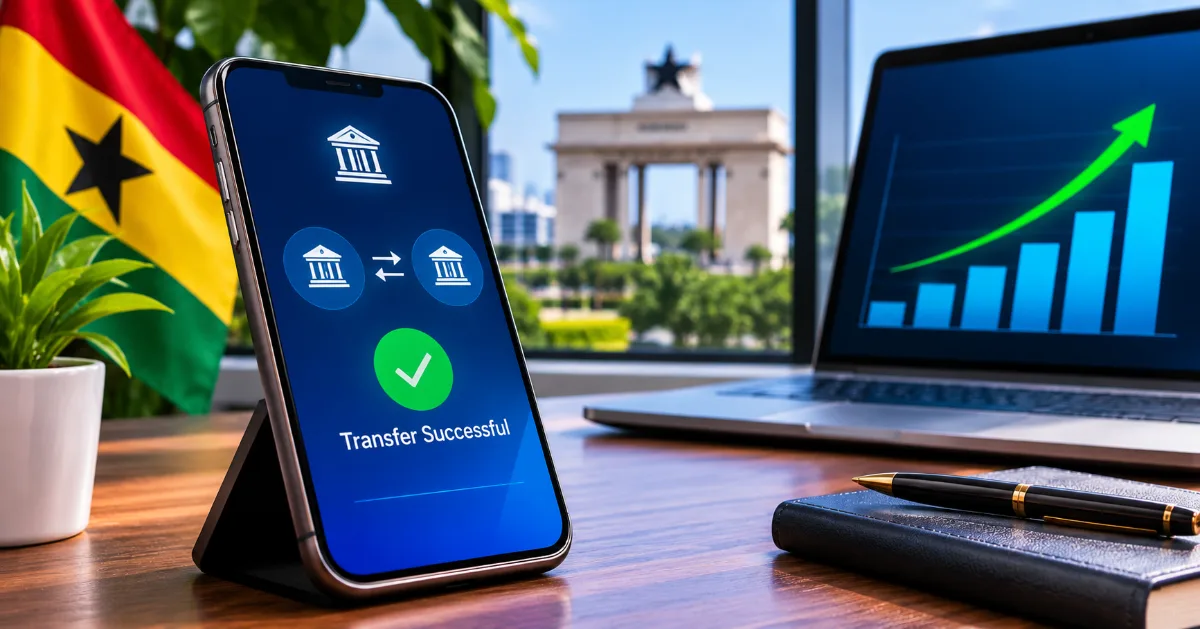
Ghana's instant payment infrastructure is quietly handling much heavier loads. The value of transactions on GhIPSS Instant Pay (GIP) reached GH¢107.7 billion in October 2026, up from GH¢70.3 billion in October 2025 — a 53 per cent jump in twelve months, according to the Bank of Ghana's Summary of Economic and Financial Data for November 2026.
What makes the numbers striking is what did not grow. The volume of transfers barely budged — GIP processed 18.35 million transactions in October, compared with 17.55 million a year earlier, a rise of just 4.6 per cent. More money is moving, but not more people are sending it.
Analysis by the Economy Times shows the average value per instant transfer rose from roughly GH¢4,007 to about GH¢5,871 — a 46 per cent increase. Since inflation ran at only 5.5 per cent over the same period, the bulk of that growth reflects larger actual payments, not just price effects.
A Platform Shifting Toward Business Payments
The pattern suggests GIP is evolving beyond personal transfers. Instant transfers settle in seconds, and a rising average ticket points to the platform absorbing bigger, business-type payments that once moved through cheques or slower clearing channels. It is not a one-month spike either — GIP's monthly value has risen in most months of 2026, from GH¢65.1 billion in February to above GH¢90 billion in every month since July, before hitting October's high.
Cheques have not disappeared — cleared cheques were worth GH¢38.9 billion in October, up 13 per cent year-on-year. But instant transfers in October were worth almost three times as much as cheques, and growing far faster.
Mobile Money Still Leads in Volume, But the Gap Is Narrowing
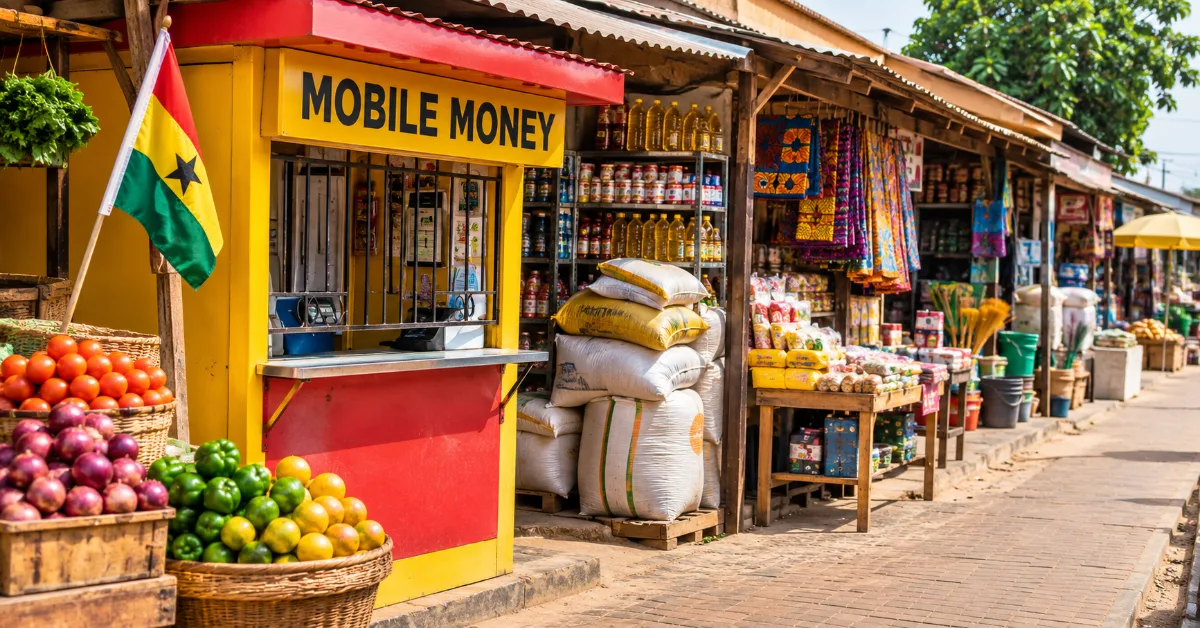
Mobile money remains Ghana's dominant payments channel by transaction count. In October, it handled 1.09 billion transactions worth GH¢552.1 billion, with an average transaction of about GH¢505. GIP processed less than 2 per cent as many transactions — but carried roughly 20 per cent of mobile money's total value.
The split is becoming clearer: mobile money handles the country's small, frequent everyday payments, while instant bank transfers are becoming the go-to channel for large-value ones. Interoperability transfers across mobile money networks and platforms also rose 48 per cent in value to GH¢7.4 billion.
Internet Banking Shows a Sharp, Unexplained Drop
Elsewhere in the data, internet banking tells a puzzling story. Transaction volumes fell sharply from 4.76 million in February to 1.57 million in March 2026, and have stayed between 1.1 million and 1.6 million every month since. By October, volume was 1.31 million — about 72 per cent below the 4.74 million recorded in October 2025.
Yet the value held steady: internet banking payments totalled GH¢38.5 billion in October, against GH¢41.7 billion a year earlier. That means the average internet banking transaction has surged from roughly GH¢8,800 to about GH¢29,500. The Bank of Ghana's tables carry no note explaining the March drop — it may reflect a reclassification of transactions or a migration of smaller retail payments to mobile apps and instant transfers.
Terminals Up, ATMs Down Slightly
The broader infrastructure data shows clear direction. Point-of-sale terminals jumped from 17,292 in October 2025 to 27,183 in October 2026 — a 57 per cent increase. ATM numbers edged down from 2,274 to 2,264. Prepaid cards more than doubled, climbing from 407,000 to 866,000.
Bigger Transfers, Higher Fraud Stakes
Larger instant payments raise the cost of every mistake or fraud attempt. Transfers settle within seconds and are difficult to reverse, meaning each fraudulent or mistaken transaction now carries greater potential loss. The Cyber Security Authority put losses from cyber fraud at GH¢209.7 million between January and September 2026, a figure that underscores how much pressure now falls on banks' controls and customer verification as average payment sizes grow.
Ghana's payments mix is visibly shifting — toward faster rails, larger tickets, and infrastructure built for a digital economy. The question now is whether the safeguards are keeping pace.