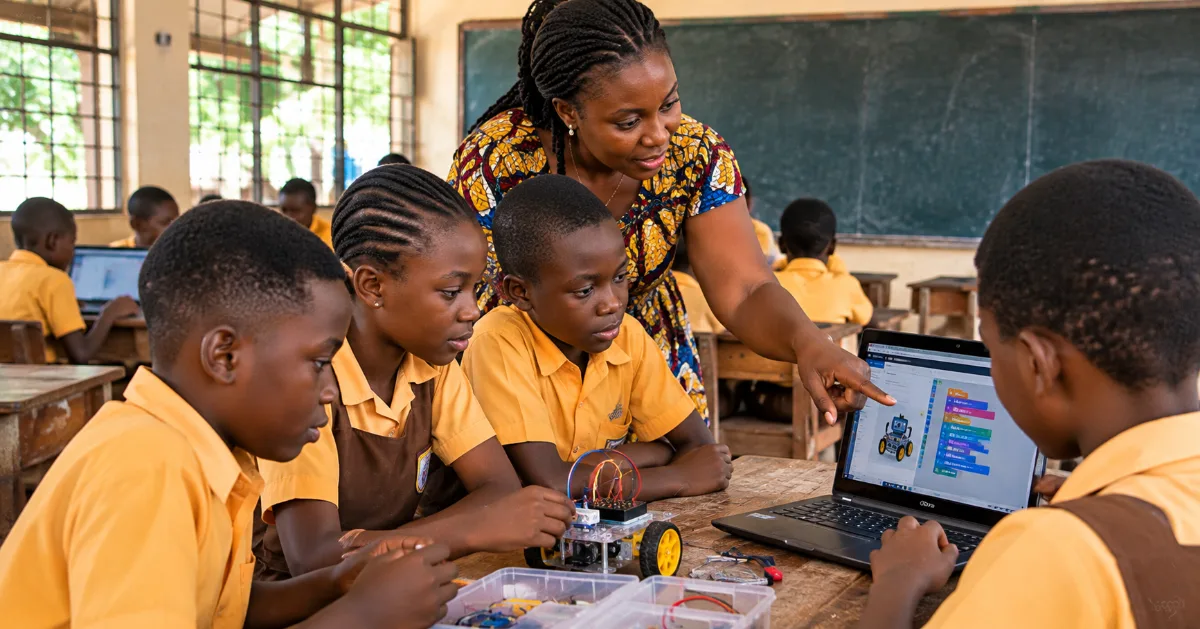
Ghana's Education Minister Haruna Iddrisu has announced plans to introduce coding, robotics, artificial intelligence and electronics into the country's basic school curriculum — from kindergarten through Primary Six — but the revised curriculum is still awaiting Cabinet approval and no start date has been set.
Mr Iddrisu made the announcement on Monday at the Ghana Tertiary Education Commission in Accra, where he was opening this year's National Education Week and Evidence Summit. Tuesday's sessions at the summit were reserved for researchers to present Ghanaian evidence on digital learning, all feeding into a draft AI-in-education roadmap covering 2027 to 2030.
Still Waiting on Cabinet
None of the proposed new subjects is currently in force. The minister was explicit: Cabinet has not yet approved the revised curriculum, and he named no date for when any of the changes would actually reach classrooms. It is not the first time he is trailed this agenda — in July he said a revised basic-school curriculum would bring coding, AI and electronics into the system, and back in December 2025 he told an Accra gathering the revision would also include robotics and financial literacy.
What is also missing from the picture: no cost estimate for the new subjects, no list of classroom equipment, and no timetable for training teachers who would actually deliver those lessons.
Ambition, With Guardrails
"Our ambition is to harness AI to improve learning outcomes and expand educational opportunities and to develop human capital that can compete with the rest of the world in a rapidly changing technological world." — Education Minister Haruna Iddrisu
Mr Iddrisu was equally firm about what the policy is not. "We are not going to replace teachers with AI," he said. "Government policy is to empower teachers with technology, not replace teachers with technology."
He also struck a cautionary note about over-reliance on AI tools among students, warning that the technology "may provide a shortcut which may not provide for the production of quality graduates for our purposes as a country." He stressed the need to guard against AI creating "lazy learners from primary school up to the university."
The minister called on the researchers present to draw up a concrete roadmap for a digital education policy with artificial intelligence at its centre.
Ghana Students Already Competing
Even as the policy debate continues, Ghanaian university students are already making their mark in the space. A team from Ashesi University won the tertiary title at this month's Pan-African Robotics Competition, held in Senegal — a result that underlines both the appetite and the existing capacity for tech education in the country.
Mr Iddrisu also noted that the 2027 Budget provides 10,000 recruitment places in education, covering teachers, non-teaching staff and academic staff at universities, with funding already secured. How those recruitment slots connect to the rollout of new tech subjects, however, remains unclear — the minister offered no specifics on that link.
For now, Ghana's coding-and-AI classroom ambition remains exactly that — an ambition. The revised curriculum needs Cabinet's green light before any of it becomes a lesson plan, and the minister's repeated announcements over several months suggest the policy is still taking shape rather than approaching launch.