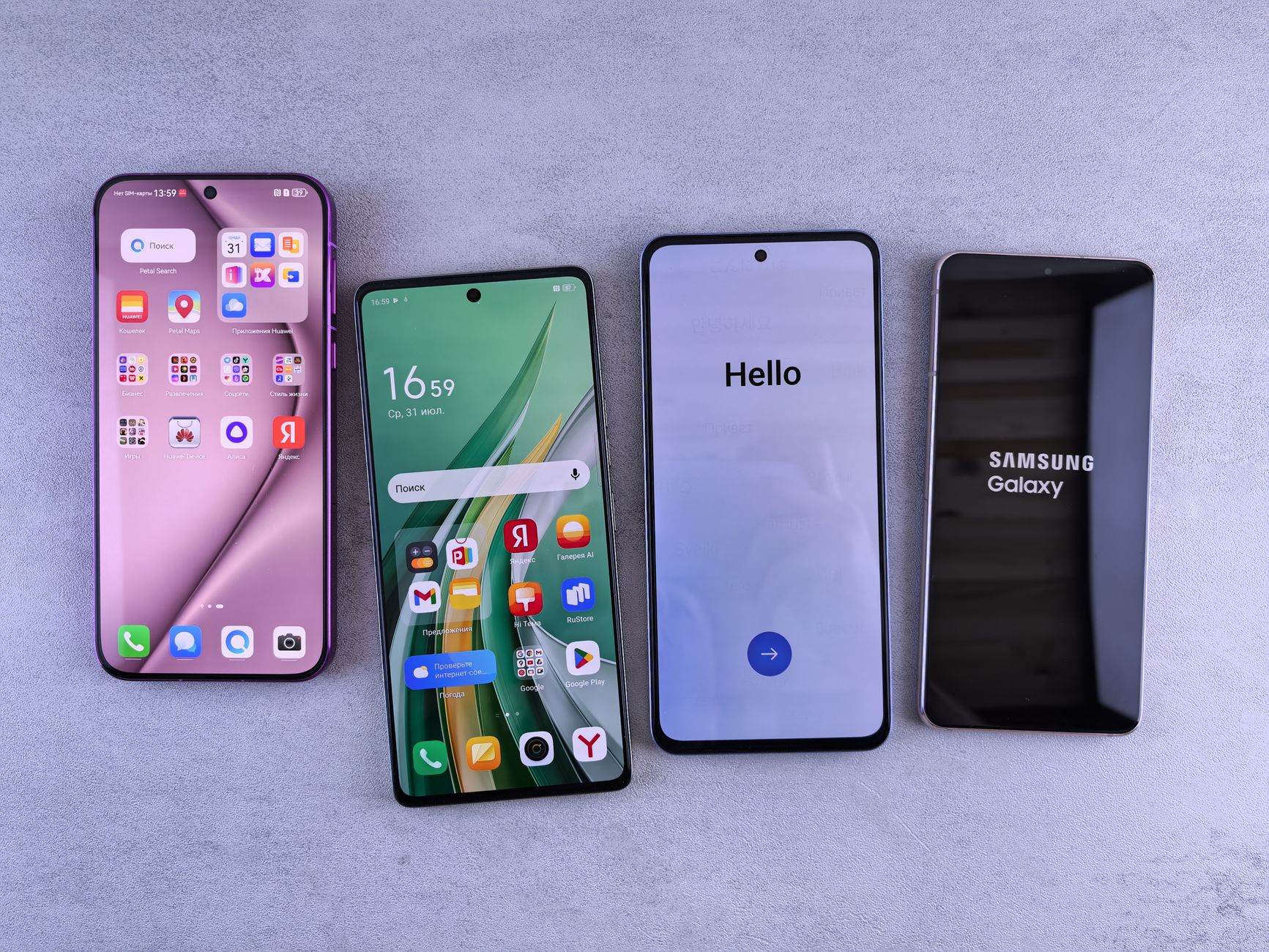
Last November I did something kind of dumb. I carried four phones simultaneously for six weeks — an iPhone 16 Pro, a Samsung Galaxy S25 Ultra, a Google Pixel 9 Pro, and a Nothing Phone (2a) — just to see how differently each ecosystem actually felt in daily life. My friends thought I'd lost it. My pockets agreed.
But here's what that experiment taught me: the specs race is mostly noise. The ecosystem is what you're really buying into. And that choice affects everything — which apps you can use, how your devices talk to each other, how long your phone stays useful, even how easy it is to leave if you change your mind.
So let's actually break this down properly.
The Apple Ecosystem: Tight, Polished, and Deliberately Walled
I'll be upfront — I use an iPhone as my daily driver. Have for three years. And the honest reason isn't the camera or the chip, it's how seamlessly everything connects.
When I AirDrop a video from my iPhone 16 Pro to my MacBook, it's instant. When I copy text on my phone and paste it on my iPad, it just works. iMessage shows up across every device without any setup. That kind of friction-free integration is genuinely hard to replicate.
The Hardware Powering It
The iPhone 16 Pro runs Apple's A18 Pro chip, built on a 3nm process. On Geekbench 6, it scores around 3,350 single-core and 8,460 multi-core — still the fastest mobile chip available as of early 2026. The base iPhone 16 uses the standard A18, which is also no slouch.
Apple software support is also where they genuinely beat everyone. The iPhone 12 from 2020 still runs iOS 18. That's five years of updates. If you're in a market where phones need to last a long time, that matters a lot.
Where Apple Gets Annoying
The App Store is a closed shop, and Apple decides what's allowed. Sideloading apps is technically possible in the EU now (thanks to regulatory pressure), but it's still clunky and restricted compared to Android. You're also locked into Apple's default apps more than people admit — try using a third-party browser that isn't just a Safari skin. You can't, at least not on iOS before version 17.4.
And the pricing. An iPhone 16 Pro starts at $999. The Pro Max is $1,199. That's before you buy any of the accessories that make the ecosystem actually shine, like AirPods Pro 2 ($249) or an Apple Watch Series 10 ($399).
Look, if you're already deep in — Mac, iPad, AirPods — iOS makes obvious sense. If you're starting fresh with zero Apple products? The upfront cost is brutal.
Android: The Ecosystem That's Actually Many Ecosystems
Here's where people get confused. Android isn't one ecosystem. It's a platform that different manufacturers build their own ecosystems on top of. Samsung's Android and Google's Android feel genuinely different to use day-to-day.
Samsung's Galaxy World
The Samsung Galaxy S25 Ultra is the phone I kept picking up when I wanted to get actual work done. The built-in S Pen, the Snapdragon 8 Elite chip (benchmarking at around 2,900,000+ on AnTuTu, per tests from GSMArena), the 6.9-inch 120Hz AMOLED display — it's a productivity machine.
Samsung's ecosystem play is Galaxy AI, their suite of on-device and cloud AI features. Live Translate, Note Assist, Circle to Search — some of it is genuinely useful, some feels like feature-stuffing for the spec sheet. I used Circle to Search probably a dozen times a day. The rest? Less often.
Samsung also has Galaxy Buds3 Pro, Galaxy Watch 7, and DeX mode (turns your phone into a desktop when plugged into a monitor). The ecosystem is wide. But it's also fragmented — Samsung's update record has improved but still doesn't match Apple. The S25 series is promised 7 years of OS updates, which is genuinely impressive and matches Apple's current commitment.
The S25 Ultra starts at $1,299. The base S25 is $799.
Google's Pixel Approach
I have a complicated relationship with Pixel phones. The Pixel 9 Pro has genuinely excellent Google Assistant integration and the cleanest Android experience you can get. It costs $999 and runs on Google's Tensor G4 chip.
Honestly? I think the Pixel 9 Pro camera is overrated. The computational photography is impressive, but in bright light conditions the Galaxy S25 Ultra produces sharper, more accurate shots to my eye. The Pixel's processing sometimes goes too aggressive on smoothing. People online will fight me on this, and that's fine.
"The best camera is the one that gets out of your way." I think about this whenever Pixel's AI portrait mode turns someone's hair into plastic. Great idea. Inconsistent execution.
Where Pixel wins is software. You get updates the day Google releases them. The Pixel 9 series gets 7 years of OS and security updates. And the integration with Google's services — Search, Maps, Translate, Gmail — is unmatched because Google made both the phone and the services.
Other Android OEMs Worth Mentioning
OnePlus, Xiaomi, and OPPO are doing interesting things, especially for buyers outside North America. The OnePlus 13 runs OxygenOS 15 on a Snapdragon 8 Elite, costs around $899, and includes 100W wired charging. That's faster than almost anything Apple or Samsung offers.
Xiaomi's 15 Ultra (available in select markets, around $1,100) has a Leica-tuned camera system that I think actually competes with the best from Apple and Samsung, especially for video.
The downside with non-Google, non-Samsung Android is software support and ecosystem depth. The buds, watches, and other accessories rarely integrate as cleanly. And if you're not in a region where these brands have strong service networks, repairs can get complicated.
The Alternatives: Small Ecosystems, Real Trade-offs
This is the section most comparison articles skip. Don't.
Nothing OS
I genuinely like the Nothing Phone (2a). It runs Nothing OS 3.0 (based on Android 14, with Android 15 on the way), costs just $349, and has a design that actually makes you look twice. The transparent back with the Glyph interface lighting is a real conversation starter.
But here's the deal: Nothing's ecosystem is thin. There's the Nothing Ear (2) earbuds and the CMF Watch Pro from their sub-brand. That's basically it. If deep device integration matters to you, Nothing isn't there yet. If you want a clean, fast Android phone that doesn't cost a fortune and looks different from everything else? It's worth serious consideration, especially in markets like India and the UK where it's well-distributed.
HarmonyOS (Huawei)
I spent a week with a Huawei Pura 70 Pro, and I want to be fair here. HarmonyOS — now on version 4.0 — is genuinely polished. The hardware is impressive. The camera, especially, is excellent.
The problem is obvious: no Google services. No Play Store. Huawei's AppGallery has improved a lot, and their Petal Search tool helps fill gaps, but if you rely on Gmail, Google Maps, YouTube, or most Western streaming apps, you're going to struggle. This matters less in mainland China, where the ecosystem works fine. For most readers globally, it's a real barrier.
LineageOS and Custom ROMs
If you're technical and care deeply about privacy, custom ROMs like LineageOS 21 or GrapheneOS (best run on Pixel hardware) give you full control over your device. GrapheneOS in particular has become the go-to for security-focused users.
This is not for most people. Setup takes hours, some apps break, and you lose warranty. But it's a real option and it's worth knowing exists.
Switching Costs Are Real, and Nobody Talks About Them Enough
I spent way too long figuring out how to migrate my iMessage threads to Android. The short answer: you basically can't. Not cleanly. Google Messages has improved a lot with RCS support, but iMessage-to-Android migration is still a mess in 2026.
Going Android-to-iPhone is easier in some ways (Apple has a Move to iOS app), but you'll still lose some Google-specific features and potentially repurchase apps that aren't cross-platform.
Switching between Android manufacturers is actually the smoothest transition of any. Samsung, Google, and OnePlus all support Google's backup system, so your contacts, photos, and most app data move cleanly.
What About Price-to-Value in Developing Markets?
If you're in India, Nigeria, Brazil, or Southeast Asia — regions where flagship prices at $1,000+ feel disconnected from local salaries — this comparison looks different.
The Nothing Phone (2a) at $349, the Pixel 8a at $499 (7 years of updates!), or a Xiaomi Redmi Note 13 Pro at around $280 might be the honest answer. You lose some ecosystem depth, but you get a capable smartphone that'll stay supported for years without breaking the bank.
Apple has essentially no budget option. The iPhone 15 (still sold new) starts at $699 and that's the cheapest you can go for a current-ish experience. For a lot of the world, that's just not the right choice regardless of how good the ecosystem is.
So Which One Should You Actually Pick?
Okay, here's how I'd actually break it down if a friend asked me:
- Already own a Mac and/or iPad? Go iPhone. The integration alone justifies it.
- Want the most powerful Android experience with the best display? Galaxy S25 Ultra or S25+. Samsung's ecosystem is wide and maturing fast.
- Want pure Android with the best Google service integration? Pixel 9 or Pixel 9 Pro. Just go in knowing the camera hype is slightly inflated.
- Budget under $400 and want something that'll last? Nothing Phone (2a) or Pixel 8a. Both are legitimately good phones.
- Privacy is your top priority? Pixel running GrapheneOS. Full stop.
- You're in China or a Huawei-dominant market? HarmonyOS is actually fine. Outside of that? Skip it.
The "best" ecosystem isn't a universal answer. It's the one that fits what you already use, what you can afford, and how much you want to be locked in versus how much flexibility you need.
After six weeks carrying four phones, I went back to my iPhone. Not because it's objectively superior — the S25 Ultra is genuinely incredible hardware — but because my whole life is already inside Apple's walls, and climbing out would cost me more time than it's worth right now.
Maybe that's the most honest thing I can say about ecosystems: the best one is usually the one you're already invested in, as long as it's not actively failing you. The switching cost is always higher than it looks on paper.